Office rug size: desk, rolling chair and room chart.
Office rug size planning starts with the desk footprint, the chair’s complete rolling path and the clear room—not the coffee table or empty floor at the center.
Written by Rehana K · Published and updated July 17, 2026.
Choose a rug that supports the desk and the chair’s full working path.
The most useful office rug size is usually 5×7 or 5×8 for a compact desk, 6×9 for a standard workstation, and 8×10 for a larger office with storage or guest seating. The chair should roll, turn and move back without crossing a raised rug edge. Measure the desk at its widest and deepest points, pull the chair back to the position used when standing, then add enough side margin to keep the layout visually balanced.
Office rug size guide contents
Jump directly to the setup, measurement or buying question that matches your home office.
Calculate your office rug size
Enter the usable room, desk and chair-path measurements. The tool suggests the smallest practical standard rug and checks whether it fits the room.
Your office rug starting point
This calculator rounds up to a common retail size. Tape the result before ordering.
Desk, chair movement and selected side allowance.
Oriented with the long side following the desk and chair path.
Checking the selected rug against the room.
Measured behind the normal working position.
Office rug size chart by setup
Use the chart as a starting point, then confirm the exact desk and rolling-chair footprint.
| Office setup | Starting rug | Useful for | Check before buying | Alternative |
|---|---|---|---|---|
| Small writing desk | 4 × 6 ft | Desk legs and a compact chair | Rear casters may leave the rug | 5 × 7 ft for more chair travel |
| Compact work-from-home desk | 5 × 7 or 5 × 8 ft | 48–60 inch desk and chair | Desk depth and standing position | 6 × 9 ft for side storage |
| Standard desk workstation | 6 × 9 ft | 60–72 inch desk, chair and pedestal | Long side orientation | 8 × 10 ft for fuller room coverage |
| L-shaped desk | 6 × 9 or 8 × 10 ft | Desk return and two-direction chair movement | Complete corner footprint | Custom size for narrow rooms |
| Executive desk with guest chairs | 8 × 10 ft | Large desk, chair and two visitor seats | Door and cabinet clearance | 9 × 12 ft in a large study |
| Shared two-desk office | 8 × 10 or 9 × 12 ft | Two desks or a shared table | Both chair paths and central walkway | Two separate 5 × 7 rugs |
| Office nook | 3 × 5, 4 × 6 or 5 × 7 ft | Bedroom or living-room workstation | Transition into the main room | Runner for a narrow niche |
What the office rug needs to do
Support movement
The chair should move from typing position to standing position without the rear casters dropping over a rug edge.
Connect the workstation
The desk, chair and nearby storage should look like one intentional zone rather than separate objects around a small floating rug.
Protect circulation
The rug must remain clear of door swings, cable routes, vents, drawers and the main path through the office.
Office rug size: the complete measurement and placement guide
Office rug size decisions are different from living-room or bedroom rug decisions because the furniture moves while you work. A sofa or bed stays in one position, but an office chair rolls, swivels and moves backward every time you stand. The correct rug must support the static desk footprint and the dynamic chair path at the same time.
A rug that looks perfectly centered under the desk can still be frustrating if the rear casters repeatedly drop onto hard flooring. A larger rug can also fail when it blocks a door, crowds a cabinet or creates an uneven transition in the main walking route. The goal is not simply to cover more floor. The goal is to create a stable, visually connected and practical work zone.
Start with the exact room and furniture measurements, use the calculator above, then mark the proposed outline with painter’s tape. The Rug Size Calculator can compare standard sizes, while the Interior Size Guide helps coordinate the rug with room scale, storage and circulation.
The office rule that matters most
Measure the chair in motion, not only the desk at rest. The rug should remain beneath the casters when you work, turn and move back far enough to stand.
Step 1: measure the clear home-office floor
Office rug size planning begins by measuring the usable room width and length after accounting for everything that reduces the practical floor area. Include the room door, closet doors, built-in shelves, radiators, floor vents, filing cabinets and the path used to reach the desk. A listed 10×12 ft office may have a much smaller clear rectangle once storage and circulation are included.
Mark door swings and drawers on a quick floor sketch. A rug can physically fit inside the room but still interfere with a cabinet door or create a thick edge directly beneath the entry door. Preserve the clear route first, then choose the largest size that improves the workstation.
Step 2: measure the complete desk footprint
The office rug size must account for the desk at its widest and deepest points. Include side returns, modesty panels, drawer pedestals, cable-management legs and attached storage. A desk described as 60 inches wide may occupy more floor because a pedestal or frame extends beyond the desktop.
For a simple rectangular desk, record width and depth. For an L-shaped desk, measure the complete outside rectangle, then note the open area where the chair moves. For a standing desk, measure the base feet rather than the desktop only because the feet may extend farther forward or sideways.
Step 3: measure the rolling-chair path
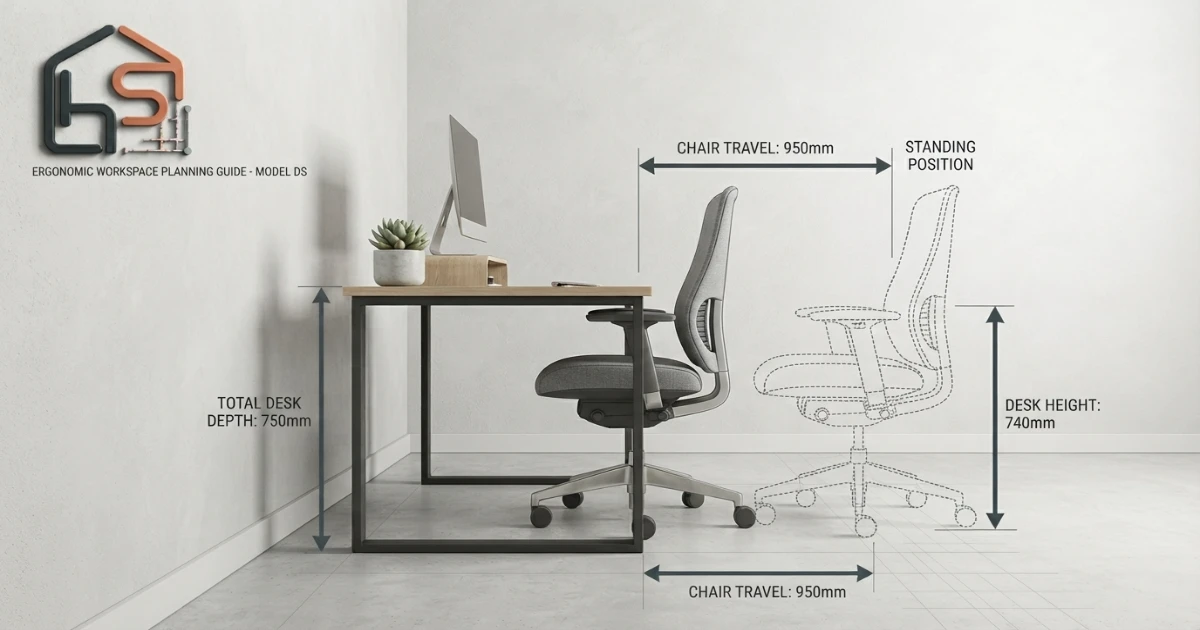
Office rug size accuracy depends on placing the chair at the normal working position and measuring from the desk edge to the rear casters. Then roll back far enough to stand comfortably and measure again. The second position is the important one. Many people need approximately 30–42 inches behind the desk, but the real chair, body movement and room layout decide the distance.
When accessibility-sensitive planning is important, use the real transfer and circulation needs rather than relying on a generic number. The U.S. Access Board accessible-route guidance explains broader clear-route principles, although it does not prescribe residential office rug dimensions.
Desk-only rug placement
A desk-only office rug size places the desk legs on the rug while most of the rolling-chair path remains on the hard floor. This approach can work when the chair uses a separate mat, the rug is decorative rather than functional, or the office is too narrow for a deeper rug.
A 3×5 or 4×6 rug can suit a small writing desk. A 5×7 can support a wider workstation. This placement uses less material and preserves more exposed flooring, but it should not be presented as a complete desk-and-chair solution.
Desk and rolling-chair rug placement
For most home offices, the stronger office rug size supports both the desk and the chair. The rug begins behind or slightly beyond the desk legs, extends along the full desk width and continues far enough behind the chair for working and standing movement.
A 5×7 or 5×8 rug may work with a compact 48–60 inch desk when the long dimension follows the chair path. A 6×9 gives more useful movement and side coverage for a standard desk. An 8×10 can include a pedestal, printer stand or guest chair.
Office rug size for a small home office
In a compact office around 8×10 or 9×10 ft, the office rug size is usually 4×6, 5×7 or 5×8 rather than 6×9. The rug should define the workstation without becoming a near-wall-to-wall carpet that crowds the door and storage.
A small room benefits from precise placement. Center the rug on the desk rather than automatically centering it in the entire room. When the desk sits against one wall, the rug can project into the room and leave a larger floor border near the entry or cabinet.

Office rug size for a medium room
A medium home office around 10×12 or 11×13 ft commonly needs an office rug size near 6×9. This size can support a 60–72 inch desk, chair movement and one side pedestal while leaving a visible floor border around the room.
An 8×10 may be better when the room includes a reading chair, printer cabinet or substantial bookcase that should visually connect with the desk. Compare both outlines.
Office rug size for a large office or study
A large study can support an office rug size of 8×10, 9×12 or a custom dimension. The larger size is useful when the office includes an executive desk, two guest chairs, a side table and storage that should read as one complete zone.
For an executive setup, measure the visitor chairs in use. Their front and rear legs should not sit directly on the rug edge. A 9×12 rug can feel luxurious, but it requires enough floor around doors, cabinets and walls to avoid a cramped appearance.
Rug size for an L-shaped desk
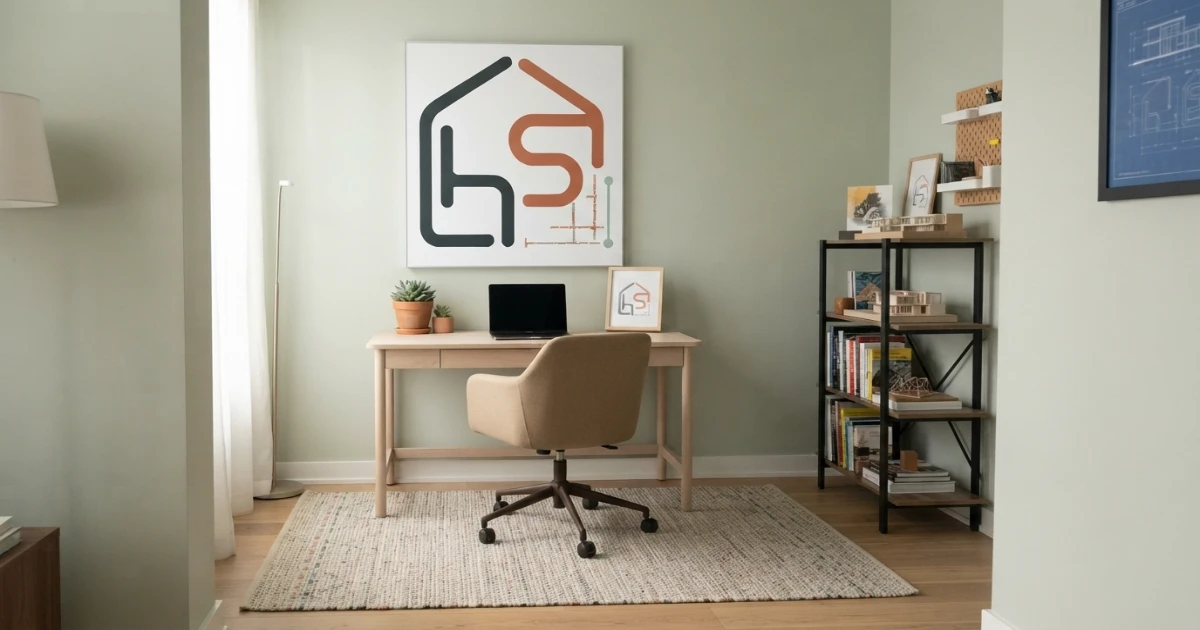
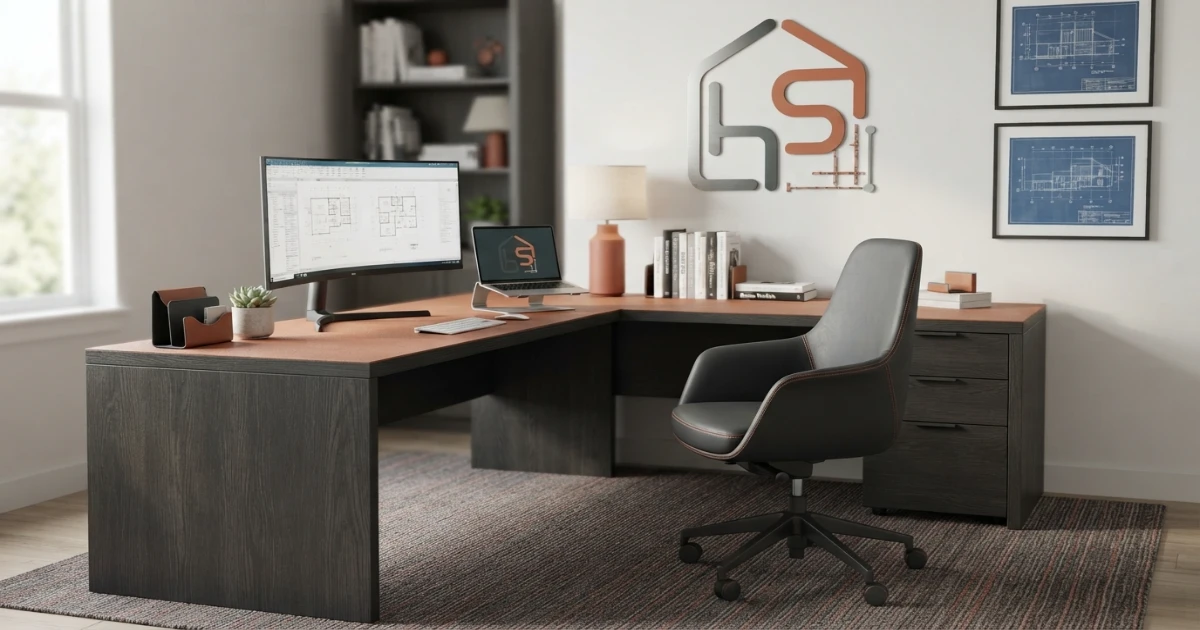
Office rug size planning for an L-shaped desk must account for the larger footprint and changing chair path. Measure the outside width of both desk sections and the deepest projection of the return. Then move the chair between the main surface and return to see where the casters travel.
A 6×9 rug can work with a compact corner desk, while an 8×10 is often more comfortable for a full-size L-shaped workstation. In a narrow room, a custom rectangular rug may fit better than a standard size that becomes too wide before it becomes long enough.
Keep all floor-standing desk supports on the same surface. If one return leg sits on the rug and another sits on hard floor, the desk can feel uneven. Use a firm pad and verify that the rug does not bunch beneath the corner.
Rug size for a standing desk
Office rug size planning for a standing desk still needs a stable seated-and-standing chair path. Measure the desk feet at their widest position and include any anti-fatigue mat that will remain at the workstation. The OSHA computer workstation eTool provides broader workstation setup guidance.
A thick anti-fatigue mat on top of a plush rug can create an unstable or awkward transition. Many users prefer a low-pile rug with a separate mat placed where the feet stand. Test the mat and chair together so neither blocks the other.
Shared office and two-desk layouts
A shared-office rug size can use one large rug or two smaller rugs. One 8×10 or 9×12 rug works well when the desks form a single central workstation or face each other across the room. Two 5×7 rugs may be more practical when desks sit on opposite walls.
Measure both chair paths at the same time. Two people moving backward can require a wider central aisle than a single-user office. Avoid placing rug edges where one chair moves from its rug into the shared walkway.
Office rug size for a bedroom or living-room nook
An office rug size for a nook should connect to the main room while remaining visually distinct. A 3×5, 4×6 or 5×7 rug can define the desk without competing with the bedroom or living-room rug.
Keep enough space between rugs so they do not look accidentally layered or create a narrow strip that collects dust. Align the office rug with the desk rather than the main room’s furniture if the nook occupies a separate wall or corner.
In a bedroom, verify that the office rug does not block bed access or dresser drawers. In a living room, keep the edge out of the primary route between seating and the entry. The Small Room Design Guide can help coordinate multiple functions in one room.
Can a round rug work in a home office?
A round office rug size can work beneath a pedestal desk, small writing table or reading chair, but it is less efficient beneath a long rectangular desk. The circular edge may leave the chair path unsupported even when the diameter looks generous.
Use a 5–6 ft round rug for a compact desk or chair zone and an 8 ft round rug for a larger central workstation. Measure the shortest distance from the desk to the rug edge because the useful depth changes around the circle.
Round rugs are strongest in square rooms or office nooks where the shape creates deliberate contrast. Choose a rectangular rug when the priority is maximum rolling-chair coverage for the available floor area.
Office rug size by desk width
| Desk width | Compact rug | Balanced rug | Full office zone |
|---|---|---|---|
| 36–42 in | 3 × 5 or 4 × 6 ft | 5 × 7 ft | 6 × 9 ft with chair/storage |
| 48–60 in | 5 × 7 or 5 × 8 ft | 6 × 9 ft | 8 × 10 ft |
| 66–72 in | 5 × 8 ft with limited chair path | 6 × 9 ft | 8 × 10 ft |
| 78–84 in | 6 × 9 ft | 8 × 10 ft | 9 × 12 ft |
| L-shaped / 84+ in footprint | 6 × 9 ft only after testing | 8 × 10 ft | 9 × 12 ft or custom |
Desk width is only one dimension. A shallow console desk and a deep executive desk of the same width may need different rugs because chair travel and desk depth change the required length.
Room-size examples
| Clear office size | Likely rug | Approximate floor border | Best layout |
|---|---|---|---|
| 8 × 10 ft | 4 × 6 or 5 × 7 ft | 18–24 in on key sides | Compact desk against a wall |
| 9 × 11 ft | 5 × 7, 5 × 8 or 6 × 9 ft | 12–24 in depending on orientation | Desk and rolling-chair zone |
| 10 × 12 ft | 6 × 9 or 8 × 10 ft | 12–24 in | Standard workstation with storage |
| 12 × 14 ft | 8 × 10 or 9 × 12 ft | 18–24 in | Executive desk or guest seating |
| Large open study | 9 × 12 ft or two coordinated rugs | Furniture-led | Separate work and reading zones |
These are planning examples rather than guarantees. Built-ins, doors, fireplaces and circulation can reduce the clear floor significantly.
Best rug material and pile for an office chair
The best office rug size also needs low-pile, flatwoven or tightly constructed material for easier caster movement. A dense surface reduces rolling resistance and makes it less likely that chair wheels will sink or pull fibers.
Natural-fiber flatweaves, low-pile wool, commercial-style carpet tiles and tightly woven synthetics can all work depending on comfort, maintenance and floor compatibility. Check the manufacturer’s care and caster guidance where available.
The Carpet and Rug Institute cleaning and maintenance guidance provides general care information. Always follow the exact rug label because fibers, backing and washable claims differ.
| Material / construction | Chair movement | Maintenance | Best use |
|---|---|---|---|
| Flatweave | Usually smooth | Easy to vacuum; edge stability matters | Compact and high-use offices |
| Low-pile wool | Generally good with suitable casters | Professional care may be needed | Comfortable premium office |
| Low-pile synthetic | Often practical | Usually easier stain care | Busy work-from-home room |
| Washable rug | Depends on backing and flatness | Check machine capacity and drying | Small office or multipurpose room |
| Shag / high pile | Often difficult | Harder to clean around casters | Reading zone rather than desk chair |
Rug pads, floor protection and chair mats
Every office rug size needs a rug pad approved for the specific floor finish. The pad should be slightly smaller than the rug so it remains hidden and does not create a raised border. A firm pad can improve stability, while a very soft pad may increase rolling resistance.
A chair mat can be used over or beside the rug, but confirm that the mat is designed for the surface beneath it. A rigid mat on a soft rug can flex, crack or create an awkward transition. Some offices work better with a rug under the desk and a separate mat for the rolling path.
Check floor-finish warranties and manufacturer instructions, especially for hardwood, luxury vinyl, laminate and heated floors. Avoid rubber or adhesive backings when the flooring manufacturer warns against them.
Cables, vents, doors and storage
A functional office rug size should not hide cable connections or create a raised edge across a floor cable cover. Plan the rug after the desk and power locations are known.
Keep supply and return vents clear unless the HVAC and rug manufacturers permit coverage. Heat and airflow can affect the rug and room performance. Mark vents inside the painter’s-tape outline before ordering.
Open the office door, closet, file drawers and printer cabinet during the test. The best rug is not the largest rectangle that fits the empty floor; it is the size that continues to work when every moving part is used.
Color, pattern and visual scale
A patterned office rug size can hide small caster marks, cable dust and everyday debris better than a very light solid rug. A subtle border can frame the desk zone, but the border should not disappear completely beneath the desk.
Small patterns generally feel calmer in compact offices, while a larger motif can work in a spacious study where more of the rug remains visible.
Coordinate the rug with the wall, desk and storage through the Room Color Palette Generator. Use the Lighting Calculator to confirm the work zone remains bright enough when the rug and walls use deep colors.
Budget, cleaning and long-term use
A larger office rug size costs more to buy, pad, ship and clean. Choose the larger size when it solves a real layout problem, not only because it looks more luxurious in a product image. A correctly placed 6×9 can outperform an 8×10 that blocks storage.
Vacuum the rolling path regularly because grit beneath chair casters can affect the rug and nearby hard flooring. Rotate the rug only when the furniture layout and wear pattern allow it. Heavy desks may make rotation impractical.
Check return terms before buying. Office rugs are difficult to judge from dimensions alone, and a taped outline is the best pre-purchase test. Nominal rug sizes can vary slightly, so compare the actual listed measurements with the room.
Common office rug size mistakes
- Measuring only the desk: the rolling-chair path usually controls the required depth.
- Putting the edge beneath the casters: repeated transitions can be uncomfortable and can disturb the rug.
- Choosing high pile for a rolling chair: the chair may become difficult to move.
- Ignoring the desk return: L-shaped desks need measurement in both directions.
- Centering the rug in the room: the desk zone may need an intentionally off-center placement.
- Covering vents or cable routes: the rug should not interfere with building systems or access.
- Forgetting doors and drawers: furniture movement can turn a technically fitting rug into a poor choice.
- Buying by room size alone: two identical rooms can need different rugs because their furniture footprints differ.
Office rug pre-purchase checklist
- Measure the clear room after storage, doors and circulation.
- Measure the desk at its widest and deepest floor points.
- Pull the chair back far enough to stand and mark the rear casters.
- Test left, right and diagonal chair movement.
- Decide whether the rug supports the desk only, the workstation or the full office.
- Tape the exact standard rug dimensions and orientation.
- Open all doors, drawers and cabinets inside the outline.
- Confirm pile, backing, pad and floor compatibility.
- Verify the retailer’s actual dimensions and return terms.
Final office rug size decision
Choose a 4×6 rug for a small writing desk or decorative desk-only placement. Choose 5×7 or 5×8 for a compact work-from-home zone when the chair path fits inside the outline.
Choose 6×9 for many standard desks because it adds useful rolling depth and side coverage without requiring a very large room. Choose 8×10 when the office includes a large desk, storage, guest seating or a full-room anchoring layout.
Choose 9×12 or a custom size for a large executive study, shared office or unusually long workstation. Choose two rugs when the office contains distinct work and reading zones.
The final decision should be based on chair movement, room function and the taped outline—not on the product photo alone.
Plan the rest of your home office
Use these calculators and guides after the rug footprint is confirmed.