Rug size for bedroom: what fits under every bed.
Use the bed-size chart, placement diagrams and room-fit estimator to choose a rug for a twin, full, queen, king or California king bed without guessing.
Written by Rehana K · Published July 11, 2026 · Updated July 14, 2026.
Confirm the bed size
Start with the mattress and bed-frame dimensions because the bed determines the minimum rug width.
Choose a placement
Compare lower two-thirds, bedside runners and full coverage before choosing a standard rug size.
Check the room fit
Confirm the rug clears walls, door swings, vents, dressers and the main walking paths.
Test before ordering
Mark the suggested outline with painter’s tape, then confirm it with the Rug Size Calculator.
Bedroom rug size estimator
Select the bed and placement, then enter the clear room dimensions. The estimate checks rug width, length and visible border instead of relying on a static label alone.
Your bedroom rug starting point
Use the result as a planning guide. The full calculator can account for your exact furniture and room layout.
Lower two-thirds placement
Checking the room fit…
Plan the rest of the bedroom
Keep the existing HomeStyle Calculator journey connected with the exact internal URLs from your plan.
Compare the three bedroom rug placements
The right size depends on how much of the bed and nearby furniture the rug is meant to support.
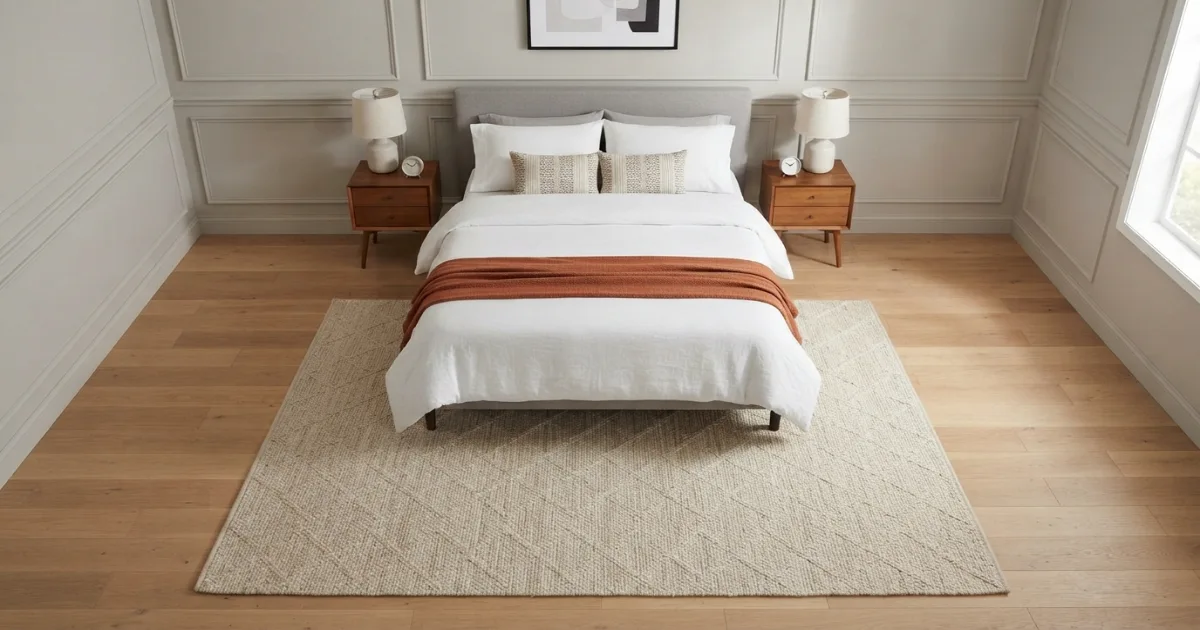
Lower two-thirds
The headboard area remains off the rug while the sides and foot receive useful coverage.
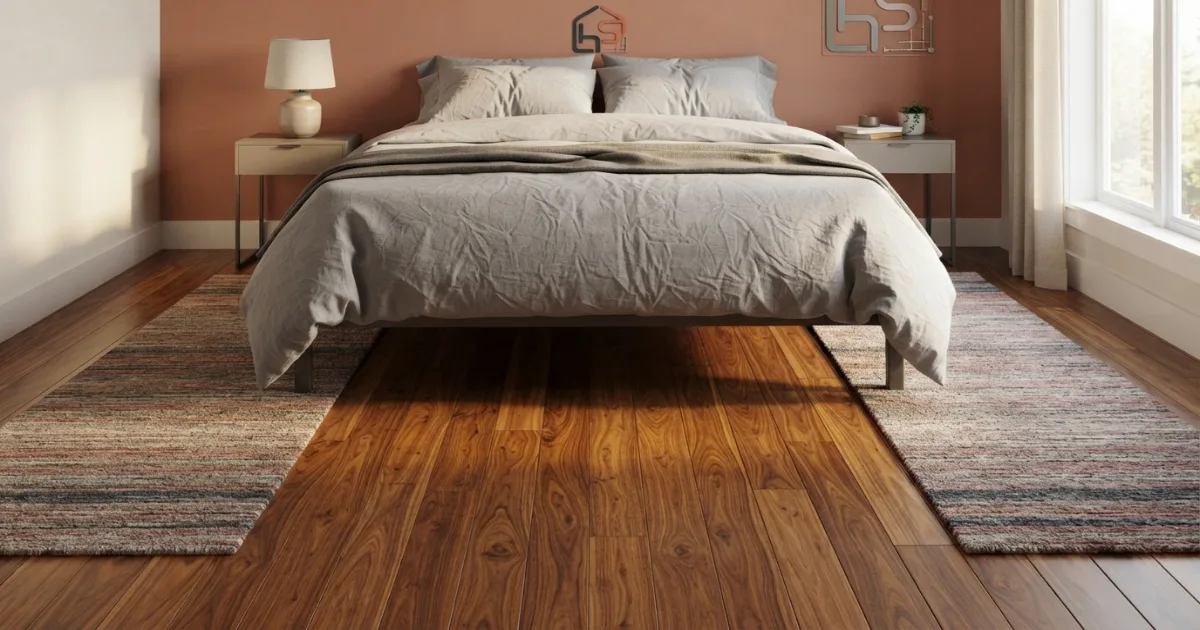
Two runners
A flexible choice for smaller rooms, tighter budgets or beds positioned close to a wall.

Full coverage
A larger rug supports the complete bed footprint and can include the nightstands when space allows.
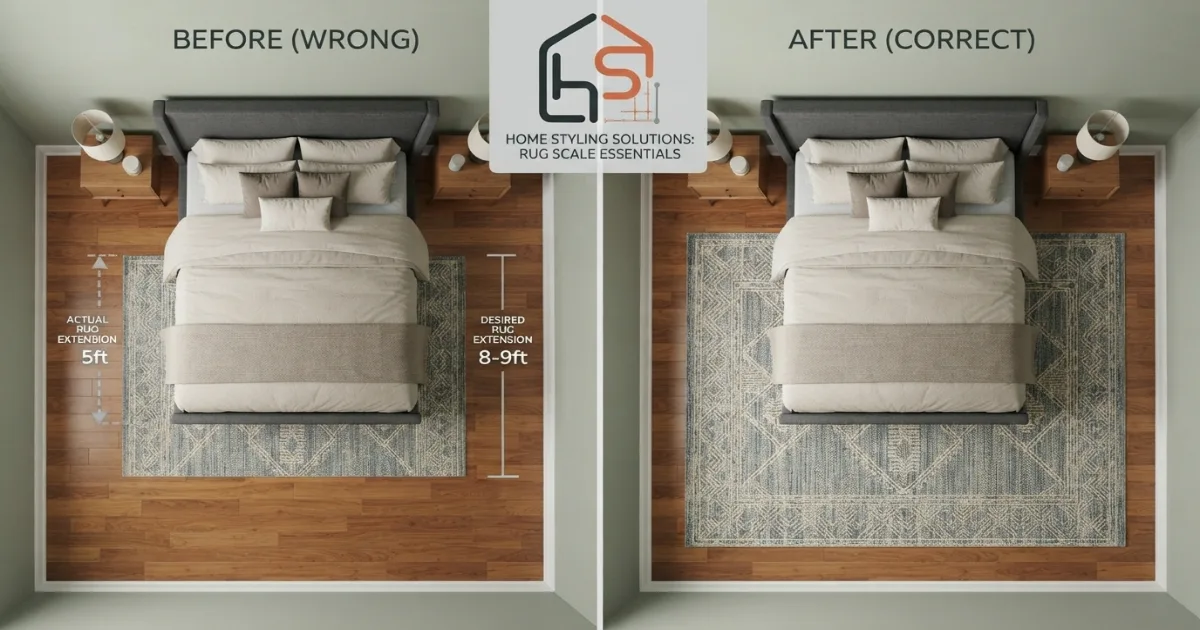
Too little coverage
A rug that barely appears beside the mattress does not provide a comfortable or balanced landing area.
How to choose the right rug size for a bedroom
A bedroom rug is sized around one fixed anchor: the bed. The goal is not simply to cover empty floor. The rug should create a comfortable landing beside the bed, visually connect the sleeping zone and still fit the room without blocking doors, vents or furniture.
Start with the bed dimensions, choose how far the rug should extend beneath it, and then confirm that the resulting standard size fits the actual room. This order matters because a rug can be proportionate to the bed but still be too wide for a narrow bedroom or too long for a door at the foot of the bed.
Quick answer
An 8 × 10 ft rug is a strong starting point for a queen bed in a lower two-thirds placement. A 9 × 12 ft rug commonly works for king and California king beds. Always verify the side border, foot extension and room clearance before ordering.
How the bedroom rug recommendations are calculated
The chart and estimator combine the standard mattress dimensions with common retail rug sizes. They calculate the visible side border from the rug width and estimate the rug extending beyond the foot based on the chosen placement. The entered room dimensions are then checked against the rug’s actual width and length.
Bed width
The rug must be wide enough to extend beyond both sides of the mattress or complete bed frame.
Placement depth
Lower two-thirds and full coverage use different portions of the bed length and therefore create different foot extensions.
Room clearance
The suggested rug is checked against the clear room width and length entered in the estimator.
Important limitation
The quick estimator cannot see your headboard depth, footboard, bench, dresser, doorway or nightstand arrangement. Confirm the outline with painter’s tape and use the Rug Size Calculator before purchasing.
Step 1: measure the bed and the clear floor
Confirm the mattress size first, but also measure the complete bed frame. Upholstered frames, sleigh beds and platform beds can be several inches wider or longer than the mattress. Using mattress dimensions alone may overstate the visible border once the rug is installed.
Next, measure the clear floor from wall to wall and note anything that reduces usable space. Include door swings, floor vents, wardrobes, dressers, benches and the walking route from the doorway to each side of the bed. The Bedroom Layout Planner can help you organize these clearances before you order a rug.
Step 2: choose a bedroom rug placement
Lower two-thirds under the bed
The rug begins below the headboard area and supports the lower section of the bed. This placement keeps the nightstands off the rug and directs more of the rug toward the sides and foot, where people step.
It is a practical balance between useful coverage and rug cost. The exact starting point under the bed can move slightly depending on the footboard and the amount of rug you want beyond the foot.
Two bedside runners
Two narrow rugs provide a soft landing without placing a large area rug beneath the bed. Runners work especially well when the room is narrow, one side of the bed is near a wall or a large rug would collide with other furniture.
Keep the runners aligned with the accessible section of the bed. They should not extend into a doorway or stop so high that your feet miss them when you stand up.
Full coverage
A full-coverage rug sits beneath the complete bed footprint and may also support the nightstands. This requires the largest rug and the most clear floor space. All furniture placed on the rug should sit fully on it rather than balancing with only two legs on the edge.
Bedroom rug size chart by bed size
Use the chart as a starting point, then confirm the exact dimensions against your bed frame and room. Sizes are written as rug width across the bed × rug length along the bed.
| Bed size | Lower two-thirds | Bedside runners | Full coverage |
|---|---|---|---|
| Twin — 38 × 75 in | 5 × 8 ft | 2 × 5 ft each | 6 × 9 ft |
| Full — 54 × 75 in | 6 × 9 ft | 2 × 6 ft each | 8 × 10 ft |
| Queen — 60 × 80 in | 8 × 10 ft | 2 × 6 ft each | 9 × 12 ft |
| King — 76 × 80 in | 9 × 12 ft | 2 × 8 ft each | 10 × 14 ft |
| California king — 72 × 84 in | 9 × 12 ft | 2 × 8 ft each | 10 × 14 ft |
Rug size for a queen bed
A queen mattress is 60 inches wide and 80 inches long. With an 8 × 10 ft rug placed across the bed, the rug is 96 inches wide. That leaves about 18 inches beside each side of the mattress before accounting for the bed frame.
The 10 ft rug length provides useful coverage beneath the lower part of the bed and beyond the foot. A 9 × 12 ft rug offers more generous coverage, but it should only be used when the room can preserve clear walking space and furniture access.
Rug size for a king bed
A standard king mattress is 76 inches wide and 80 inches long. A 9 × 12 ft rug is 108 inches wide, leaving approximately 16 inches beside each side of the mattress. A substantial bed frame will reduce that visible amount.
A 10 × 14 ft rug offers a wider border and fuller coverage, but the room must be large enough to hold a 10 ft wide and 14 ft long rug without crowding the walls, doorway or dresser.
Rug size for a California king bed
A California king is slightly narrower and longer than a standard king. A 9 × 12 ft rug remains a practical lower two-thirds starting point, while a 10 × 14 ft rug supports full coverage in a larger room.
Because the mattress is 84 inches long, check the foot extension carefully. A bench or footboard can reduce how much rug remains visible beyond the bed.
Rug sizes for twin and full beds
A 5 × 8 ft rug can support a twin bed in a lower two-thirds placement. A 6 × 9 ft rug offers fuller coverage or works beneath a full bed. In a guest room with limited floor space, a single runner on the accessible side may be more practical than forcing a large rug into the room.
When two twin beds share a room, do not automatically place one huge rug beneath both. Separate runners or a rug centered in the walkway can create a cleaner layout and make moving the beds easier.
How much rug should show around the bed?
Eighteen to 24 inches beside the mattress is a useful target when space allows, but it is not a universal rule. The complete bed frame, room width and placement choice all affect the final visible border.
In a narrow room, a smaller but balanced border can work. What matters is that the rug provides a useful landing area and does not create a squeezed pathway. At the foot, make sure the rug extends beyond the mattress or footboard far enough to remain visible and useful.
Nightstands, benches and dressers
In a lower two-thirds placement, nightstands usually remain off the rug. With full coverage, they may sit completely on it. Avoid placing only the front legs of a nightstand on the rug because the height difference can make the furniture unstable.
A bench at the foot of the bed should sit fully on or fully off the rug. Dressers usually remain off the bedroom rug unless the rug is large enough to support the complete dresser footprint without creating an awkward edge.
Small bedrooms and awkward layouts
When the charted rug does not fit, the solution is not to fold it, push it against a wall or let it block a doorway. Use two runners, one runner on the accessible side, or a smaller rug placed deliberately at the foot of the bed.
Rooms with beds pushed against a wall often need a different plan from centered-bed examples. The Small Room Design Guide can help with the broader layout, while the Bedroom Layout Planner supports furniture placement.
Rug shape, material and pile
Rectangular rugs work naturally with rectangular beds. Round and oval rugs are better treated as secondary accents near a reading chair, vanity or open corner unless the room has an unusual layout.
Bedroom rugs can use a softer pile than high-traffic entry or dining rugs, but very deep pile may interfere with benches, dressers and narrow furniture legs. Choose a material that matches your cleaning needs, household allergies, pets and floor type.
Use a suitable rug pad
A correctly sized pad helps reduce sliding, adds cushioning and protects the flooring. The pad should be slightly smaller than the rug so it remains hidden. Choose a product compatible with the specific floor finish, especially on hardwood, heated floors or carpet.
Common bedroom rug sizing mistakes
- Measuring only the mattress: a wide bed frame reduces the visible rug border.
- Ignoring the room dimensions: a bed-appropriate rug can still be too large for the bedroom.
- Leaving too little rug beside the bed: the rug should provide a practical landing area.
- Forcing furniture onto an edge: benches and nightstands should sit fully on or fully off the rug.
- Blocking doors or vents: verify the complete rug outline before ordering.
- Using one large rug when runners fit better: narrow and asymmetrical rooms often need a different solution.
Measure before you order
Mark the recommended dimensions on the floor with painter’s tape. Walk around the bed, open every door, pull out dresser drawers and confirm that each side of the bed has a comfortable route.
Check the retailer’s actual listed dimensions because a product sold as 8 × 10 ft may vary slightly. Also confirm whether fringe is included in the measurement and whether the rug can be returned after opening.
Get the room-specific result
Use the free Rug Size Calculator after measuring the bed frame and clear floor. It is the next step from this educational guide to a specific recommendation.
Rug size for bedroom FAQs
Quick answers for the most common bedroom rug size decisions.