Queen vs Full Bed: Size, Comfort & Room Fit
Six inches wider. Five inches longer. A different room decision.
The queen vs full bed choice is about the space you sleep in and the space you live around. Compare the dimensions, test your actual frames, then choose a size that works beyond the showroom.
By Rehana K · HomeStyle Calculator · Reviewed October 19, 2026

Queen vs Full bed: which should you choose?
Choose Queen for regular sharing or extra length; choose Full when one sleeper needs more usable room. A common US Full is 54 × 75 inches; Queen is 60 × 80 inches. Queen adds 6 inches of width and 5 inches of length. For two equal sharers, that is 30 inches each on Queen versus 27 inches on Full.
That extra sleeping surface can be worthwhile, but the actual bed frame may be several inches larger than the mattress. Measure your frame, walkways and storage before choosing.
Best starting point for a solo room
Consider Full for a teen bedroom, a single adult’s compact room or a guest space that doubles as an office. The smaller footprint can preserve a usable desk or a comfortable route to the wardrobe.
Best starting point for a couple
Consider Queen for two adults, frequent overnight guests or a taller solo sleeper. Its extra length is as relevant as its width, especially when the room can support a compact Queen frame.
Queen vs Full bed size chart: inches and centimeters
| Measurement | Full / Double | Queen |
|---|---|---|
| Common US mattress size | 54 × 75 in | 60 × 80 in |
| Metric equivalent | 137.2 × 190.5 cm | 152.4 × 203.2 cm |
| Length in feet and inches | 6 ft 3 in | 6 ft 8 in |
| Width for each of two equal sharers | 27 in / 68.6 cm | 30 in / 76.2 cm |
| Mattress surface area | 4,050 sq in / 28.13 sq ft | 4,800 sq in / 33.33 sq ft |
| Useful starting use | One sleeper; compact guest room | Two sleepers; extra length |
| Frame dimensions | Model-specific; larger than mattress | Model-specific; larger than mattress |
The queen vs full bed difference is not a uniform border around the mattress. Queen adds width and length, so it can affect both bedside access and the route beyond the foot. If centered in the same room, a mattress that is 6 inches wider reduces each side gap by 3 inches. A mattress that is 5 inches longer reduces the foot gap by 5 inches when the head position stays fixed.
These are US dimensions. A UK Double is commonly 135 × 190 cm, and a size name from another country may describe something different. For international comparisons, use our Bed Size Chart for US, UK and EU mattresses before matching a mattress to an imported frame.
Queen vs Full bed for couples: what 3 inches each changes
A Full can sleep two adults, but its name should not be read as a comfort guarantee. At 54 inches wide, it gives each person 27 inches when divided evenly. Queen raises that to 30 inches. It is a modest personal-width increase that can matter when people turn, change position or prefer space between them.
For nightly sharing, start with Queen if the room supports it. For occasional guests, Full may be an acceptable compromise. Body size, sleep position and personal preference matter more than a blanket rule that a particular label is “enough for two.” Try the size together when possible, using the position you actually sleep in.
More width does not decide mattress comfort
The queen vs full bed decision sets the available surface. Mattress construction, firmness and the foundation then affect how that surface feels. A larger mattress does not automatically reduce motion transfer or provide better support. Compare the same model in both sizes when isolating the benefit of the extra space.
For taller sleepers, length can be the deciding factor
A 75-inch Full is 6 feet 3 inches long, but matching mattress length to someone’s height leaves no allowance for a pillow, movement or preferred sleeping position. Queen adds 5 inches. Full XL may offer a narrower 80-inch-long alternative for one person, though frame and bedding selection should be checked before committing.
If Queen still feels narrow for two, our King vs Queen comparison shows the next step up and its room requirements. Do not jump to a wider size without checking the walkways it would consume.
Queen vs Full bed in a 10×10 room and larger bedrooms
Use the room’s clear interior dimensions, not a real-estate description or a measurement that includes an unusable recess. The examples below use an illustrative 58 × 79-inch Full frame and 64 × 84-inch Queen frame. These are planning examples, not universal frame standards.
| Clear room | Full: side / foot gap | Queen: side / foot gap | What to check |
|---|---|---|---|
| 9 × 10 ft | 25 in / 41 in | 22 in / 36 in | Queen side access is tight |
| 10 × 10 ft | 31 in / 41 in | 28 in / 36 in | Full meets a 30-inch side target; Queen misses it |
| 10 × 11 ft | 31 in / 53 in | 28 in / 48 in | Extra length helps foot furniture, not side gaps |
| 11 × 12 ft | 37 in / 65 in | 34 in / 60 in | More flexibility for both sizes |
| 12 × 12 ft | 43 in / 65 in | 40 in / 60 in | Test bedside furniture and doors |
Assumptions: first room dimension runs across the bed; head gap is zero; no dresser or other furniture is included. Side gaps are equal. A 10 × 11 room becomes a different calculation when the bed changes walls.
The small-room trade-off
In the 10×10 example, Full preserves 3 inches more on each side and 5 inches more at the foot. Those small differences can determine whether a drawer opens or a walkway feels usable.
Add an 18-inch-deep dresser opposite the Queen and its 36-inch foot gap becomes 18 inches with the drawers closed. Open drawers need additional space. Moving storage under the bed may help, but only if the mechanism has room to operate.
A Queen can physically fit while failing the circulation target you selected. That is why this guide separates “inside the room” from “works with your layout.”
Choose a clearance target that matches the route
As general planning allowances, 24 inches can be a tight secondary gap, 30 inches is a useful everyday walking target, and 36 inches provides more room. These are design allowances, not building-code or accessibility certification. Allow separately for mobility needs, doors, wardrobe access and drawers.
Queen vs Full bed room-fit checker
Enter your room dimensions and each frame’s outside footprint. This queen vs full bed checker reports the clear space remaining and whether each option meets your chosen targets. Changing units converts the inputs; it does not reinterpret an inch value as centimeters.
Full frame
Queen frame
What this checks
A centered bed with equal side gaps, one head gap and furniture opposite the foot. Change the example frame sizes to the actual products.
It does not draw doors, test delivery access, or subtract nightstands from the side gaps. A fit result needs a final furniture and door check.
The simple fit formulas
Required room width = frame width + twice the side clearance.
Required room length = head gap + frame length + foot clearance + opposite furniture depth.
For the default Full example, 58 + 30 + 30 = 118 inches of room width. The Queen example needs 64 + 30 + 30 = 124 inches. That is why one meets the selected target in a 120-inch-wide room and the other does not.
For wider bedroom planning, open the Bed Size Calculator after comparing these two frames. Tape the footprint on the floor and open every nearby door before ordering.
Who should buy Full, and who should upgrade to Queen?
Choose Full when the room has several jobs
A solo sleeper may value a workstation, reading chair or clear exercise area more than a wider mattress. Full can free a useful strip of floor along the side and a little extra room at the foot.
For a teen or student room, consider the next few years as well as the current layout. A taller sleeper may benefit more from added length than added width. Measure first, then compare Full XL and Queen if a standard Full feels short.
Choose Queen for a room centered on sleeping
If two adults share nightly, or a guest room regularly hosts couples, Queen is usually the stronger starting point. It also keeps the familiar 80-inch length when a solo sleeper wants more freedom to change position.
For a queen vs full bed decision in a rental, include your likely next move. A mattress that works today still needs a compatible frame and a viable delivery path later. Check the assembled frame, largest rigid component and whether the mattress can be maneuvered according to the manufacturer’s instructions.
In a guest office, draw both modes: desk chair pulled back for work and bed ready for overnight visitors. A beautiful photograph may hide these overlaps. The better choice is the one that supports the room’s real daily use.
Amazon picks for your Queen vs Full bed shortlist
Affiliate disclosure: As an Amazon Associate I earn from qualifying purchases.
These are researched options for two different needs: a Full mattress and a Queen storage frame. They are not a matched set. Selection is based on listed dimensions and useful features, not hands-on testing. Product pages were checked October 19, 2026; confirm the selected size, seller, availability and return terms before ordering.
Zinus 12-inch Green Tea Full mattress
Listed size: 54 W × 75 L × 12 inches thick. This memory-foam option is worth comparing when you have chosen Full and want a straightforward mattress-in-a-box format.
- Why consider it: a clearly specified Full footprint makes frame and sheet matching easier.
- Trade-off: the 75-inch length and limited shared width remain the same regardless of mattress thickness.
- Check before buying: foundation requirements, delivery setup and the exact variant’s return conditions.
Allewie Queen lift-up storage frame
Listed outer size: 63 W × 84.25 L × 44.5 inches high. This upholstered frame has a hydraulic lift mechanism for access beneath the mattress.
- Why consider it: under-bed storage can reduce the need for another floor-standing storage piece.
- Trade-off: the lifting mechanism still needs operating space and a compatible mattress.
- Check before buying: assembly, mattress requirements and access around the raised platform.
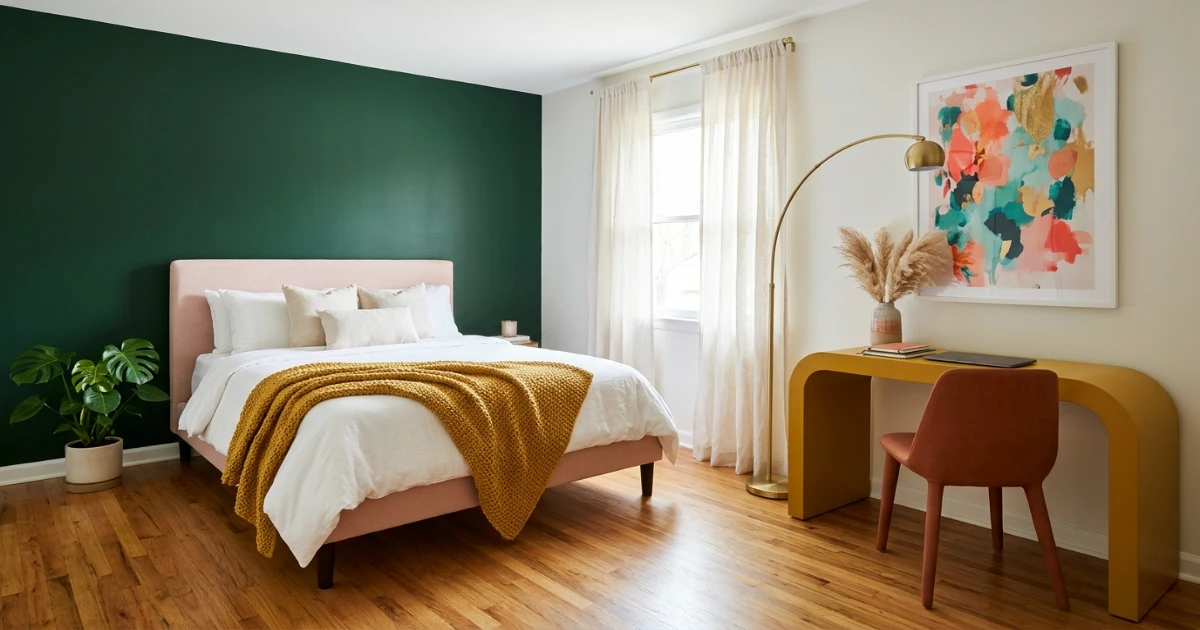
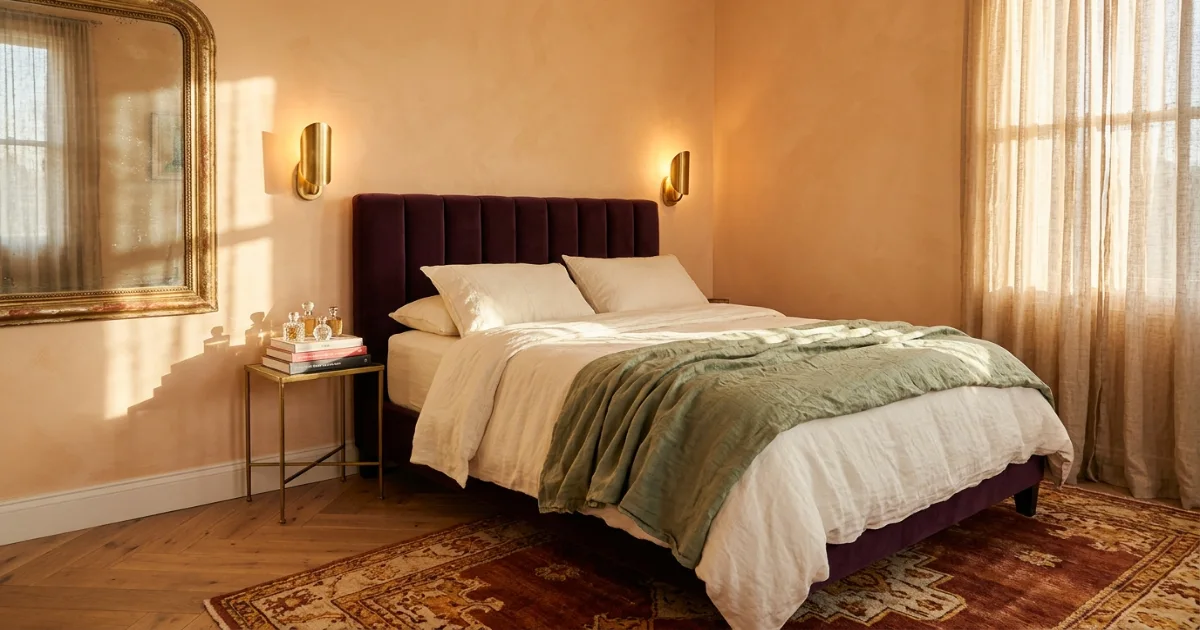
Editorial room images on this page illustrate layout ideas; they do not depict or identify either Amazon product. Product popularity, prices and ratings change, so this shortlist does not label either item a current bestseller.
Queen vs Full bed cost: compare the whole setup
Full often costs less than Queen within the same mattress range, but promotions can change the difference. Compare current prices for the same construction, thickness and seller rather than treating the cheapest listing in each size as an equivalent product.
The queen vs full bed upgrade may also require a different frame, fitted sheets, protector and topper. If you already own good Full bedding and a fixed Full frame, the mattress price alone understates the cost of moving to Queen. A duvet may transfer; a fitted sheet usually will not.
Use four totals: mattress, support or frame, fitted bedding, and delivery or assembly. Then decide what the extra width and length are worth in your room. A more affordable size that fits comfortably can be a better purchase than a discounted larger bed that forces replacement furniture.
Do not compare mattress height with mattress size
A 12-inch Full is not wider or longer than a thinner Full simply because it is thicker. Thickness changes overall bed height and sheet-pocket requirements. Add frame support height and mattress thickness to estimate the finished sleeping height before buying bedside tables.
Frames, sheets and Full/Queen bedding labels
Fitted sheets need the right rectangle and depth
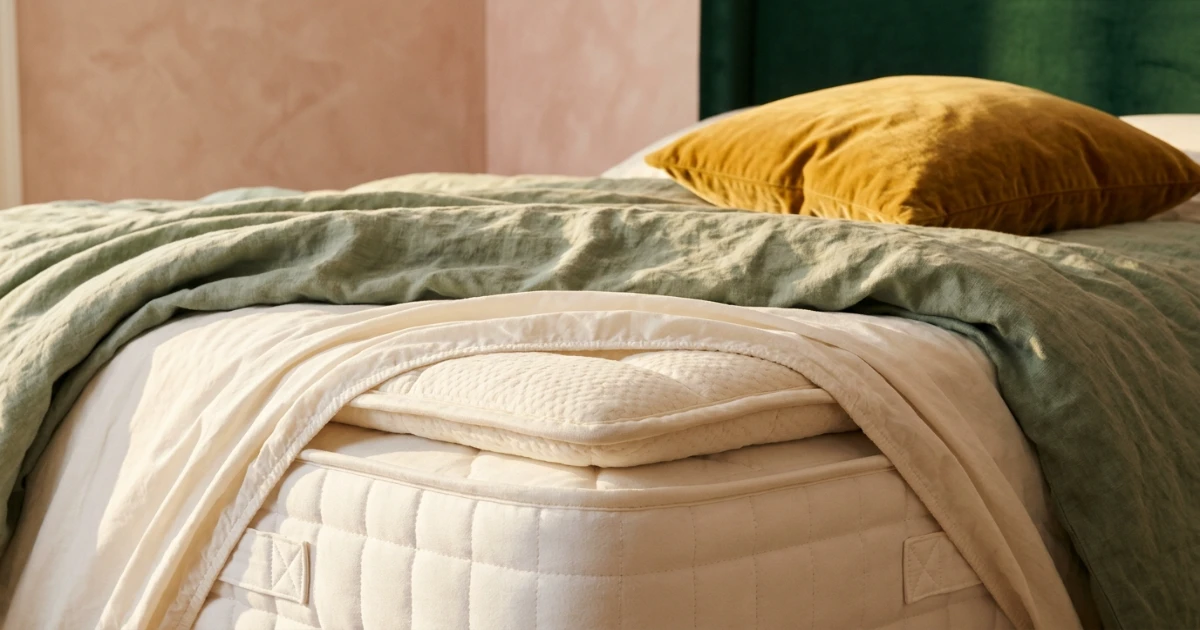
A Queen fitted sheet is cut for a wider, longer mattress and can bunch on Full. Full sheets generally cannot cover a Queen correctly. Match width and length first, then the combined mattress-plus-topper depth. Do not assume “deep pocket” means a particular measurement across every brand.
A Full/Queen comforter is a different kind of label
Comforters and duvets are often sold in a shared Full/Queen category. That label can be reasonable because a loose cover can have different overhangs. Check its actual width and length: the same comforter hangs farther down a Full’s sides than a Queen’s. Use our Bedding Size Calculator to work through coverage.
Full/Queen headboard does not mean adjustable support
A headboard may have mounting slots for both widths while the platform beneath it is fixed. Confirm the complete frame’s supported mattress size and support requirements. Do not let a Queen mattress overhang a Full platform unless the manufacturer explicitly permits that configuration.
This queen vs full bed check is especially useful when combining secondhand furniture with a new mattress: take measurements from the usable internal support area as well as the external frame. The first tells you whether the mattress fits; the second tells you whether the room works.
Measure before you order
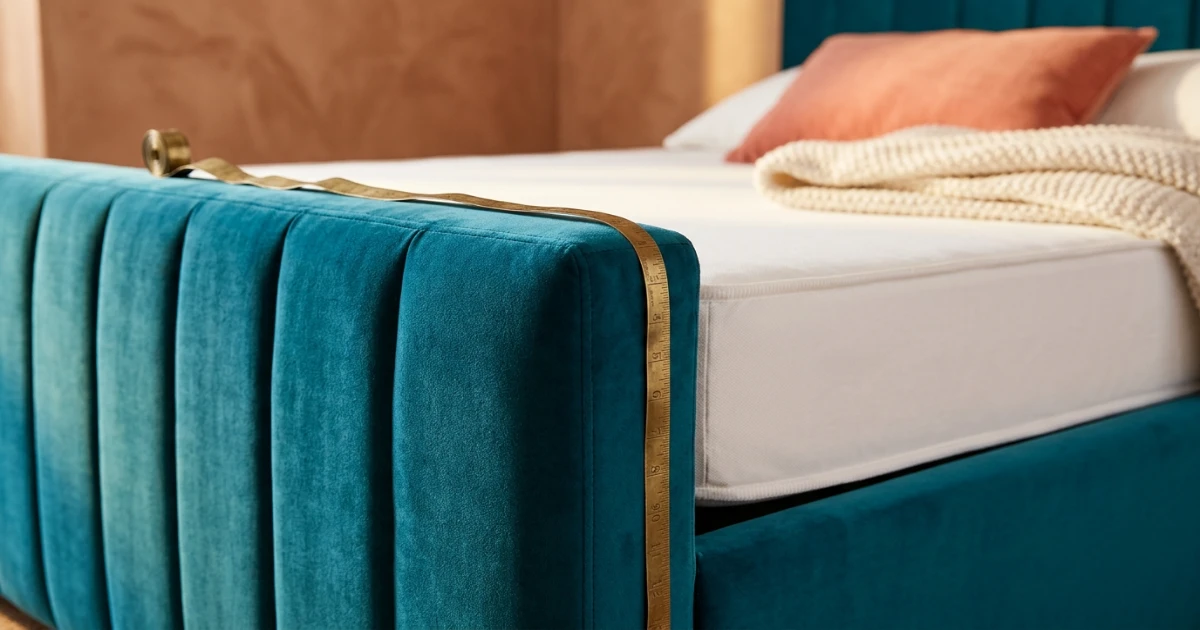
- Measure the clear room. Record width, length and any protrusions, including radiators, columns and built-in storage.
- Record both outside frame sizes. Include projecting headboard wings and footboards, not just the mattress rectangle.
- Set usable paths. Mark where you enter, dress, reach the closet and change the sheets. Test each side separately if the bed will be off-center.
- Open the furniture. Trace drawer and door movement; check a storage bed with its mechanism raised or extended.
- Check the delivery route. Measure entrances, turns and stairs against package sizes and the largest rigid pieces.
- Confirm the full order. Match mattress, frame, protector and fitted-sheet sizes before checkout.
Queen vs Full bed FAQs
What is the difference between a Queen and Full bed?
A common US Full mattress is 54 × 75 inches, while Queen is 60 × 80 inches. Queen adds 6 inches of width and 5 inches of length. Some brands list Full at 53 inches wide, so compare the exact product specifications.
Is a Full bed the same as a Double?
In US mattress sizing, Full and Double generally describe the same size category, commonly 54 × 75 inches. Regional naming differs; a UK Double is commonly 135 × 190 cm. Check dimensions rather than relying on the label alone.
Can two adults sleep on a Full bed?
Yes, but a 54-inch Full gives two equal sharers only 27 inches of width each. A Queen gives 30 inches each and 5 inches more length. Full can work for occasional sharing; Queen is usually the more practical starting point for two adults if the room allows it.
Will a Queen bed fit in a 10 × 10 room?
A compact Queen frame can fit, but the layout may be tight. An example 64 × 84-inch frame in a clear 120 × 120-inch room leaves 28 inches on each side and 36 inches at the foot with no head gap or opposite furniture. Check doors, wardrobes and drawers separately.
How much bigger is Queen than Full?
Compared with a 54 × 75-inch Full, a 60 × 80-inch Queen provides 750 extra square inches, or about 18.5% more mattress surface. The difference is 6 inches in width and 5 inches in length, not 6 inches per sleeper.
Can Queen sheets fit a Full mattress?
A Queen fitted sheet is sized for a wider and longer mattress and usually fits loosely on Full. Use the correct fitted-sheet dimensions and pocket depth. A comforter sold as Full/Queen may suit either size, depending on its actual dimensions and the overhang you want.
Can I put a Queen mattress on a Full frame?
Only if the manufacturer explicitly says the frame adjusts to Queen and provides the required support. A fixed Full frame is too small for a standard Queen mattress. Do not assume a Full/Queen headboard makes the platform adjustable.
Is Full XL the same as Queen?
No. Full XL is commonly around 54 × 80 inches, with some brands using 53 inches of width. Queen is 60 × 80 inches. Full XL can provide Queen-length sleeping space for one person, but compatible frames and bedding need checking.
Is Queen always better than Full?
No. Queen favors extra sleeping space and regular sharing. Full can be a better fit for one sleeper in a room that also needs a desk, wardrobe access or open floor space. Compare the actual frame footprints and the way the room will be used.
Which measurements should I enter in the room-fit checker?
Enter clear room width and length, then each bed frame’s outside width and length. Add your desired side and foot clearances, any headboard gap and the depth of furniture opposite the foot. The checker assumes a centered bed and does not model door swings or side furniture.
How this comparison was prepared
Mattress dimensions were checked against Casper’s mattress size guide and the linked product specifications. Casper’s 53-inch Full listing is why this page explicitly distinguishes brand measurements from the common 54-inch comparison.
Area, per-person width and room gaps are calculated from the dimensions stated beside each example. They are planning calculations, not measured product tests. Frame dimensions and mechanisms vary; verify the exact model before purchase. Sources and product listings were reviewed on October 19, 2026.