Standard rug sizes chart: feet, inches and centimeters.
Compare common US nominal rug sizes with exact metric conversions, nearest UK and EU retail categories, floor area and the rooms each size commonly supports.
Written by Rehana K · Published and updated July 14, 2026.
The most common rectangular rug categories run from 3×5 to 10×14 feet.
Standard rug sizes usually refer to nominal retail categories, not one internationally regulated set of exact dimensions.
US stores commonly describe rugs in feet, including 3×5, 4×6, 5×7, 6×9, 8×10, 9×12 and 10×14. UK and EU stores commonly list metric products such as 120×180, 160×230, 170×240, 200×300, 240×300 and 300×400 cm. Exact conversions and real retail categories are not always identical, so always check the finished product dimensions.
How standard rug sizes grow
This standard rug sizes ladder uses one visual scale. Area increases faster than the numbers may suggest.
15 sq ft · entry, bedside or chair zone.
35 sq ft · coffee table, twin bed or office.
54 sq ft · full bed or compact seating.
80 sq ft · queen bed or living room.
108 sq ft · king bed or large seating.
Convert standard rug sizes across US, UK and EU listings
Use the standard rug sizes converter and select a US nominal category to see inches, exact metric conversion, nearest common metric retail categories, area and typical use.
Standard rug sizes chart: US feet, UK cm and EU cm
In this standard rug sizes chart, “Exact metric” is the mathematical conversion. UK and EU columns show nearby common retail categories—not guaranteed one-to-one equivalents.
| US nominal | Inches | Exact metric | Common UK listings | Common EU listings | Area | Typical use |
|---|---|---|---|---|---|---|
| 2×3 ft | 24×36 in | 61×91 cm | 60×90 cm | 60×90 cm | 6 sq ft | Doormat / bedside |
| 3×5 ft | 36×60 in | 91×152 cm | 80×150 or 90×150 cm | 80×150 or 90×150 cm | 15 sq ft | Entry / accent |
| 4×6 ft | 48×72 in | 122×183 cm | 120×180 cm | 120×180 cm | 24 sq ft | Small accent zone |
| 5×7 ft | 60×84 in | 152×213 cm | 150×210 or 160×230 cm | 160×230 cm | 35 sq ft | Coffee table / twin bed |
| 5×8 ft | 60×96 in | 152×244 cm | 160×230 or 170×240 cm | 160×230 or 170×240 cm | 40 sq ft | Compact room |
| 6×9 ft | 72×108 in | 183×274 cm | 180×270 or 200×300 cm | 180×270 or 200×300 cm | 54 sq ft | Small room / full bed |
| 8×10 ft | 96×120 in | 244×305 cm | 240×300 or 250×300 cm | 240×300 or 250×300 cm | 80 sq ft | Living room / queen bed |
| 9×12 ft | 108×144 in | 274×366 cm | 280×370 or 300×400 cm | 280×370 or 300×400 cm | 108 sq ft | Large room / king bed |
| 10×14 ft | 120×168 in | 305×427 cm | 300×400 or custom | 300×400 or custom | 140 sq ft | Large sectional / dining |
| 12×15 ft | 144×180 in | 366×457 cm | 350×450 or 400×500 cm | 350×450 or 400×500 cm | 180 sq ft | Oversized room |
Standard rug sizes: the complete US, UK and EU guide
Standard rug sizes help shoppers compare products, but the phrase “standard” needs context. There is no single worldwide rule requiring every 8×10, 160×230 or 200×300 rug to finish at exactly the same measurement. Retail categories make shopping easier, while manufacturers still list their own finished dimensions.
In the United States, standard rug sizes are usually described in feet and inches. In the United Kingdom and European Union, rugs are normally sold in centimeters or meters. The systems overlap, but they do not always map perfectly. A US 8×10 converts mathematically to 243.84×304.8 cm, while a UK or EU store may sell a nearby 240×300, 250×300 or product-specific size.
This standard rug sizes chart separates exact conversion from common retail equivalents. Use it to understand the category, then verify the actual width and length on the product page. Enter the final dimensions in the Rug Size Calculator before buying.
The most important rule
Never treat a rounded metric category as an exact conversion. Compare finished product dimensions, furniture clearance and the taped room outline.
What “standard rug sizes” really means
Standard rug sizes are common commercial categories. They help retailers group products and help customers recognize familiar room scales. The label may describe a target size rather than the exact finished result.
Machine-made rugs can use rounded categories because of manufacturing and finishing tolerances. Handmade rugs can vary because weaving, washing, stretching and trimming affect the final dimensions.
For that reason, the standard rug sizes chart is a planning tool—not a substitute for the retailer’s specification. A product labeled 5×7 may measure 5 feet 3 inches by 7 feet 7 inches, while another may be closer to the nominal category.
Current IKEA US rug listings, for example, include dimensions such as 5 feet 3 inches by 7 feet 7 inches and 7 feet 10 inches by 10 feet rather than only exact nominal labels. IKEA UK listings include metric categories such as 133×195, 160×230 and 170×240 cm. These are market examples of why exact US conversions and actual UK/EU products do not always match. See IKEA US rug dimensions and IKEA UK metric rug dimensions.
How feet and inches convert to centimeters
The exact relationship is 1 inch equals 2.54 centimeters. To convert feet to centimeters, multiply the feet value by 12, then multiply by 2.54.
For an 8×10 rug, 8 feet equals 96 inches and 10 feet equals 120 inches. The exact conversion is therefore 243.84 by 304.8 cm.
The National Institute of Standards and Technology guidance on SI conversions also notes that converted values should not imply more precision than the original measurement. That is why a practical chart may show 244×305 cm rather than unnecessary decimal places.
In standard rug sizes shopping, the exact conversion explains scale. The product’s actual metric dimensions determine fit.
Common US standard rug sizes
US standard rug sizes are normally listed in feet. Small accent rugs begin around 2×3 or 3×5. Medium categories include 5×7, 5×8 and 6×9. Large room anchors include 8×10 and 9×12. Oversized categories include 10×14 and 12×15.
The category often suggests a room role. A 5×7 works beneath a coffee table or beside a bed. A 6×9 can support a compact furniture group. An 8×10 commonly anchors a medium living room or queen bed. A 9×12 can support a king bed or large seating group.
US standard rug sizes are nominal, so the final product may differ by several inches. Always compare actual width and length before using a tight furniture or doorway clearance.
Common UK rug sizes
UK retailers usually list rugs in centimeters. Common categories include approximately 80×150, 120×180, 133×195, 160×230, 170×240, 200×300 and larger custom or premium dimensions.
These categories are not simply US sizes converted and rounded. Some are created around metric manufacturing standards and product collections. A 170×240 cm rug is about 5 feet 7 inches by 7 feet 10 inches, which falls between familiar US nominal categories.
When using a standard rug sizes chart for UK shopping, use the exact centimeter listing as the source of truth. Convert it to feet only to understand visual scale.
Common EU rug sizes
EU rug listings are also metric, with common categories such as 80×150, 120×170 or 120×180, 160×230, 200×290 or 200×300, 240×300 and 300×400 cm.
Country, retailer and manufacturer influence the available categories. A German, Dutch, French or Scandinavian retailer may use slightly different stock sizes.
Standard rug sizes in the EU should therefore be treated as common market groups rather than a legally fixed size system.
Nearest US, UK and EU equivalents
US 5×7
152×213 cm exact Nearest common metric products: around 150×210 or 160×230 cm.US 8×10
244×305 cm exact Nearest common metric products: around 240×300 or 250×300 cm.US 9×12
274×366 cm exact Nearest common metric products: around 280×370 or 300×400 cm.The nearest equivalent is a shopping reference, not a claim that the rugs are identical. A 300×400 cm rug covers substantially more floor than the exact 9×12 conversion.
Standard rug sizes for living rooms
For standard rug sizes in living rooms, a small room or reading area may use 4×6, 5×7 or 6×9. A medium sofa-and-chair group commonly uses 8×10. A large all-legs-on furniture layout may require 9×12 or 10×14.
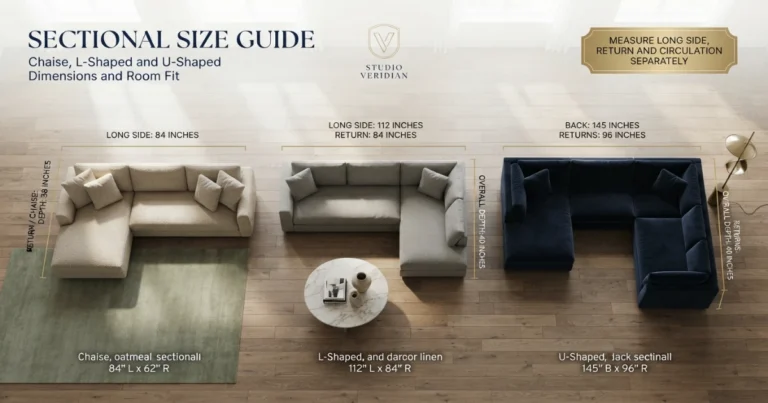
Choose the rug from the outer furniture footprint rather than the room label. An 8×10 can be large in a narrow room and small beneath a broad sectional.
Use the Living Room Rug Size Guide and the standard rug sizes chart together: the guide explains placement, while the chart converts the selected category.
Standard rug sizes for dining rooms
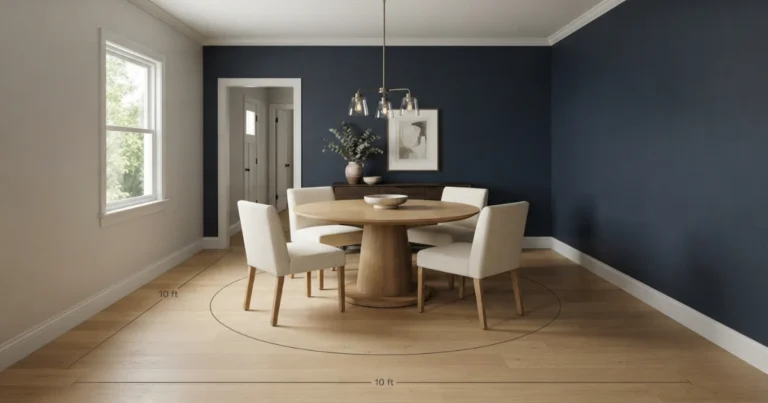
Standard rug sizes for dining rooms must account for chair clearance. Add about 24–30 inches beyond every tabletop edge so rear chair legs remain on the rug when diners pull back.
A compact four-seat table may fit 6×9 or 8×10. A six-seat table commonly needs 8×10 or 9×12. An eight-seat or extension table may need 9×12, 10×14 or a custom size.
Use the Dining Room Rug Size Guide, 6-Chair Table Rug Guide and 8-Chair Table Rug Guide for detailed measurements.
Standard rug sizes for bedrooms
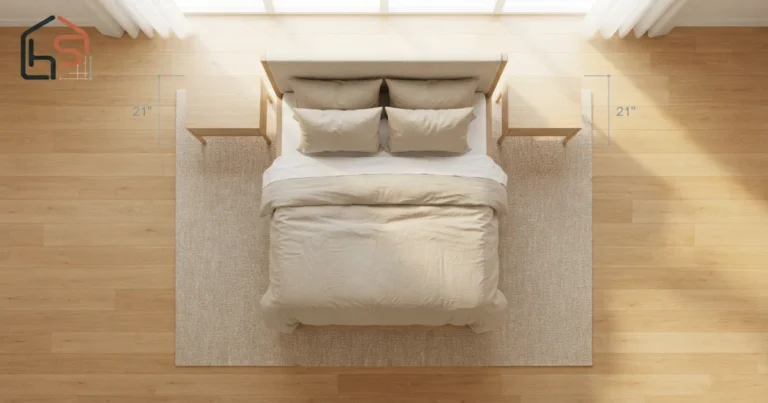
Standard rug sizes for twin beds commonly include 4×6, 5×7 or 6×9 depending on placement. Full beds often use 6×9 or 8×10. Queen beds commonly use 8×10, while king beds commonly use 9×12.
The rug can sit beneath the full bed, beneath the lower two-thirds or beside the bed. Placement changes the required size.
See the Twin Bed Rug Guide, Full Bed Rug Guide, Queen Bed Rug Guide and King Bed Rug Guide.
Standard runner rug sizes
| US runner | Exact metric | Common metric category | Typical use |
|---|---|---|---|
| 2×6 ft | 61×183 cm | 60×180 cm | Short hallway / kitchen |
| 2.5×8 ft | 76×244 cm | 80×240 cm | Hallway / beside island |
| 3×10 ft | 91×305 cm | 80×300 or 90×300 cm | Long hallway |
| 3×12 ft | 91×366 cm | 80×350 or 90×360 cm | Long corridor |
Runner widths and lengths vary more than the familiar rectangular categories. Measure door swing, hallway width and the desired exposed floor on both sides.
Standard round rug sizes
| US diameter | Exact metric | Common metric category | Typical use |
|---|---|---|---|
| 4 ft round | 122 cm | 120 cm | Accent / bistro table |
| 6 ft round | 183 cm | 180 cm | Four-seat round table |
| 8 ft round | 244 cm | 240 or 250 cm | Living area / dining |
| 10 ft round | 305 cm | 300 cm | Large round dining table |
| 12 ft round | 366 cm | 350 or 360 cm | Oversized dining zone |
Standard square rug sizes
Standard rug sizes for square rugs commonly include 4×4, 6×6, 8×8 and 10×10 feet, with approximate metric categories of 120×120, 180×180, 240×240 and 300×300 cm.
Square rugs work well beneath square tables, centered conversation groups and symmetrical rooms. Furniture clearance still determines the final size.
Floor area comparison
| Rug size | Area | Compared with previous size |
|---|---|---|
| 3×5 | 15 sq ft | Starting accent category |
| 5×7 | 35 sq ft | 133% more area than 3×5 |
| 6×9 | 54 sq ft | 54% more area than 5×7 |
| 8×10 | 80 sq ft | 48% more area than 6×9 |
| 9×12 | 108 sq ft | 35% more area than 8×10 |
| 10×14 | 140 sq ft | 30% more area than 9×12 |
Comparing only width and length can hide how quickly area grows. Price, weight, rug-pad cost and cleaning requirements often rise with area.
Nominal size vs actual finished size
The standard rug sizes chart uses nominal categories. Before buying from any standard rug sizes category, look for the actual product width and length in the specifications.
A retailer may round dimensions for navigation while displaying the exact size on the product page. Fringe may or may not be included. Handmade rugs may have accepted variation.
Use the actual measurement for the painter’s-tape outline. That is the dimension that must work with furniture, doors and circulation.
How much precision should a conversion chart use?
Exact mathematical conversions can produce decimals such as 243.84 cm. Those decimals are useful when verifying the calculation, but a nominal 8-foot dimension is not measured to hundredths of a centimeter.
NIST advises that conversions should not imply greater precision than the original value. In practical standard rug sizes tables, rounded whole centimeters are usually easier to read while the product specification remains the final authority.
Rug care across all sizes
Across all standard rug sizes, the larger the rug, the more difficult it may be to lift, rotate, wash or return. The Carpet and Rug Institute cleaning and maintenance guidance includes general care information for area rugs.
Always follow the manufacturer’s fiber and construction instructions. A “washable” label does not guarantee that a large rug fits a household machine.
Standard rug sizes shopping checklist
- Measure the furniture footprint and required chair or walking clearance.
- Choose the smallest standard category that fully performs the intended job.
- Convert units for comparison, but use the product’s actual finished dimensions.
- Do not assume UK or EU metric listings are exact US-size equivalents.
- Mark the actual rug dimensions with painter’s tape.
- Open doors, drawers and cabinets while the outline remains on the floor.
- Pull dining chairs back and check every rear-leg position.
- Include the rug pad in cost, size and thickness planning.
- Review return shipping and package dimensions before ordering a large rug.
- Use the Rug Size Calculator when the furniture footprint falls between categories.
Standard rug sizes by room and furniture layout
| Room or layout | Common US category | Nearby UK/EU metric category | Placement note |
|---|---|---|---|
| Entry or bedside accent | 2×3 or 3×5 ft | 60×90 or 80×150 cm | Keep doors and the main walking path clear. |
| Reading nook or compact office | 4×6 or 5×7 ft | 120×180 or 160×230 cm | Support the chair and small table rather than the whole room. |
| Small living room | 5×7 or 6×9 ft | 160×230 or 180×270 cm | Use the larger option when front furniture legs should reach the rug. |
| Medium living room | 8×10 ft | 240×300 or 250×300 cm | Common for a sofa, two chairs and a coffee table. |
| Large living room | 9×12 or 10×14 ft | 280×370, 300×400 or larger | Useful for all-legs-on layouts and broad sectionals. |
| Four-seat dining table | 6×9 or 8×10 ft | 180×270, 200×300 or 240×300 cm | Confirm 24–30 inches of chair clearance. |
| Six-seat dining table | 8×10 or 9×12 ft | 240×300, 250×300 or 300×400 cm | Table length and end-chair movement usually decide. |
| Eight-seat dining table | 9×12 or 10×14 ft | 280×370, 300×400 or custom | Measure with extension leaves installed when used regularly. |
| Queen bed | 8×10 ft | 240×300 or 250×300 cm | Provides balanced side and foot coverage. |
| King bed | 9×12 ft | 280×370 or 300×400 cm | Works best in a larger room with clear wall and dresser space. |
This room matrix is a starting point. Furniture depth, table extension leaves, bed-frame width and the desired floor border can move the recommendation up or down. Standard rug sizes should follow the real furniture footprint rather than a room label alone.
How to shop standard rug sizes across regions
When shopping a US retailer, start with the familiar feet-and-inch category, then open the product specifications to check the finished measurement. A rug grouped under “8×10” may be slightly smaller or use a nearby manufactured dimension.
When shopping in the UK, use centimeters as the primary measurement. A product listed as 170×240 cm should be planned as 170×240 cm, not automatically renamed 5×8 or 6×9. Converting it to feet can help with visualization, but the metric listing controls room fit.
When shopping in the EU, expect common metric categories to vary by retailer and country. Products around 160×230, 200×290, 200×300 and 240×300 cm may all occupy similar browsing groups while producing different furniture clearances.
For cross-border orders, check whether the seller lists dimensions in centimeters, inches or both. Do not confuse the punctuation used for feet and inches with decimal measurements. Also confirm whether fringe is included and whether the retailer permits a small manufacturing tolerance.
The safest process is consistent across all regions: measure the furniture zone, convert only for understanding, tape the actual listed dimensions and buy according to the finished product specification.
What to do when your room falls between standard rug sizes
Furniture footprints do not always match the common chart. A seating group may be too wide for 6×9 but leave excessive floor around 8×10. A dining table may need more length without needing a much wider rug.
First, check whether another retail category exists, such as 7×9, 7×10, 8×11, 200×290 or 200×300 cm. These intermediate sizes are not available in every collection, but they can solve a proportion problem without requiring a fully custom rug.
Second, consider changing placement rather than automatically sizing up. A front-legs-on living-room layout needs less rug than an all-legs-on layout. A bedroom rug placed beneath the lower two-thirds of the bed needs less length than one extending beneath the nightstands.
Third, consider a custom or cut-to-size rug when the room has unusual architecture, a very long table or a sectional that standard rug sizes cannot support. Custom products should still preserve door swing, walking routes and maintenance access.
Do not round down when the smaller size causes chair legs to catch or leaves major furniture pieces disconnected. Function should decide before price or category familiarity.
How to print or save the chart for measuring
Save the chart as a planning reference, but write the exact dimensions of the shortlisted product beside the nominal category. A printed standard rug sizes chart is most useful when paired with the room width, room length and furniture footprint.
For painter’s-tape testing, convert feet to inches before measuring. An 8×10 outline is 96×120 inches, while a 9×12 outline is 108×144 inches. For metric products, measure the listed centimeters directly to avoid rounding twice.
Photograph the taped outline from the main doorway and from the primary seated position. The two views reveal whether the rug feels proportionate and whether furniture placement looks connected.
Common standard rug sizes chart mistakes
- Calling a rounded metric size an exact equivalent: 240×300 cm is not mathematically identical to 8×10 ft.
- Ignoring actual product dimensions: nominal labels can hide several inches of difference.
- Choosing by room name only: furniture footprint matters more than “living room” or “bedroom.”
- Rounding down: smaller rugs can lose dining-chair or furniture-leg support.
- Ignoring area growth: 9×12 covers 35% more floor than 8×10.
- Forgetting orientation: width and length must follow the furniture layout.
- Ignoring runners and round sizes: a rectangular chart is not the answer for every room.
- Skipping the tape test: the real floor outline is more reliable than a chart alone.
Final standard rug sizes summary
Standard rug sizes are shared retail categories, not perfectly fixed international dimensions. US stores typically use feet and inches, while UK and EU stores typically use centimeters.
Use exact conversions to understand scale, nearest retail metric categories to search products and actual finished dimensions to confirm room fit.
The most useful standard rug sizes for residential rooms are 5×7, 6×9, 8×10 and 9×12 feet, with larger 10×14 and 12×15 options for oversized furniture groups.
Turn the chart into a room-specific answer
Enter the furniture and room dimensions in the free Rug Size Calculator to find the best standard category for your layout.
Standard rug sizes FAQs
Direct answers about US, UK and EU rug dimensions, conversions and room use.