Round Rug Sizes: a complete guide for every room.
Round rug sizes usually range from 4 to 10 feet in diameter. Use this guide to match the rug with a dining table, conversation group, bedroom, entryway or open-floor accent zone.
Written by Rehana K · Updated July 15, 2026 · Includes a size chart, interactive planner, placement rules and buying checks.
Choose round rug sizes with a measured plan
Measure the zone
Measure the furniture group, table or open floor area the rug must define.
Add extension
Allow space for chairs, furniture connection, walking or visible floor border.
Choose a diameter
Compare the required diameter with standard 4-to-10-foot retail sizes.
Check the product
Confirm pile, backing, rug pad, door clearance, care and return terms.
Round rug sizes quick planner
Choose the room use and enter the furniture or table diameter to get a practical starting rug diameter.
Your round rug starting point
Confirm the result against the exact room, furniture and product dimensions.
Supports a 48-inch table with useful chair space.
Furniture diameter plus extension on both sides.
Leaves a visible floor border in a 12-foot-wide room.
Choose the larger option for fuller visual coverage.
Round rug sizes calculators and room guides
Use the rug calculator for a room-specific recommendation, then connect the rug with furniture, lighting and color.
Round rug sizes by room
These five branded image slots are ready for WebP visuals. Missing images display a styled fallback instead of breaking the page.
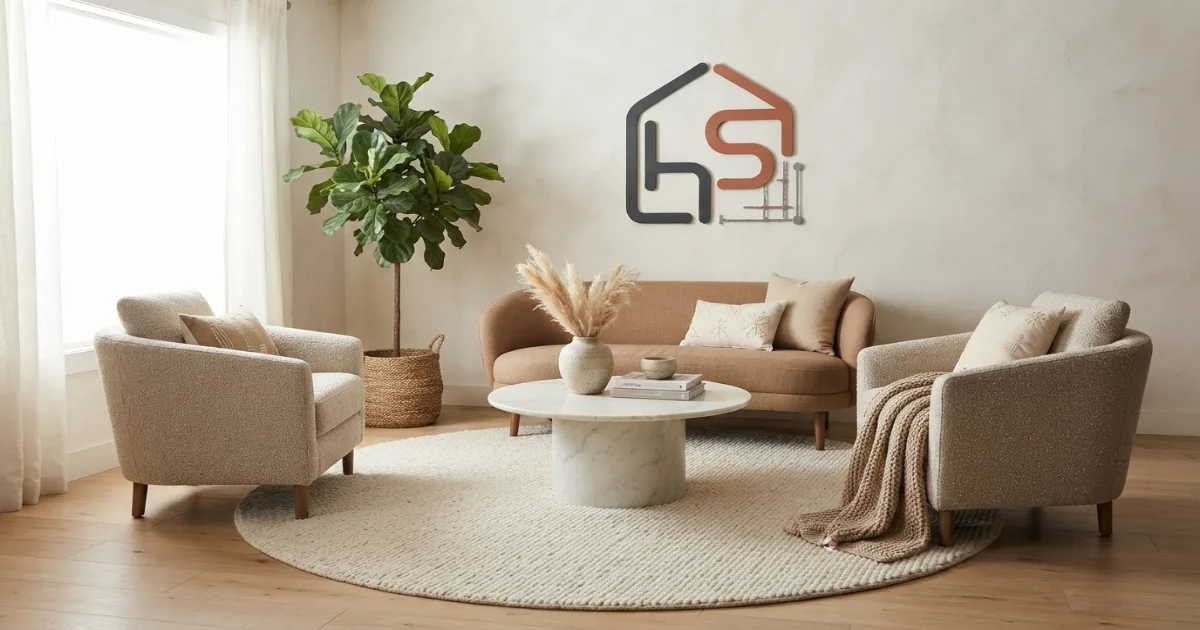
Living room
A 6-to-9-foot rug can define a compact or medium conversation group.
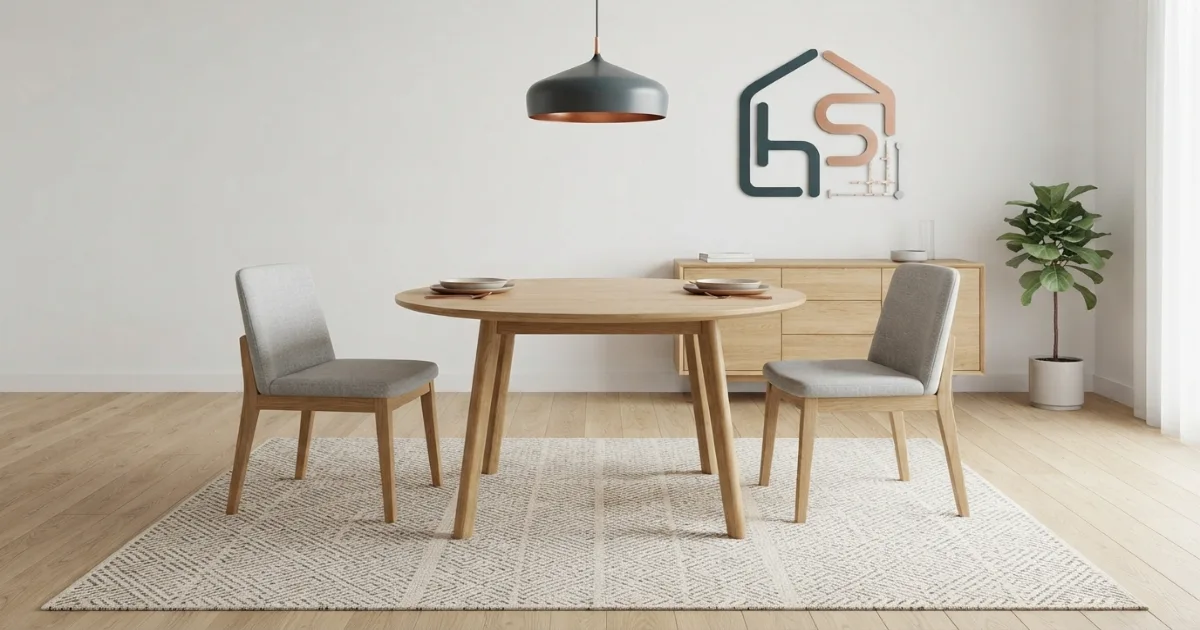
Dining table
Add chair-pullout extension to the tabletop diameter before choosing.
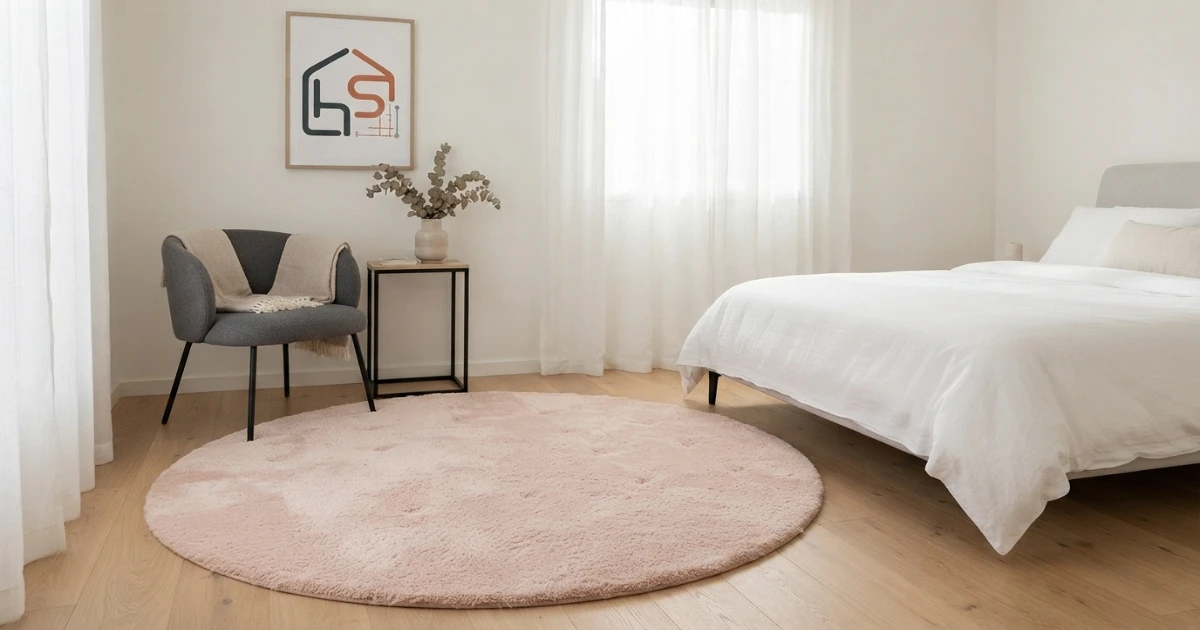
Bedroom
Round rugs work well beside the bed or beneath a small centered furniture group.
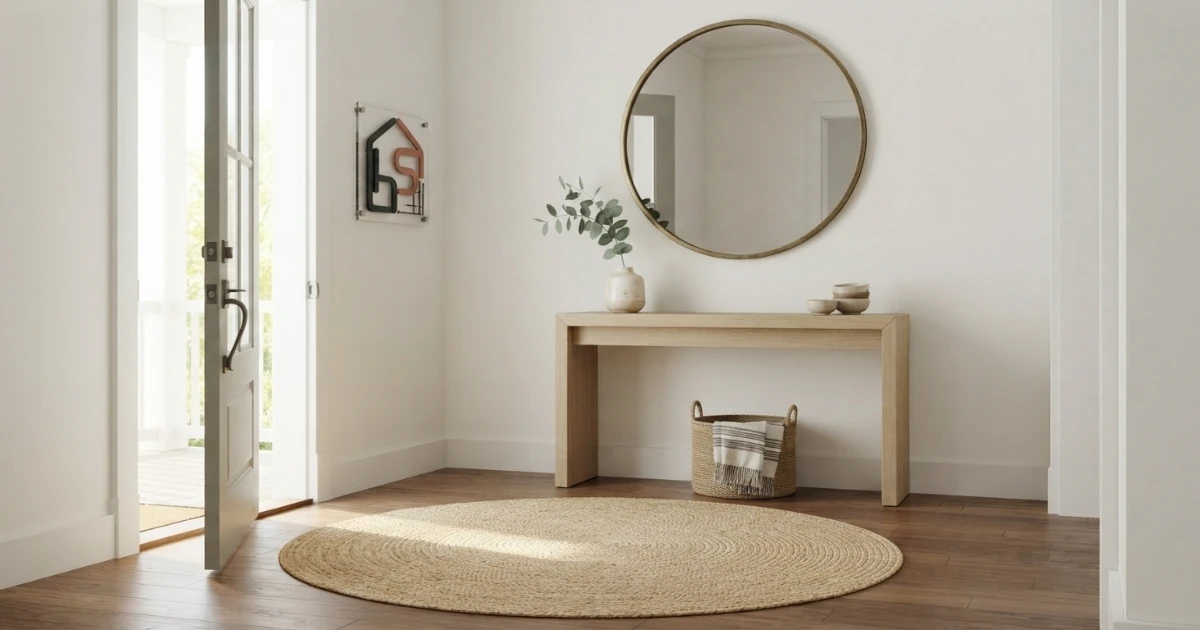
Entryway
A 4-to-6-foot rug can mark a foyer without blocking the door swing.
Round rug sizes: complete diameter chart
Round rugs are measured across the center from edge to edge. A rug listed as 8 feet round has an approximate diameter of 8 feet, although handmade and soft-edged products may vary slightly.
The chart gives practical starting uses. The room, furniture footprint and walking routes still control the final choice.
| Diameter | Metric approx. | Best starting uses | Planning note |
|---|---|---|---|
| 4 ft round | 122 cm | Small entry, bedside accent, reading corner | Accent scale; usually too small for a complete seating group. |
| 5 ft round | 152 cm | Foyer, nursery, small bistro table | Useful for compact zones with limited furniture. |
| 6 ft round | 183 cm | Small living group, 30–36 in table, bedroom accent | Check whether chairs or furniture legs remain supported. |
| 7 ft round | 213 cm | Conversation area, larger foyer, 36–42 in table | A useful middle size when 6 ft feels tight and 8 ft feels dominant. |
| 8 ft round | 244 cm | 48 in dining table, medium seating zone | One of the most versatile large round rug sizes. |
| 9 ft round | 274 cm | Large dining or floating conversation group | Needs enough surrounding floor border to avoid crowding walls. |
| 10 ft round | 305 cm | Large foyer, large table, expansive seating zone | Measure delivery access and furniture placement carefully. |
Quick answer
Four-to-six-foot round rugs suit accent zones. Seven-to-nine-foot rugs suit many dining and seating groups. Ten-foot round rugs need a genuinely large room.
How to measure for round rug sizes
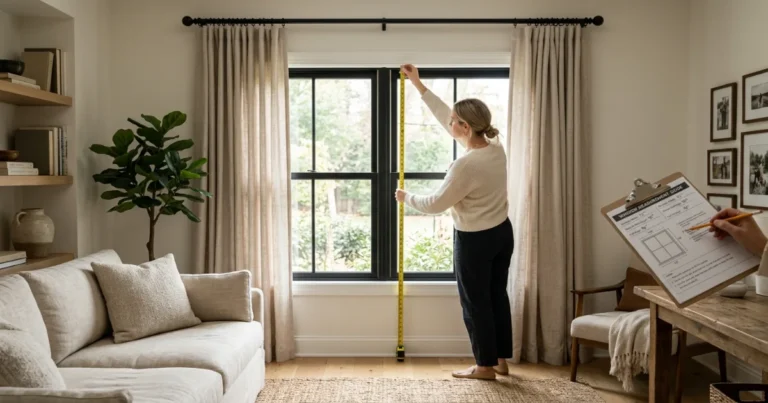
Measure the diameter of the object or zone the rug will anchor. For a round dining table, measure the tabletop from edge to edge.
For a living room, measure the width of the intended conversation group rather than the entire room. Decide whether the front legs of chairs or sofas should touch the rug.
Use painter’s tape or a string compass to mark the full circle. Walk around it and check door swing, drawer access and the visible floor border.
Round rug sizes for living rooms
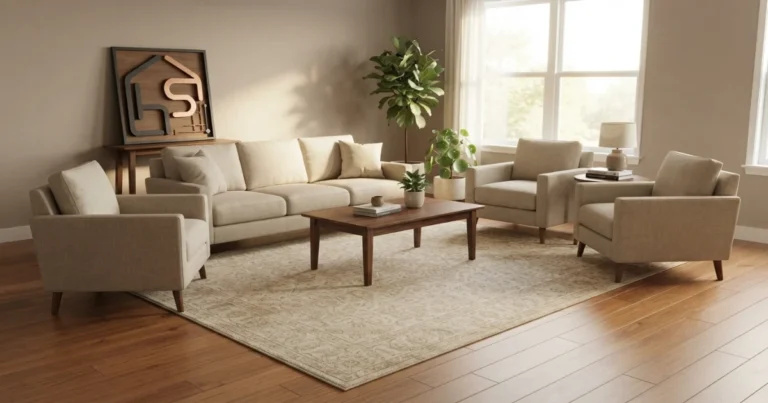
A round rug works best when the furniture arrangement already has a circular or inward-facing rhythm. It can soften a square room and connect curved chairs, a round coffee table or a compact conversation group.
A 6-foot rug is usually accent scale. A 7-or-8-foot rug can connect a small-to-medium seating group, while a 9-foot rug can support a larger floating arrangement.
Avoid placing a tiny circle under only the coffee table when the seating spreads far beyond it. Use the Rug Size Calculator and Living Room Layout Guide together.
Round rug sizes under dining tables
Dining rugs must account for the chairs, not only the tabletop. Add the desired chair extension to both sides of the table diameter.
For example, a 48-inch table plus 24 inches on both sides needs a minimum diameter of 96 inches, which equals 8 feet.
A 36-inch table often starts around a 7-foot rug with generous chair space, while a 60-inch table may need 9 feet or more. Always test the chairs in their pulled-back position.
Use the Dining Table Size Calculator and Dining Room Rug Guide before ordering.
Round rug sizes for bedrooms and entryways
In bedrooms, a round rug is usually an accent rather than a full under-bed solution. Place it beside the bed, under a reading chair or at the foot where its complete shape remains visible.
Four-to-seven-foot sizes cover most bedroom accent uses. A larger circle can work beneath a small centered bed in a square room, but confirm the visible rug extension first.
Entryways often suit 4-to-6-foot rugs. Check the door swing, console depth and main walking path. A round rug should welcome movement, not create a tight obstacle.
Can round rug sizes work in rectangular rooms?
Yes. The rug shape can relate to the furniture rather than the room outline. A round dining table, curved chair group or circular chandelier can justify a round rug inside a rectangular room.
The key is scale. Leave a deliberate floor border and avoid choosing a circle that feels disconnected from every nearby object.
In a long room, use the round rug to define one zone instead of trying to cover the full rectangle.
Round rug sizes and visual balance
Round rugs reduce hard corners and can make a formal layout feel more relaxed. They also draw attention toward the center of a furniture group.
A larger diameter usually feels calmer than a small rug surrounded by disconnected furniture. When deciding between two sizes, tape both outlines before buying.
Coordinate the rug with a centered pendant, round table, curved sofa or circular wall detail, but avoid repeating circles everywhere.
Round rug sizes formula: turn furniture measurements into a diameter
The cleanest way to choose a circular rug is to start with the object or furniture group it must support. Measure the widest part of that anchor, then add the functional extension required on both sides. The result is the minimum useful diameter, not automatically the final retail size.
For a dining table, the formula is simple: tabletop diameter + chair extension on the left + chair extension on the right. A 48-inch table with 24 inches of chair space on each side needs 96 inches, or 8 feet, of total rug diameter. If the dining chairs are deep, heavy or frequently pulled back, a larger diameter may feel more forgiving.
For living-room round rug sizes, measure the full width of the conversation zone that should visually connect. If only a coffee table sits on the rug, the result may look decorative rather than anchoring. When the front legs of chairs or a compact sofa should touch the rug, measure between those furniture edges and add enough diameter for a balanced visible border.
For an entryway, bedroom accent or reading corner, the anchor may be smaller than the rug. A round table, stool, chair pair or pendant can sit near the center while the rug creates breathing room around it. In these cases, visual balance matters alongside the mathematical minimum.
Always round up to a real product size after calculating. If the minimum comes to 7.3 feet, compare 8-foot options rather than forcing a 7-foot rug to perform like a larger one. Standard round rug sizes vary by brand, so check the actual listed diameter instead of relying only on the category name.
Round rug sizes and furniture placement rules
Furniture placement changes how large a rug needs to be. Two rooms with the same dimensions can require different round rug sizes because one uses a compact coffee-table accent while the other uses a full conversation circle.
All furniture off the rug
This is an accent layout. The rug sits beneath a coffee table, small dining table, plant display or entry feature while the surrounding furniture remains outside the circle. It works best when the rug is intentionally decorative and the room already feels connected through other elements.
Front legs touching the rug
This is often the most practical living-room arrangement. The front legs of chairs, loveseats or a small sofa touch the circular edge, creating a visible relationship without requiring a huge rug. Measure the furniture group carefully because one disconnected chair can make the circle feel undersized.
All seating fully on the rug
A floating conversation group can sit completely on a large round rug. This creates a strong room-within-a-room effect, especially in a square living room, large bedroom sitting area or open-plan space. The diameter must include furniture depth as well as the empty space between seats.
Dining table and all chair positions on the rug
A dining rug must support chairs when they are both tucked in and pulled back. This requirement usually makes dining-room round rug sizes larger than shoppers expect. Test the farthest normal chair position, not only the neatly staged position shown in a product photo.
When furniture placement is asymmetrical, center the rug on the functional group rather than automatically centering it in the room. A slightly off-center rug can look correct when it aligns with the table, chandelier, curved sofa or seating zone.
Round rug sizes for small, medium and large rooms
Small rooms and apartments
In a compact room, the goal is not to choose the smallest rug possible. A rug that is too small can make furniture feel scattered and can visually divide an already limited floor area. Four-to-six-foot round rug sizes are useful for entryways, nurseries, bedside accents, reading corners and very small bistro tables.
Keep enough exposed flooring around the circle so the rug does not appear jammed against walls or cabinets. Check that the door opens freely and that the circular edge does not create an awkward pinch point in a narrow walkway. Low-profile edges are especially useful near doors and busy routes.
Medium rooms
Six-to-eight-foot diameters are the most flexible range for many homes. They can support a small round dining table, a compact conversation group, a nursery seating area or a generous foyer. In a medium room, compare the rug with the largest nearby furniture piece so the circle does not look visually weak.
An 8-foot rug can feel significantly larger than a 6-foot rug because area increases quickly as diameter grows. That is why taping the full circle is more reliable than imagining the difference from a size label.
Large rooms and open plans
Nine-to-ten-foot round rug sizes create a strong focal zone in a large room. They suit large dining tables, floating chair groups, spacious foyers and open-plan areas where a circular shape helps separate one function from another.
Large circles need generous floor borders. If a 10-foot rug leaves only a narrow strip between the rug and surrounding walls, the room may feel crowded even though the rug technically fits. Also measure stairs, elevators and turning points because a large rolled rug can be difficult to deliver.
Round rug sizes for different dining-table diameters
The table below is a practical planning reference, not a substitute for measuring the real chairs. It assumes roughly 24 inches of rug beyond the tabletop on every side.
| Table diameter | Calculated rug minimum | Practical starting size | Best use |
|---|---|---|---|
| 30 inches | 78 inches | 7 ft round | Small breakfast table or bistro setting. |
| 36 inches | 84 inches | 7 ft round | Compact dining nook with standard chairs. |
| 42 inches | 90 inches | 8 ft round | Four-seat dining arrangement. |
| 48 inches | 96 inches | 8 ft round | Comfortable four-to-six-seat table. |
| 54 inches | 102 inches | 9 ft round | Larger dining room with generous chair pullout. |
| 60 inches | 108 inches | 9–10 ft round | Large round table and substantial chairs. |
Chairs with arms, deep upholstered seats or wide bases may need more than 24 inches of extension. Benches and pedestal tables can behave differently as well. Measure the actual furniture rather than treating the chart as a universal rule.
Round rug sizes for specific room shapes
Square rooms
Square rooms naturally support circular layouts because the rug can sit evenly within the floor area. A centered round rug can connect a table, chandelier or inward-facing chair arrangement without fighting the room geometry.
Rectangular rooms
A round rug should define one zone rather than attempt to fill the full rectangle. Place it under the dining table, conversation group or entry feature. Leave the remaining rectangular floor area visually calm so the circle reads as intentional.
Long and narrow rooms
Use a circle only where the room widens enough to support it. A 4-to-6-foot rug may work in an entry bulge, reading corner or small dining end. In a very narrow passage, a runner is usually more practical than a round rug.
Open-plan rooms
Round rug sizes can separate a dining table from a rectangular living-room rug or identify a curved conversation zone. Repeating the round shape in a pendant or coffee table can strengthen the zone, but keep the rest of the room simple to avoid visual clutter.
Irregular and angled spaces
A circle can soften awkward corners because it does not need to align with every wall. Center it on the furniture or function, then check the shortest distance to nearby walls, steps and doorways. The rug should not create a narrow wedge that is difficult to walk through.
Round rug sizes, material and pile height
Size is only one part of a successful rug choice. Material, pile and edge construction affect how the rug performs in the room.
Low-pile rugs
Low-pile round rugs are practical under dining chairs, near doors and in busy rooms. Chairs move more easily, crumbs are simpler to clean and the edge is less likely to catch a swinging door.
Medium-pile rugs
Medium pile works well in living rooms, bedrooms and reading corners where softness matters. Confirm that furniture remains stable and that the pile does not interfere with door clearance.
High-pile and shag rugs
High-pile rugs create a soft visual center but can make dining chairs difficult to move. They are better suited to low-traffic conversation zones or bedroom accents than under a frequently used dining table.
Natural fibers
Wool can be durable and comfortable, while jute and sisal create texture but may feel rougher underfoot. Natural fibers can react differently to moisture, stains and sunlight, so review the manufacturer’s care guidance.
Synthetic fibers
Polypropylene, polyester and nylon rugs can offer stain resistance and lower prices. Construction quality still varies. Check backing, edge finish, indoor or outdoor rating and suitability for the intended floor.
Round rug sizes, color and pattern balance
A large circular rug becomes a major color field, while a small rug behaves more like an accent. Consider how much of the floor will be covered before choosing a strong pattern or dark color.
In a small room, a low-contrast rug can keep the floor visually open. A bold central medallion can work when the furniture leaves enough of the design visible. If a dining table covers the entire motif, a border or all-over pattern may be more useful.
Large-scale patterns generally suit larger round rug sizes because the design has room to develop. Tiny patterns can appear busy across a wide circle, especially when combined with patterned curtains, upholstery and wall art.
Use the rug to connect existing colors rather than matching every item exactly. Pull one color from the sofa, curtains, artwork or dining chairs, then allow the remaining tones to provide contrast.
Layering round rugs with rectangular rugs
Layering can work when a round rug is used as a focused accent over a larger neutral rectangular rug. This is useful in a reading corner, beneath a round coffee table or inside a large open-plan seating area.
The base rug should be large enough to anchor the room on its own. The circular rug then adds color, texture or emphasis. Avoid layering two rugs that are almost the same size because the edges can look accidental.
Check that the layered edges do not create a trip point and that the top rug stays stable. Use pads or manufacturer-approved methods suitable for both rugs and the flooring below.
Round rug sizes, care and safety checks
A rug that fits visually must also work safely. Inspect the walking route from every doorway and consider how the edge will behave under daily traffic.
Use a rug pad designed for the floor and rug material when appropriate. The pad should be slightly smaller than the rug so it remains hidden and does not lift the edge.
Near an entry door, test the full swing with the rug and pad in place. In a dining room, check whether chair legs catch the edge when pulled back. In a home with children, older adults or mobility needs, review the route carefully and seek qualified accessibility guidance where required.
Vacuum and rotate the rug according to the manufacturer’s instructions. Rotation can reduce uneven wear and fading, especially in sunny rooms or beneath a frequently used dining table.
Address spills promptly using the recommended cleaning method. Do not assume every natural or synthetic fiber can tolerate the same product, water level or scrubbing technique.
How this round rug sizes guide was prepared
This guide uses a measurement-first method. The recommended diameter begins with the furniture or table footprint, then adds functional extension for chairs, seating connection, walking space or visual border.
Retail size categories are treated as starting points because actual dimensions can vary. The guide therefore recommends checking the specific product listing, measuring the real furniture and taping the rug outline before purchase.
The room recommendations separate accent use from anchoring use. A small round rug may be attractive beneath a coffee table, but it does not perform the same job as a larger rug that connects seating.
Safety and accessibility considerations are presented as planning reminders rather than professional advice. Complex installations, accessible routes, unusual flooring, fire-safety questions and specialist environments should be reviewed by qualified professionals.
The interactive planner follows the same logic: anchor diameter + extension on both sides, rounded up to a practical retail size, followed by a room-fit check.
Common round rug sizing mistakes
- Measuring the radius instead of the full diameter.
- Choosing for the table but forgetting chair pullout.
- Using a small accent rug for a large seating group.
- Ignoring door swing, vents or cabinet access.
- Pushing a large round rug too close to surrounding walls.
- Ordering without checking the actual product dimensions.
- Using a loose rug without appropriate slip-control measures.
Round rug sizes buying checklist
Retail categories can vary, so compare the stated diameter with your taped floor outline. Check whether fringe or tassels are included in the listed measurement.
- Confirm diameter in feet, inches and centimeters.
- Check pile height, edge thickness and door clearance.
- Review material, backing and cleaning instructions.
- Choose a rug pad suitable for the rug and floor.
- Check fire-safety labeling and applicable product requirements.
- Measure hallways, doors and stairs for delivery.
- Review return terms before buying a large rug.
For a complete room plan, connect this guide with the Sofa Size Calculator, Lighting Calculator, Room Color Palette Generator and Interior Size Guide.
Expert note: when two round rug sizes both fit, compare the larger option first. A slightly larger circle often connects furniture more successfully, provided it still leaves clear routes and a deliberate border of exposed flooring.
Best planning order
Measure the anchor, add functional extension, tape the full circle, check routes and doors, then compare the result with real retail diameters.
Measurement and safety resources
These followed external links support unit conversion, accessible-route research and rug-safety checks.
NIST length units
Use the official reference when converting inches, feet, centimeters and meters.
Read NIST length guidanceU.S. Access Board routes
Review official accessible-route requirements when accessibility compliance affects the floor plan.
Read accessible-route guidanceCPSC rug safety
Review official information about rug requirements and reducing loose-rug trip hazards.
Read CPSC rug guidance