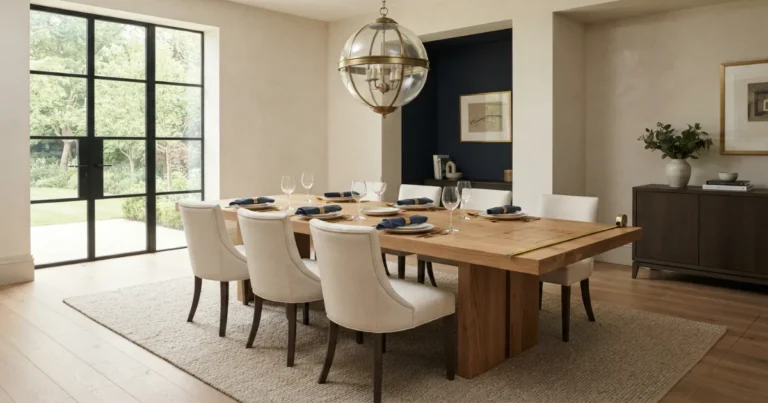
Hallway Runner Rug Size: choose the right width and length.
Hallway runner rug size: measure the narrowest usable width, choose a deliberate side border, measure the straight walking run, and match those numbers with a standard or custom runner.
Written by Rehana K · Updated July 15, 2026 · Includes a size chart, interactive planner, placement rules and a 3,500+ word buying guide.
Choose a hallway runner rug size with real measurements
Measure the narrowest width
Include trim, doors, radiators, vents and fixed furniture that reduce usable floor space.
Choose the side border
Decide how much floor should remain visible while protecting the walking route.
Measure the straight run
Subtract planned gaps at thresholds, turns, stairs and door swings.
Confirm the real product
Check exact dimensions, pile, backing, rug pad, care and return terms.
Hallway runner rug size quick planner
Enter hallway length and width, then choose the side and end gaps you prefer.
Your hallway runner starting point
Compare this result with the exact hallway, doors and product listing before buying.
Balanced for a 42-inch-wide, 12-foot hallway.
Hall width minus the selected side borders.
Leaves deliberate floor at both ends.
Choose this when more side flooring should remain visible.
Hallway runner rug size calculators and guides
Start with the rug calculator, then connect the hallway runner with the surrounding rooms, lighting and color.
Hallway runner rug size examples
These five branded WebP image slots include styled fallbacks, so missing uploads will not leave broken-image icons.
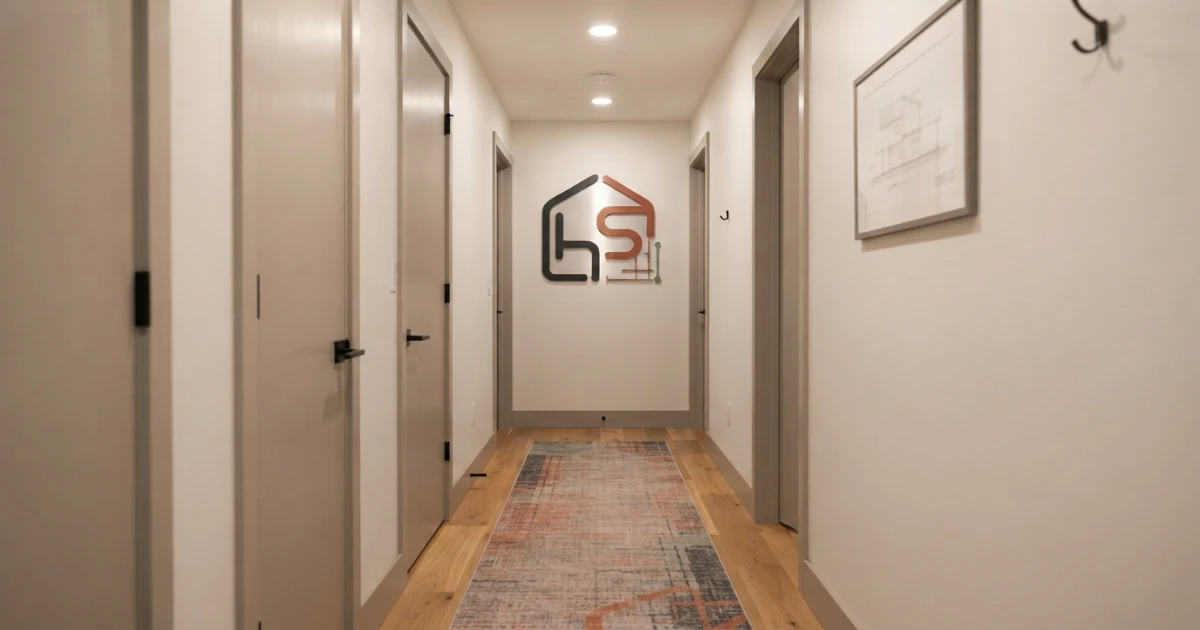
Narrow hallway
A 2-to-2.5-foot runner often preserves useful side flooring.
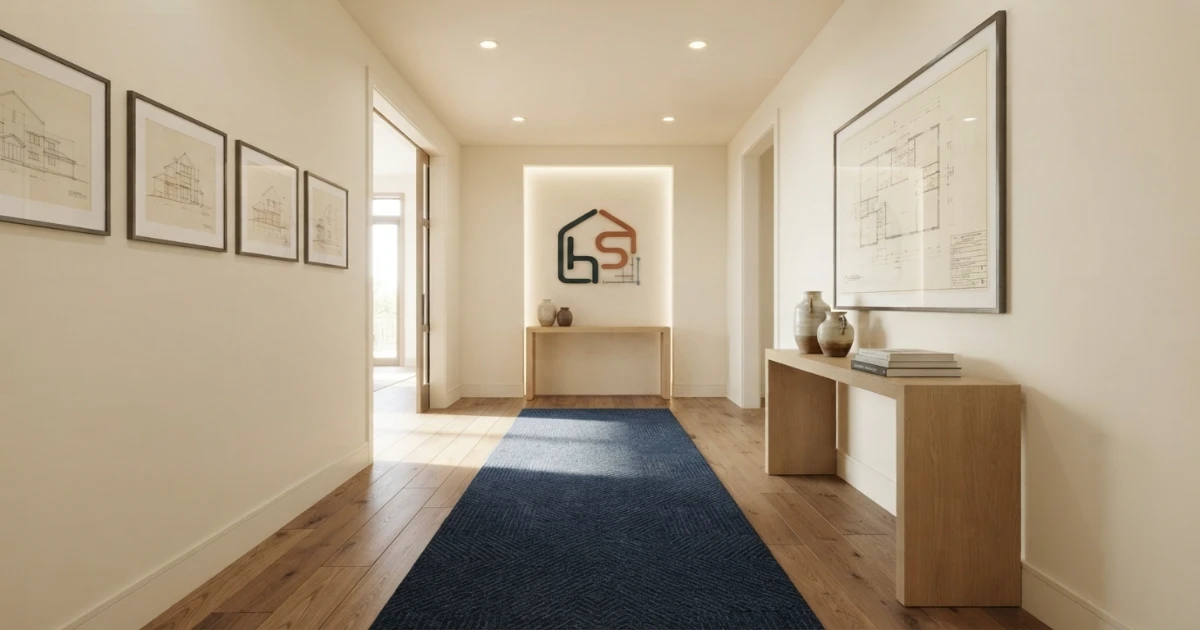
Wide hallway
A wider runner can feel intentional without covering the entire floor.
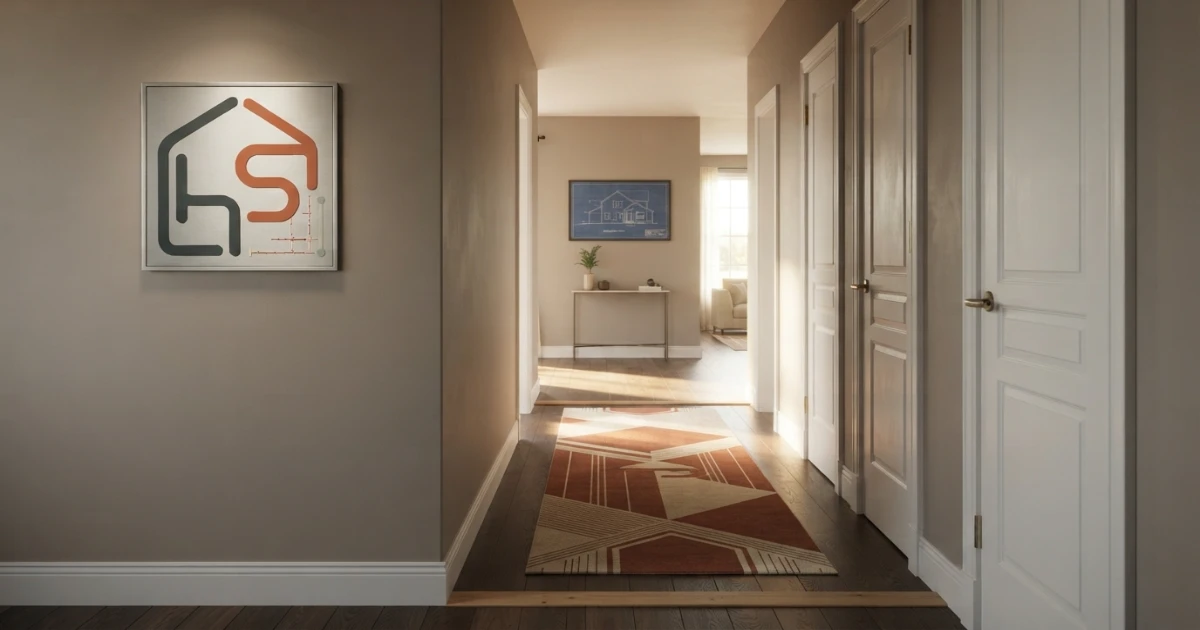
Long hallway
Length should cover the main visual run while respecting thresholds and turns.
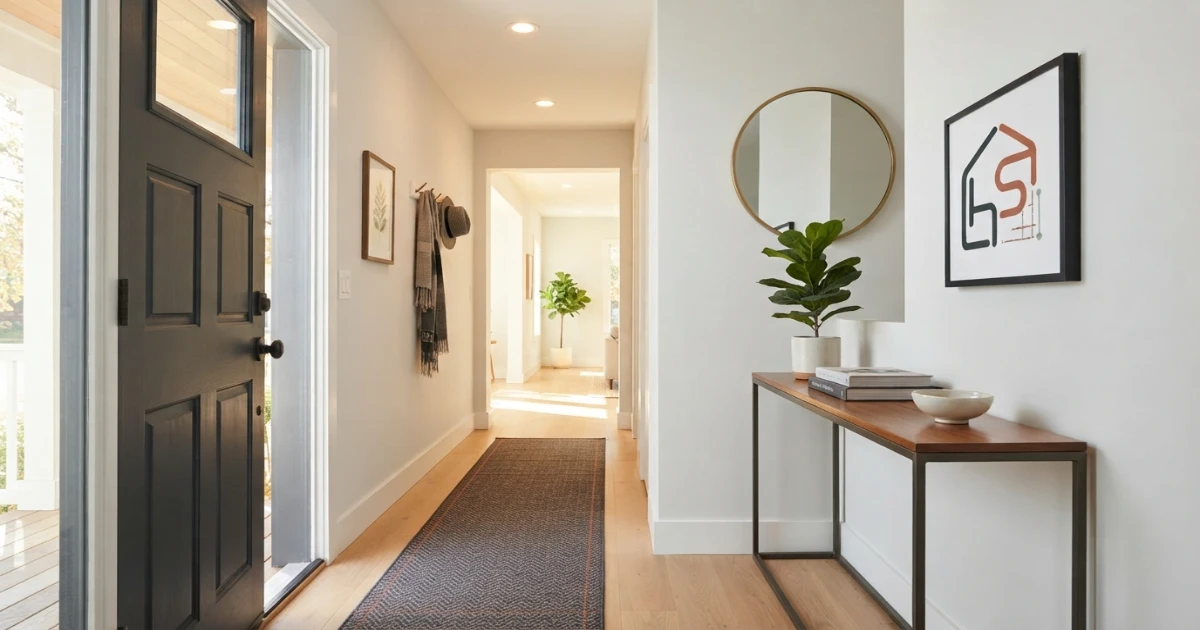
Entry hallway
Door swing, moisture and dirt control matter as much as visual length.
Hallway runner rug size: complete standard chart
A hallway runner is measured by width × length. Retail labels are usually given in feet, but actual products may differ by an inch or more. Always check the detailed listing before ordering.
Common widths include 2 feet, 2 feet 3 inches, 2 feet 6 inches, 2 feet 8 inches and 3 feet. Common lengths include 6, 8, 10, 12, 14, 16, 18 and 20 feet.
The correct hallway runner rug size is based on the narrowest usable hallway width and the straight floor run the rug should cover—not the largest number measured anywhere in the space.
| Runner size | Approx. dimensions | Best starting use | Planning note |
|---|---|---|---|
| 2×6 ft | 24×72 in | Short entry, bedside corridor, small landing | Accent length rather than full hallway coverage. |
| 2×8 ft | 24×96 in | Compact hallway or kitchen passage | Useful where side flooring must remain visible. |
| 2.5×8 ft | 30×96 in | Standard-width short hallway | Provides more visual presence than a 2-foot runner. |
| 2.5×10 ft | 30×120 in | Medium residential hallway | One of the most versatile hallway runner rug size options. |
| 2.5×12 ft | 30×144 in | Long bedroom or upstairs corridor | Check every door along the route. |
| 3×10 ft | 36×120 in | Wide hallway or generous entry | Needs enough side border to avoid a wall-to-wall look. |
| 3×12 ft | 36×144 in | Wide, long central hallway | Measure radiators, consoles and door casing. |
| 2.5×16 ft | 30×192 in | Extended straight corridor | Custom lengths may give a more deliberate fit. |
| 2.5×20 ft | 30×240 in | Very long straight hallway | Delivery, cleaning and movement control become more important. |
Quick answer
Most homes use runners about 2 to 3 feet wide. Choose length by subtracting deliberate end gaps from the straight hallway run, then compare with real retail sizes.
How to measure hallway width for a runner
Measure wall to wall at several points. Hallways are not always perfectly straight, especially in older homes. Use the narrowest usable measurement when deciding the maximum runner width.
Do not measure through skirting boards, projecting trim or radiators as if that space were fully available. Note door casing, vents, floor registers and furniture legs that reduce the clear path.
Once the narrowest width is known, choose how much floor should remain visible on each side. Many decorative hallway layouts begin with roughly 3 to 6 inches per side, but this is not a universal accessibility or safety rule.
A 36-inch hallway with 4 inches of visible floor on each side gives a calculated maximum runner width of 28 inches. You would compare 24, 27 or possibly 28-inch products rather than automatically buying a 30-inch runner.
A 42-inch hallway with 6 inches showing on each side allows a 30-inch runner. The same hallway with only 3 inches showing could theoretically accept 36 inches, but a wider runner may crowd trim, doors or the visual border.
The best hallway runner rug size should feel centered and intentional. It should not look like wall-to-wall carpet that was cut too narrow, unless that is the specific custom look being designed.
How to measure hallway length for a runner
Measure the straight usable floor run from the visual beginning of the hallway to the visual end. Do not automatically measure through doorways into adjoining rooms.
Decide whether the runner should start after the entry threshold, after a door swing, or after a small mat. At the far end, decide whether it should stop before a staircase, room opening, turn or decorative floor feature.
Subtract the planned end gaps from the total hallway length. A 12-foot hallway with 12 inches of exposed floor at both ends has a target runner length of 10 feet.
A 17-foot hallway with 9 inches at each end has a target of 15.5 feet. You might choose a 14-or-16-foot runner depending on doors, thresholds and the visual emphasis you want.
Do not choose length only by the percentage of floor covered. A 10-foot runner can look correct in one 12-foot hallway and too short in another if the second hall has multiple doors or an open sightline from the main room.
For an L-shaped hallway, measure each straight section separately. One bent rug is not practical. Use separate runners, a custom installation or one runner in the dominant visual section.
Hallway width-to-runner chart
This chart gives a practical starting range using approximately 3 to 6 inches of visible flooring on each side. Always check the narrowest point and any accessibility requirements.
| Hallway width | Possible runner width | Visible border | Planning approach |
|---|---|---|---|
| 30–32 inches | 18–24 inches | About 3–6 inches per side | Very narrow; preserve the route and test edges carefully. |
| 34–36 inches | 24–27 inches | About 3.5–6 inches per side | Common compact hallway range. |
| 38–42 inches | 27–30 inches | About 4–7.5 inches per side | Balanced for many standard runners. |
| 44–48 inches | 30–36 inches | About 4–9 inches per side | Wide enough for stronger visual scale. |
| 50–60 inches | 36 inches or custom | Varies by furniture and route | Treat as a gallery hall or transitional room. |
Hallway runner rug size for narrow and wide hallways
Narrow hallways
In a narrow corridor, the runner should add warmth without reducing the usable route. Two-foot and 2-foot-3-inch widths are common starting points, but the correct choice depends on the actual floor border.
A dark, high-contrast border can make a narrow runner feel even narrower. A quieter edge or low-contrast color may help the floor read as one continuous path.
Choose a low-profile edge near doors. Thick fringe, curled corners or a pad that extends beyond the runner can create an obstacle in a tight route.
Standard residential hallways
Hallways around 36 to 44 inches wide often work with runners from roughly 24 to 30 inches. A 2.5-foot runner offers noticeable presence while leaving visible flooring in many standard halls.
Center the runner according to the usable floor, not necessarily the midpoint between uneven walls. Radiators, consoles or door recesses can shift the real path.
Wide hallways and gallery corridors
A wide hall may function like a small room. Three-foot runners, custom widths or even narrow area rugs can work when the floor space is generous.
If the hallway includes a console, bench or gallery wall, decide whether the runner should align with the architectural center or the walking path. A slightly off-center runner can be correct when furniture occupies one side.
Hallway runner rug size for short, medium and long hallways
Short hallways
Six-to-eight-foot runners suit many short entries, bedroom corridors and kitchen passages. Leave a visible gap so the runner does not appear trapped between thresholds.
In a very short hall, a rectangular accent rug may look more proportionate than a traditional runner. Compare both outlines with painter’s tape.
Medium hallways
Eight-to-twelve-foot lengths cover many standard residential hallways. The hallway runner rug size should connect the visible run without crossing every doorway.
A 2.5×10-foot runner is a flexible starting option for a medium hall, but measure before treating it as standard.
Long hallways
Long corridors need enough coverage to avoid a small rug floating in the center. Twelve-to-twenty-foot runners or custom lengths may be appropriate.
Very long runners require careful pad selection, cleaning access and delivery planning. A heavy roll can be difficult to turn through stairs or narrow entries.
If the hallway has a clear architectural break, two coordinated runners may look better than one continuous piece. Keep the gap centered on the break rather than placing it randomly.
Hallway runner rug size, placement and centering
In a straight, empty hallway, center the runner between the usable boundaries. Check the alignment from both ends because a small shift can be obvious across a long distance.
In a hallway with several door recesses, center the runner on the dominant walking line. The geometric midpoint between walls may not match the path people actually use.
Keep the runner parallel with the main walls. A runner that angles slightly can make the entire corridor feel crooked, even when the walls themselves are not perfectly square.
Use a tape line or laser reference during installation. Measure the exposed floor border at several points rather than adjusting by eye only.
Patterns with a strong central stripe make alignment errors more visible. Organic or all-over patterns can be more forgiving in older or irregular halls.
The hallway runner rug size should also relate to the sightline. From the front door or living room, the runner should lead the eye toward a destination instead of stopping abruptly without a visual reason.
Runner rugs near doors, thresholds, vents and stairs
Open every door through its full normal movement before choosing a runner. Measure the clearance under the door as well as the floor area it sweeps across.
Do not cover raised thresholds unless the product and installation are designed for that transition. A runner edge pressed against a threshold can curl or become difficult to clean.
Floor vents and registers should remain functional. Avoid trapping heat, restricting airflow or creating an uneven section beneath the runner.
At the top of stairs, keep the landing route clear and visually distinct. A loose runner is not a substitute for a professionally installed stair runner.
At an entry door, consider water, sand and outdoor dirt. A washable entrance mat may be more practical before the decorative hallway runner begins.
When several bedroom doors open into one corridor, check the thickest part of the runner and pad beneath each door. A low-profile product can prevent scraping and bunching.
Hallway runner rug size, materials and pile height
Hallways receive concentrated foot traffic, so construction matters. The runner should tolerate repeated walking, turning and cleaning without losing shape.
Low-pile runners
Low pile is practical near doors, in busy family hallways and where a vacuum must pass easily. It also reduces the height difference between the runner and surrounding floor.
Flatweave runners
Flatweaves are often lightweight and reversible, but they may move more easily without the right pad. Check edge curling and the manufacturer’s slip-control recommendations.
Medium-pile runners
Medium pile adds softness and sound absorption. Confirm door clearance and choose a dense construction that can handle the traffic level.
High-pile and shag runners
Thick pile may feel luxurious but can be difficult in a narrow route. It can catch doors, hold dirt and create a more pronounced edge.
Wool, natural and synthetic fibers
Wool can be resilient and comfortable. Jute and sisal add texture but may feel rough and react to moisture. Synthetic fibers can offer stain resistance and lower cost, although quality varies widely.
Read the product’s indoor use, care and backing details. Material choice should match pets, children, shoes, moisture and cleaning habits—not only the hallway runner rug size.
Hallway runner rug size, color and pattern
A runner creates a long visual line, so pattern direction matters. Stripes can make the hallway appear longer, while a strong border emphasizes width and edge alignment.
In a very narrow hall, a high-contrast border can make the rug look smaller. A softer edge or similar floor tone can create a calmer transition.
Long repeating patterns should end deliberately. Check the product photo and actual dimensions to understand whether the motif will be cut at the end.
Dark colors can disguise some dirt but may show lint, dust or pet hair. Very pale runners brighten a corridor but may need more frequent cleaning.
Connect the runner with nearby rooms by repeating one wall, wood, curtain or upholstery color. Exact matching is unnecessary; a related undertone often feels more natural.
Use the Room Color Palette Generator to compare the runner with hallway walls, trim and adjoining rooms.
Custom hallway runners and using two runners
A custom runner is useful when the hallway is extremely long, unusually wide or slightly irregular. It can create more deliberate end gaps than the nearest standard size.
Custom products may have limited returns, so confirm the finished dimensions, edge treatment, pattern direction, pad and installation method before ordering.
Two runners can work in an L-shaped hall, around a central landing or where one long standard product is unavailable. Use matching runners for a continuous look or related designs for connected zones.
Keep the gap between runners intentional. Align it with a doorway, turn, window, ceiling change or architectural break.
Avoid placing two loose edges in the busiest part of the route. Each rug needs suitable movement control and enough space to lie flat.
Do not tape runners together as a substitute for a properly sized product. An unstable joint can become visually messy and difficult to maintain.
Hallway runner rug size for entries, bedroom corridors and kitchens
Entry hallways
Entry runners face shoes, moisture and grit. Start the decorative runner after the door swing or separate entrance mat when needed.
A shorter runner can highlight a console or mirror, while a longer one can draw the eye toward the main home. Check whether the front door opens inward.
Bedroom corridors
Softness and sound reduction are useful, but every bedroom door must clear the pile. A 2-to-2.5-foot width works in many compact upstairs halls.
Coordinate the corridor runner with bedroom rugs without repeating every pattern. Similar colors or texture can provide continuity.
Kitchen passages
Use a washable, low-profile runner where spills are likely. Keep the edges clear of cabinet doors, appliances and floor vents.
Measure the actual standing and walking zone. A kitchen runner may need different end gaps from a decorative gallery hallway.
Upstairs landings
A landing may need an area rug rather than a runner when the floor becomes square. Protect stair access, rail posts and turning space.
Hallway runner rug size in rentals and older homes
Rental hallways benefit from non-permanent solutions, but the runner still needs stable placement. Choose pads and movement-control products approved for the flooring and lease conditions.
Older homes may have uneven walls, sloped floors or nonstandard door clearances. Measure every few feet and use the narrowest point.
Do not assume a historic hallway is a perfect rectangle. A custom runner can follow the dominant visual line without copying every small irregularity.
Original wood floors may be sensitive to certain rubber, latex or adhesive products. Check the flooring and rug-pad manufacturer guidance.
In a rental, keep product labels and care instructions. Document the floor condition before placing a long runner, especially where sunlight can create uneven fading.
Hallway runners for pets, children and busy homes
Hallways become running routes for children and pets. Stability, edge control and washability are more important than a decorative photograph.
Choose a runner that lies flat and use a compatible pad. Inspect corners regularly because repeated turning can lift or shift the rug.
Low or medium pile is often easier to clean and less likely to catch claws, small wheels or toys. Check whether the construction sheds or snags.
Pattern can hide minor marks, while a very dark solid color may show pet hair. Washable runners are useful, but confirm the washing-machine capacity for long products.
For older adults, mobility devices or anyone with balance concerns, seek qualified accessibility guidance and minimize loose edges and abrupt floor-level changes.
Hallway runner rug size, safety and accessibility
A hallway is primarily a circulation route. The runner must not compromise doors, steps, accessible routes, emergency movement or normal household use.
Visible side borders are decorative planning choices, not replacements for official accessibility dimensions. When compliance matters, use the applicable standards and a qualified professional.
Use a suitable non-slip rug pad when recommended for the runner and floor. The pad should remain hidden and should not create a raised ridge.
Avoid loose fringe in narrow routes, near stairs or where wheeled devices pass. Check corners, seams and edge wear regularly.
Review the product’s fire-safety labeling and applicable requirements. Do not place a rug near an ignition source unless the product and location are appropriate.
The correct hallway runner rug size should support a clear route, but size alone cannot guarantee safety. Installation, material, maintenance and user needs matter equally.
Common hallway runner sizing mistakes
- Measuring only one point in an uneven hallway.
- Buying by a “standard hallway” label without checking dimensions.
- Choosing width without subtracting visible side borders.
- Running the rug through thresholds or door swings.
- Using a short accent runner in a very long uninterrupted corridor.
- Buying a wide runner that resembles accidental wall-to-wall carpet.
- Ignoring pile height, pad thickness or floor vents.
- Centering on uneven walls instead of the usable walking route.
- Using two runners with an unstable gap in a busy path.
- Ordering a custom runner without confirming pattern direction and returns.
Hallway runner rug size buying checklist
Before checkout, compare the exact listed dimensions with the taped outline. Product categories can be rounded, and handmade runners may vary slightly.
- Measure the narrowest width at several hallway points.
- Measure the straight usable length between visual stopping points.
- Choose side and end gaps deliberately.
- Open every door, cabinet and closet through its full movement.
- Check vents, thresholds, stairs and floor transitions.
- Confirm pile height, edge thickness and backing.
- Choose a rug pad compatible with both floor and runner.
- Review material, cleaning and stain guidance.
- Measure delivery access for very long runners.
- Review return terms, especially for custom dimensions.
Use the Rug Size Calculator for the final measurement check. Compare related dimensions with the Standard Rug Sizes Chart and the Interior Size Guide.
Hallway runner rug size quick-reference decisions
The best hallway runner rug size begins with the narrowest usable width, not the widest section near an open doorway or alcove.
Choose a hallway runner rug size that leaves a deliberate floor border on both sides while keeping the main walking route practical.
For length, the right hallway runner rug size should respect thresholds, stairs, turns and room openings instead of covering every available inch.
In a narrow corridor, a slightly smaller hallway runner rug size can look cleaner and reduce edge crowding around trim and doors.
In a wide gallery hall, a larger hallway runner rug size can create stronger visual scale, provided it still leaves a clear and intentional floor border.
Before ordering any hallway runner rug size, tape the exact product dimensions on the floor and test doors, vents, cleaning access and normal household traffic.
How this hallway runner rug size guide was prepared
This guide follows a measurement-first system. Runner width begins with the narrowest usable hallway width, then subtracts the desired visible floor on both sides.
Runner length begins with the straight usable floor run, then subtracts deliberate gaps at both ends, thresholds, turns, stairs or door zones.
Standard sizes are presented as common retail categories rather than universal product dimensions. The actual listing remains the source of truth for width, length, fringe, pile and edge construction.
The planner rounds the calculated width down to an available runner that fits within the selected borders. It rounds length to a practical standard size that does not exceed the target run.
The recommendations separate decorative guidance from accessibility and safety requirements. Official rules, unusual installations and specialist environments require appropriate professional review.
This hallway runner rug size guide also considers daily use: doors, pets, cleaning, moisture, pads, vents and sightlines. A visually correct runner should still work for the people moving through the hallway.
Expert note: when two runner lengths both fit, choose the one that aligns better with doors, architectural breaks and the main sightline—not automatically the longer option.
For adjoining rooms, compare the 5×8 vs 6×9 Rug Guide before choosing a separate area rug that visually connects with the hallway runner.
Best planning order
Measure the narrowest width, choose side borders, measure the straight run, subtract end gaps, tape the outline, test every door, and then compare real product dimensions.
Measurement, route and rug-safety resources
These followed external links support unit conversion, accessible-route research and carpet or rug safety checks.
NIST length units
Use the official reference when converting inches, feet, centimeters and meters.
Read NIST length guidanceU.S. Access Board routes
Review official accessible-route guidance when accessibility compliance affects the hallway.
Read accessible-route guidanceCPSC carpets and rugs
Review official information on carpet and rug requirements, including surface-flammability standards.
Read CPSC rug guidance