Paint Coverage Guide: calculate how much paint you need.
Paint coverage guide: measure wall and ceiling area, subtract openings, plan primer and coats, then estimate gallons using the coverage rate on the selected product.
Written by Rehana K · Updated July 15, 2026 · Practical planning for DIY rooms and contractor quote checks.
Use the paint coverage guide before buying cans
Measure surfaces
Record every wall or ceiling section that will receive paint.
Subtract openings
Remove large doors, windows, tile and unpainted built-ins.
Plan coats
Set primer and finish-coat needs from the real surface condition.
Match the label
Use the coverage rate and real container sizes for the final purchase.
Paint coverage guide quick planner
Enter room dimensions and coat count for a fast surface-area and gallon starting estimate.
Your paint planning baseline
Subtract openings and check the selected product label before purchasing.
Before openings and special deductions.
Surface area multiplied by coats.
Planner baseline using average coverage.
Add doors, windows and product coverage.
Paint coverage guide calculators and room tools
Use the exact calculator for paint quantity, then coordinate the finished room.
Paint coverage guide examples
All five original image URLs remain unchanged. These examples show the four calculations that most often affect the final quantity.
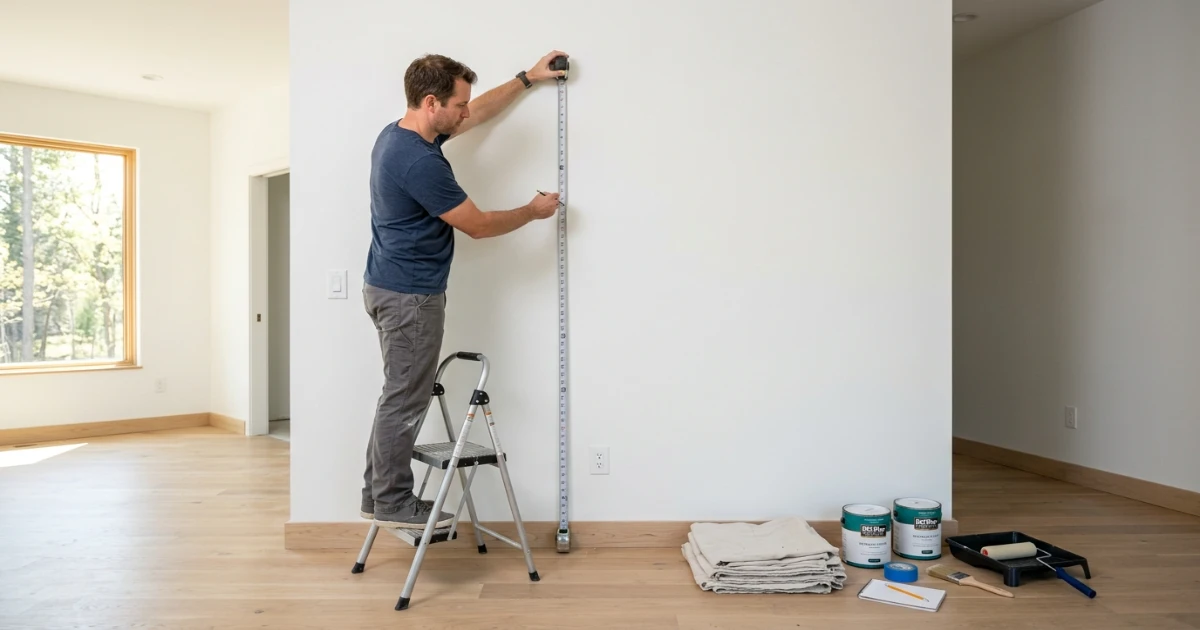
Wall measurements
Calculate each wall separately before adding the room total.
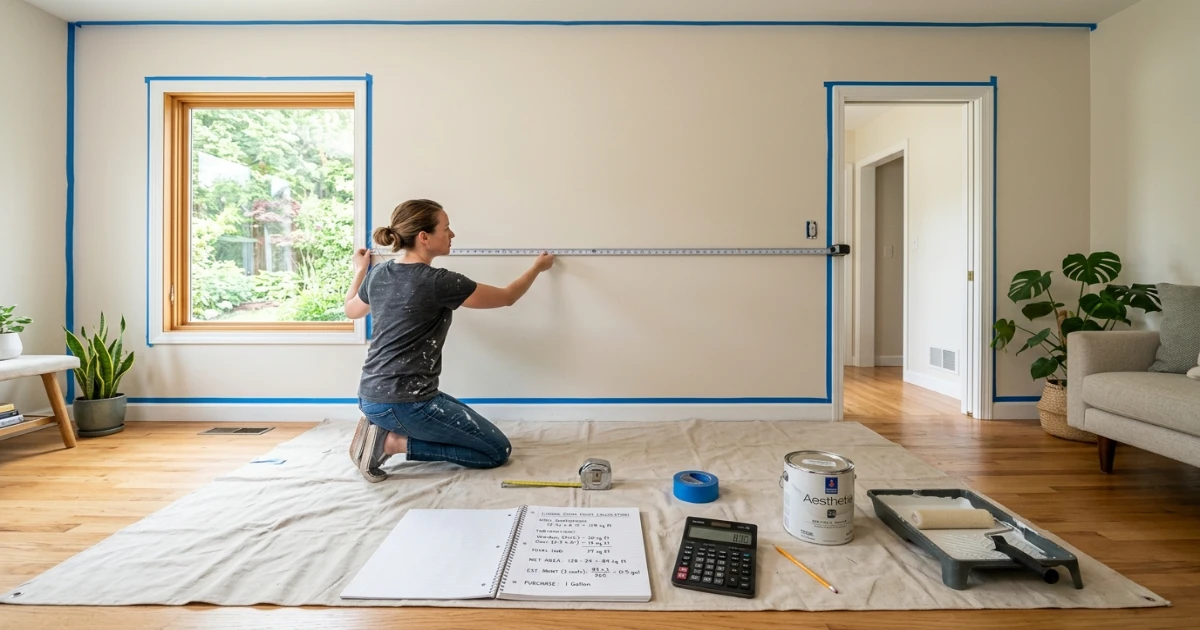
Opening subtraction
Large windows and doors reduce the real paintable area.
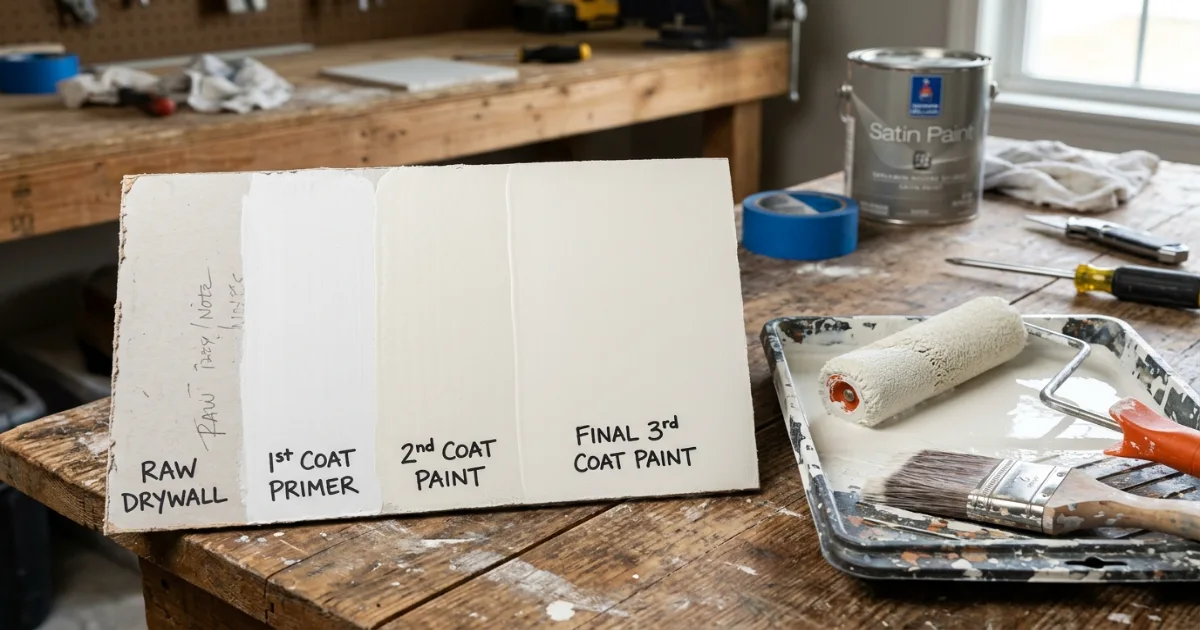
Primer and coats
Surface condition changes the amount and type of product.
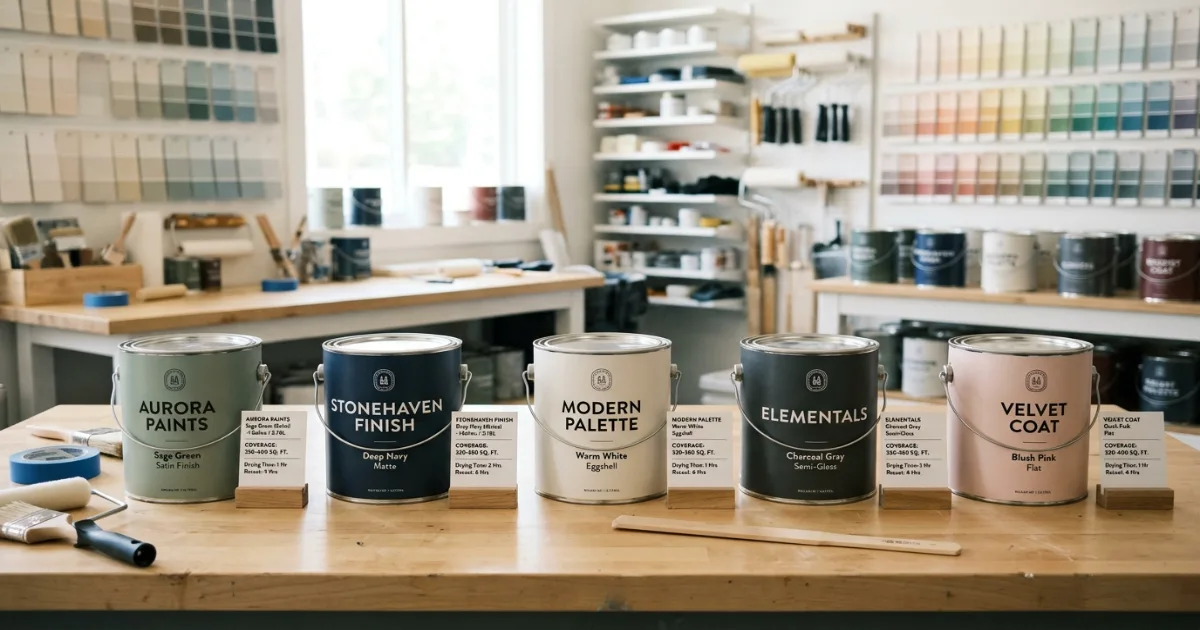
Coverage label
The selected product label controls the final container count.
Paint coverage guide: the complete formula
A reliable estimate starts with paintable surface area, not the room name or floor size. Measure each wall width and multiply it by wall height.
Add all wall areas. If the ceiling is included, calculate length × width separately so ceiling paint remains its own line item.
The basic formula is: paintable area × coat count ÷ product coverage rate. Round the result to available container sizes.
Quick answer
Measure, subtract openings, multiply by coats, divide by the label coverage rate, and round up to a real container.
Paint coverage guide for doors and windows
Subtract large openings and sections that will not receive the same paint. Include windows, doors, tiled areas, paneling and major built-ins.
Small openings may not change the purchase enough to matter, but multiple large windows can remove substantial wall area.
Keep trim and doors separate when they use a different sheen, color or product.
Paint coverage guide for coats and primer
Two finish coats are common, but they are not automatic. Read the product instructions and inspect the existing surface.
New drywall, bare wood, repairs, stains, glossy paint and dramatic color changes may need primer or additional preparation.
A paint-and-primer product does not replace every specialist primer. Stain blocking, bonding and bare-surface sealing may require dedicated products.
| Condition | Planning response | Reason |
|---|---|---|
| Minor same-color refresh | Check whether one or two coats are specified | Coverage depends on product and wall condition. |
| Dark-to-light change | Consider primer and full finish coats | The previous color may show through. |
| New or patched drywall | Use a suitable sealing primer | Porosity can create uneven absorption. |
| Glossy surface | Follow preparation and bonding guidance | A slick surface can reduce adhesion. |
| Rough or textured wall | Allow additional material | Texture increases the effective surface area. |
Paint coverage guide for ceilings, trim and accent walls
Calculate ceiling area separately. Ceiling products, roller technique and coat count can differ from the walls.
Trim and doors often use a more durable finish. Measure them as a separate product group instead of mixing their quantity into the wall total.
An accent wall needs only one wall measurement, but it may still require primer when the color change is strong.
Paint coverage guide for texture, sheen and tools
Texture and porosity can reduce real-world coverage. Brick, rough plaster and heavy texture may need more product than smooth drywall.
Sheen mainly changes appearance, cleaning and preparation. Higher sheens tend to reveal surface imperfections more clearly.
Use the roller nap and application method recommended for the surface. Incorrect tools can create uneven coverage and extra passes.
Paint coverage guide for gallons and liters
Do not rely on one generic coverage figure for every brand. Use the rate printed on the actual paint container or technical data sheet.
Calculate all coats, then round up to available cans, gallons or liters. Buying from the same batch can reduce visible color variation.
Keep a labeled amount for future touch-ups when the storage instructions permit it.
Room-by-room estimating checks
Bedrooms are usually straightforward, while open living areas often include more walls, transitions and ceiling sections.
Bathrooms and kitchens may need moisture-resistant products. Hallways may have less floor area but substantial wall length.
Stairwells and vaulted rooms should be measured wall by wall because a single average height can be misleading.
Common paint estimating mistakes
- Estimating from floor area instead of wall area.
- Forgetting the ceiling or counting it as wall paint.
- Ignoring doors, windows and unpainted surfaces.
- Assuming every color change needs the same coat count.
- Using a generic coverage number instead of the product label.
- Ignoring rough texture, repairs or porous material.
- Failing to check lead-safe requirements in older buildings.
Paint coverage guide buying checklist
Review the final quantity against the selected product before checkout. Container sizes, tint bases and coverage rates vary.
- Confirm wall, ceiling and opening measurements.
- Check primer, coat and drying instructions.
- Review ventilation and indoor-air-quality guidance.
- Check local rules and specialist advice for hazardous coatings.
- Buy enough matching product to finish continuous surfaces.
- Use the Paint Calculator for the final room-specific estimate.
After the quantity is fixed, use the Room Color Palette Generator, Lighting Calculator, Curtain Size Calculator and Wall Art Size Calculator to complete the room plan.
For more complete planning, compare the Interior Size Guide, Living Room Layout Guide, Bedroom Rug Size Guide, Small Room Design Guide, Home Renovation Calculators and Home Style Quiz.
Best planning order
Measure surfaces, inspect condition, choose primer and coats, calculate quantity, review safety guidance, and only then buy the product.
Official references for this paint coverage guide
These followed external links support measurement, indoor-air-quality and lead-safe renovation planning.
NIST area units
Use the official reference when converting square feet, square meters and related area units.
Read NIST area guidanceEPA VOC information
Review official information about volatile organic compounds and indoor air quality around paints and coatings.
Read EPA VOC guidanceEPA lead-safe painting
Review official lead-safe renovation and painting information for applicable pre-1978 properties.
Read EPA lead-safe steps