Paint Cost Calculator: House Painting & Labor Estimate
Use this paint cost calculator to estimate a room or whole-house interior painting job from wall area, coats, paint price, primer and optional professional labor. Enter your measurements to get an instant project estimate—no sign-up required.
A typical 12×12 ft room may cost about $130–$220 for standard DIY wall materials, or roughly $750–$1,200 with professional labor in this calculator’s assumptions. Your estimate changes with wall area, coats, paint price, primer, prep and local labor rates.
Paint cost calculator estimates by room size.
These estimates assume a 9 foot wall height, 2 coats, 1 door and 2 windows. Use the calculator above for a total matched to your exact room and choices.
| Room Size | Wall Area | Economy (DIY) | Standard (DIY) | Premium (Hired) |
|---|---|---|---|---|
| 8×10 ft (bathroom) | ~270 sq ft | $65–$110 | $95–$160 | $550–$900 |
| 10×10 ft (bedroom) | ~324 sq ft | $75–$130 | $110–$190 | $650–$1,050 |
| 12×12 ft (bedroom) | ~378 sq ft | $90–$150 | $130–$220 | $750–$1,200 |
| 12×16 ft (living area) | ~450 sq ft | $105–$180 | $155–$260 | $900–$1,450 |
| 15×20 ft (open plan) | ~567 sq ft | $135–$225 | $195–$330 | $1,150–$1,850 |
| Whole floor (~1,200 sq ft) | ~2,200 sq ft | $550–$900 | $780–$1,300 | $4,500–$7,200 |
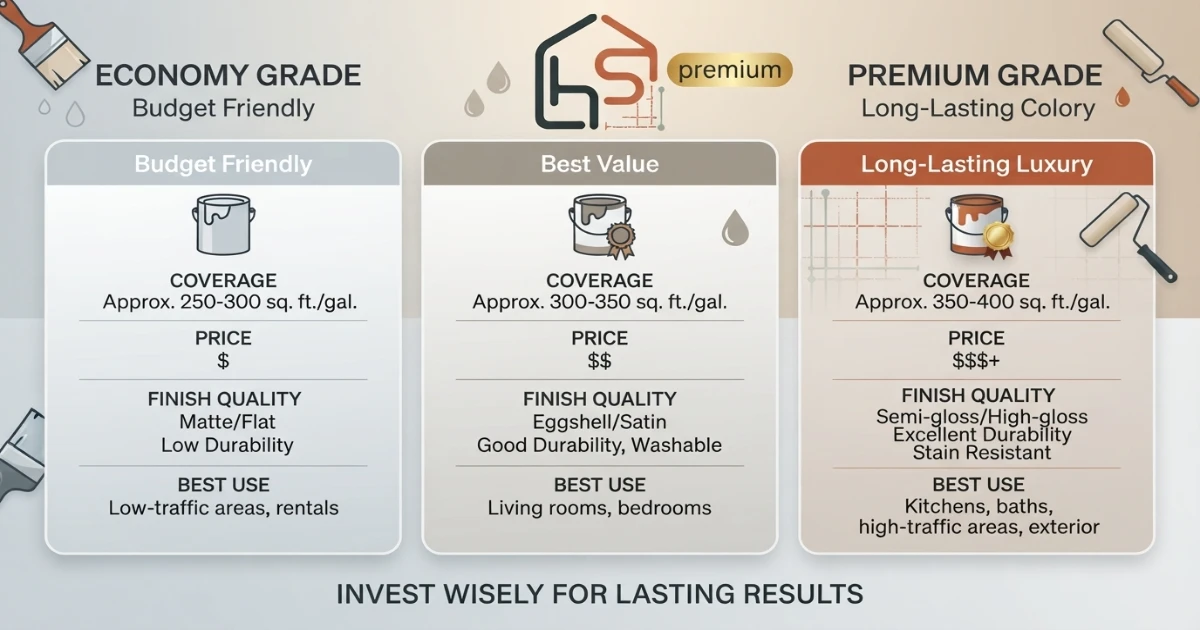
Three paint quality tiers — and what changes the price.
Price per gallon isn’t the only difference between tiers. Coverage, durability and how many coats you’ll actually need all shift the real total cost.
Economy
The lowest price per gallon, but usually needs an extra coat for full coverage and shows wear sooner in high-traffic rooms. Best for rentals or rarely used spaces.
~$22–$32/galStandard
The balance point most homeowners land on: solid coverage in two coats, reasonable washability, and a price that suits most whole-house repaints.
~$32–$48/galPremium
Higher pigment load and better self-leveling often mean full coverage in fewer coats, plus stronger scrubbability, which suits kitchens, hallways and kids’ rooms.
~$48–$70/galJust need gallons?
If you only need coverage and gallon count without a cost breakdown, the standalone Paint Calculator gives a faster, simpler estimate.
See Paint CalculatorSee how total cost changes by choice.
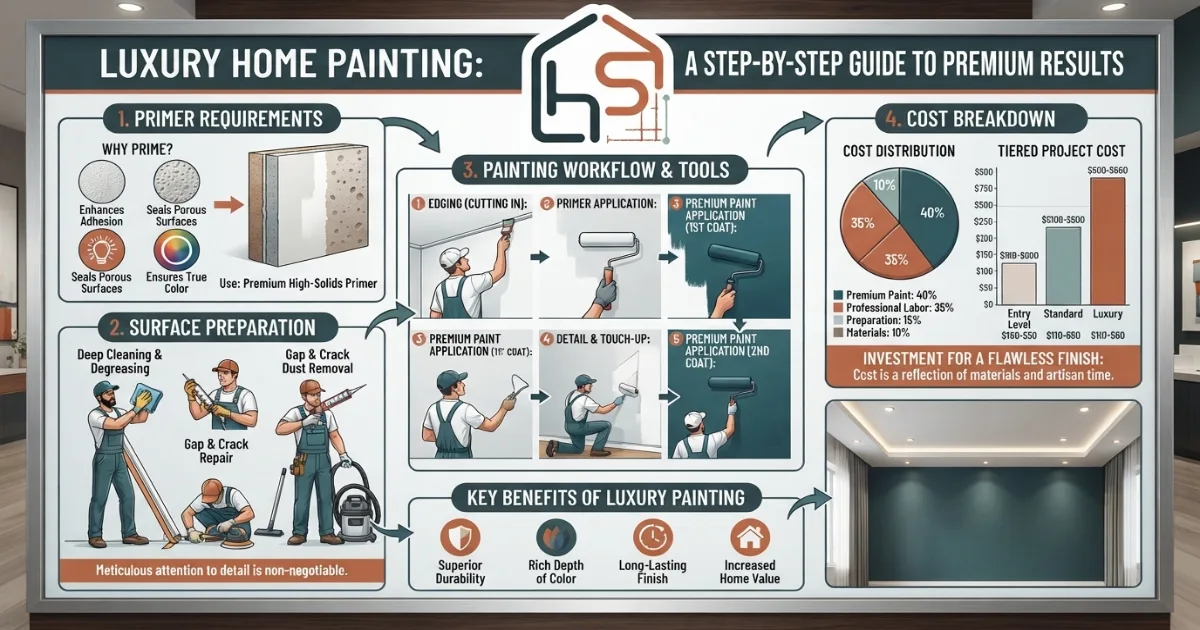
These steps cover the essentials: measuring wall area, choosing paint quality and coats, and deciding on primer and labor before you buy.
Measure the wall area
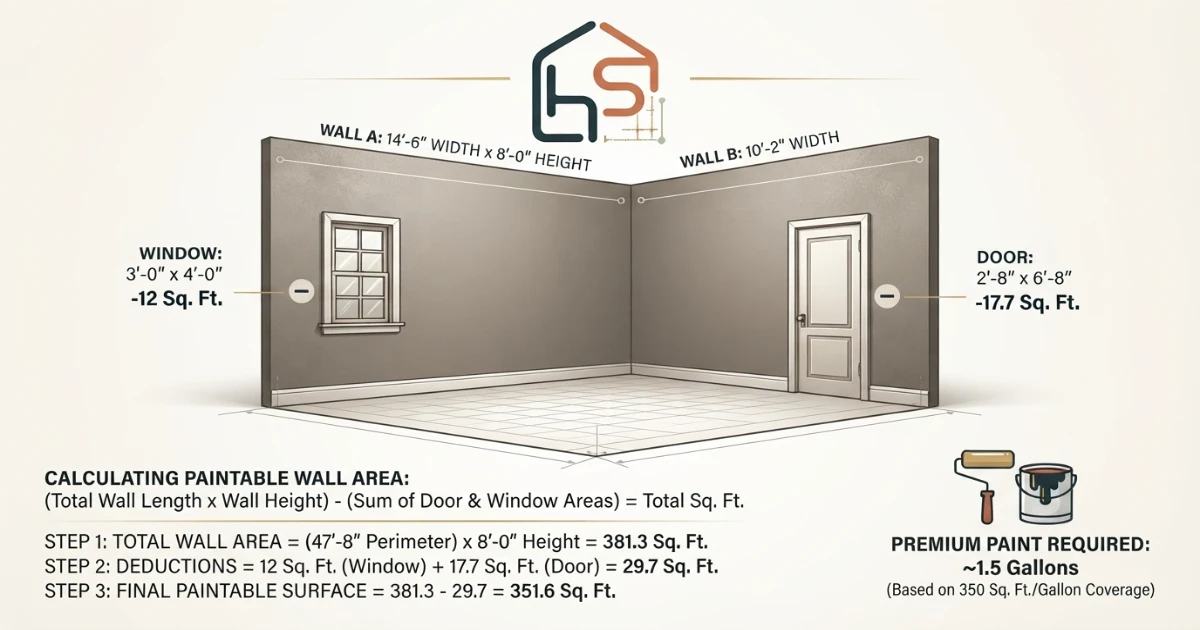
Start with room width, length and wall height, then subtract doors and windows to get the true paintable area.
Choose paint quality and coats
A higher price per gallon can sometimes cost less overall if it needs one fewer coat to look fully opaque.
Decide on primer and labor
Primer and professional labor are usually the two biggest swing factors in a total paint project estimate.
How to use the paint cost calculator for paint, primer and labor.
The most common paint budgeting mistake is pricing only the cans of paint and forgetting primer, tape, brushes, rollers, and — if hiring out — labor, which is often the single largest line item in a professional quote. A realistic total always adds these together rather than treating the paint itself as the whole cost.
A paint job looks like one of the simplest and cheapest home improvement projects on paper, but the total bill can surprise people who only priced the cans of paint at the store. Coats, primer, room shape, and the decision between doing it yourself or hiring a professional all swing the final number by a factor of two or more for the exact same room. This guide walks through every piece of that total, from measuring wall area correctly through the labor math professional painters use, so the number the calculator above gives you lines up with what you’ll actually spend.
Step 1: Measure wall area, not floor area
Paint coverage is based on wall area, not the square footage of the floor, which is a common point of confusion for first-time estimators. Calculate wall area by adding up the perimeter of the room — twice the width plus twice the length — and multiplying by the wall height. A 12 by 12 foot room with 9 foot ceilings has a perimeter of 48 feet, which multiplied by 9 feet of height gives 432 square feet of gross wall area, well before any deductions.
Step 2: Subtract doors and windows
Paint isn’t applied to door and window openings, so subtract their area from the gross wall area to get the true paintable surface. A standard interior door is roughly 21 square feet and a standard window is roughly 15 square feet. A room with one door and two windows subtracts about 51 square feet from the gross wall figure, which matters more in smaller rooms where openings make up a larger share of the total wall.
Step 3: Choose a paint quality tier
Economy paint has the lowest price per gallon but often needs three coats instead of two to look fully opaque and even, especially over a dramatically different base color, which can erase its apparent savings once extra cans and labor time are factored in. Standard paint is where most homeowners land, giving solid two-coat coverage at a moderate price. Premium paint costs more per gallon but frequently achieves full coverage in fewer coats thanks to higher pigment concentration, and it typically holds up better to scrubbing and daily wear, which matters more in kitchens, hallways, and kids’ rooms than in a rarely used guest room.
Step 4: Decide on the number of coats
Two coats is the standard recommendation for most color changes, giving even, opaque coverage without visible roller marks or patchiness. A single coat can work when the new color closely matches the existing one and the wall surface is already in good condition, though this is the exception rather than the rule. Three coats are sometimes necessary when painting a very light or white color over a dark or saturated base color, since darker pigments can bleed through two coats of a much lighter shade.
Step 5: Decide whether primer is needed
Primer is recommended before painting bare drywall or new patchwork, when covering a stain, when switching between a glossy and a matte finish, or when making a dramatic color change, such as painting a deep red wall a pale cream. It is often skippable when repainting a wall that’s already in good condition with a similar color and finish. Primer typically costs somewhat less per gallon than finish paint and usually only needs a single coat, but it adds both material cost and an extra day of dry time to the schedule.
Step 6: Estimate gallons needed from coverage rate
Multiply the net wall area by the number of coats to get total paint area, then divide by the paint’s coverage rate, typically printed on the can and usually between 300 and 400 square feet per gallon. Round up to the next whole gallon, since partial cans still need to be purchased in full, and most paint retailers won’t sell a fraction of a gallon. For a 350 square foot net wall area painted with two coats at 350 square feet of coverage per gallon, that’s 700 square feet of paint area divided by 350, or exactly 2 gallons.
Step 7: Add primer cost separately if needed
If primer is part of the plan, calculate its gallons the same way, though primer usually only needs one coat rather than matching the finish coat count. Multiply the primer gallons by its price per gallon, typically 25 to 40 dollars, and add that total to the paint cost rather than trying to combine primer and finish coat into a single gallon count, since they’re usually different products at different price points.
Step 8: Calculate paint labor cost per square foot
DIY painting has no direct labor cost beyond your own time, but it does carry an implicit cost in hours spent, particularly for taping, furniture moving, and cleanup, which experienced painters do faster. Professional painters typically charge 1.50 to 4 dollars per square foot of wall area, with the range depending heavily on region, how much prep and patching the walls need, ceiling height, and trim or detail work included in the quote. A straightforward, single-color room with walls already in good condition sits at the lower end of that range; a room needing patching, trim work, or an accent wall in a different sheen sits toward the higher end.
Step 9: Factor in supplies beyond paint and primer
Painter’s tape, drop cloths, rollers, brushes, and a paint tray typically add 30 to 60 dollars to a DIY project if starting from scratch, though many of these items are reusable across future projects. Professional quotes usually bundle these supplies into the labor rate, so a hired painter’s per-square-foot price typically already includes them, which is worth confirming explicitly before comparing a DIY estimate against a professional quote.
Step 10: Account for trim, ceilings and accent walls separately
This calculator’s wall area formula covers the four walls of a room; ceilings, trim, doors and an accent wall in a different color or sheen are typically priced and estimated separately, since they often use different products, such as a semi-gloss trim paint versus a flat or eggshell wall paint. If your project includes any of these, estimate them independently and add the results to the wall total for an accurate whole-room figure.
Step 11: Adjust for room shape and complexity
A room with many corners, alcoves, or built-in shelving takes noticeably longer to cut in around than a simple rectangular room, even at the same total wall area, and professional labor quotes often reflect this with a higher per-square-foot rate for complex rooms. If estimating your own labor time, budget extra hours for any room with more than four corners or with detailed millwork requiring careful edge work.
Step 12: Plan for drying time between coats and primer
Most primers and paints need 2 to 4 hours of dry time between coats, though full cure can take up to 2 to 4 weeks depending on the product, humidity and ventilation. A two-coat job with primer realistically spans at least a full day of active work, and rushing dry time between coats is one of the most common causes of visible streaking or an uneven finish in an otherwise correctly estimated project.
Step 13: Use the paint cost calculator for a whole-house estimate
For a full interior repaint, run the paint cost calculator separately for every room using its own dimensions, since ceiling height, door and window counts, and paint colors often vary. Sum each room’s paint, primer and labor totals for a whole-house figure rather than averaging floor area across the home, which can understate smaller rooms with proportionally more trim and openings.
Step 14: Build in a contingency for touch-ups and mistakes
Budgeting an extra 10 to 15 percent above the calculated paint total covers minor miscalculations, future touch-ups, and the reality that opened cans of paint are rarely used down to the last drop. This is particularly worth doing on rooms with a dramatic color change or textured walls, both of which tend to consume more paint than the flat coverage-rate math predicts.
Step 15: Compare DIY savings against your own time value
Before committing to a DIY project purely to save the labor line item, weigh the hours involved — often a full weekend for an average bedroom including prep, two coats and cleanup — against what that time is worth to you and whether the finished quality will match what you’re hoping for. For rooms with extensive prep work, high ceilings, or detailed trim, the labor savings from DIY sometimes don’t offset the added time and risk of an uneven finish compared with a professional quote.
Two useful Amazon products for a cleaner paint job.
These practical supplies cover the two basics most DIY estimates forget: an application kit and clean edge protection. Compare current sizes, availability and prices on Amazon before buying.
Disclosure: As an Amazon Associate, HomeStyle Calculator earns from qualifying purchases. This does not change the price you pay.
Wooster paint roller kit
A roller frame, tray and covers give first-time DIY painters the main application tools in one purchase. Check the included roller nap against your wall texture before ordering.
Best for: walls and ceilings Check on AmazonScotchBlue painter’s tape
Painter’s tape helps protect trim, switches and adjacent surfaces while creating cleaner edges. Choose the width and surface rating that match your project.
Best for: trim and edge protection Check on AmazonPaint cost rules that prevent a budget surprise.
A calculator gives the best starting numbers, but the final bill still depends on wall condition, color change and how the job is actually completed. The rules below cover the details worth checking even after settling on a total from the calculator above.
Add paint cost, primer cost if needed, and labor cost if hiring a professional into one total rather than pricing only the cans of paint. Budget an extra 10 to 15 percent on top for touch-ups and rounding up to full gallons.
Price the whole job, not just paint
Primer, supplies and labor are often larger line items than the paint itself, especially when hiring a professional painter.
Round up to full gallons
Paint is sold in whole gallons. Always round a coverage calculation up, never down, to avoid running short mid-coat.
Confirm what a labor quote includes
Ask whether a professional quote includes paint, primer and supplies, or only labor, before comparing it against a DIY estimate.
Match paint quality to room use
Spend more on washable, durable paint in high-traffic rooms and save with economy paint in rarely used spaces.
Helpful room planning topics.
A paint job rarely stands alone in a room’s design. Once you know your total cost, it helps to plan the surrounding elements at the same time — wall color palette, trim and door paint, and the room layout the color will live in. Use these supporting pages from the HomeStyle Calculator homepage to plan the rest of the room.
Six things professional painters always check before quoting a job.
Test the color before buying full cans
A small sample pot on the actual wall, viewed at different times of day, catches a color mismatch far more cheaply than repainting after the full job is done.
Buy all cans from the same batch
Paint batches, or “lots,” can vary slightly in tint. Buying enough from one batch for the whole room avoids a subtle color shift on the last wall.
Ask what a labor quote excludes
Confirm whether patching, trim, ceiling work or supplies are included, since quotes that look cheaper sometimes exclude one of these.
Prioritize prep time in the budget
Patching, sanding and taping often take longer than the actual painting, so include prep separately in your paint cost calculator estimate. For homes built before 1978, review the EPA’s lead-safe renovation guidance for DIYers before disturbing old paint.
Choose sheen based on room function
Higher-sheen finishes are more washable but show wall imperfections more; flatter finishes hide flaws but are harder to clean, especially in kitchens and bathrooms.
Keep leftover paint labeled and sealed
A labeled, sealed leftover can makes future touch-ups match exactly, which is far cheaper than repainting an entire wall over one scuff.
Paint cost calculator questions — answered.
More calculators for every room decision.
Every tool uses professional designer formulas. Free, instant, no sign-up — just enter your room and get the exact answer.
Bookmark HomeStyle Calculator for every room in the house.
From a single accent wall to a whole-house repaint, our free tools give you the exact total cost before you buy paint or hire a painter.