Nursery Rug Size: choose the right fit for the crib, chair and play area.
Nursery rug size: measure the usable floor, decide whether the rug anchors the whole room or a crib, chair or play zone, add practical extension, and compare 3×5, 4×6, 5×7, 6×9, 8×10 or round sizes.
Written by Rehana K · Updated July 16, 2026 · Includes a quick answer, interactive planner, diagrams, charts and a 3,500+ word guide.
What nursery rug size should you choose?
A 4×6 rug suits a small nursery or focused crib-side zone. A 5×7 or 6×9 rug works in many standard nurseries. An 8×10 rug can anchor a larger room with the crib, chair and changing area. A 4-to-6-foot round rug can define a reading or play corner.
Choose a nursery rug size with real measurements
Measure usable floor
Account for crib, changing table, chair, storage, door swing and vents.
Choose the rug role
Decide whether it anchors the room, crib, chair, reading corner or play zone.
Add useful extension
Leave visible rug beyond furniture without blocking doors or storage.
Check care and safety
Confirm pile, backing, cleaning, edge flatness and product instructions.
Nursery rug size quick planner
Choose the room type, enter usable dimensions and select the rug role.
Your nursery rug starting point
Confirm the result with the crib, chair, changing table, storage and exact rug dimensions.
Balanced for a standard nursery.
Connects the main nursery furniture.
Leaves a deliberate floor border.
Use for fuller coverage when the room allows it.
Nursery rug size calculators and guides
Use the rug calculator for the final measurement, then coordinate the nursery rug with furniture, lighting, curtains and color.
Nursery rug size examples
These five branded WebP image slots include styled fallbacks, so missing uploads will not leave broken-image icons.
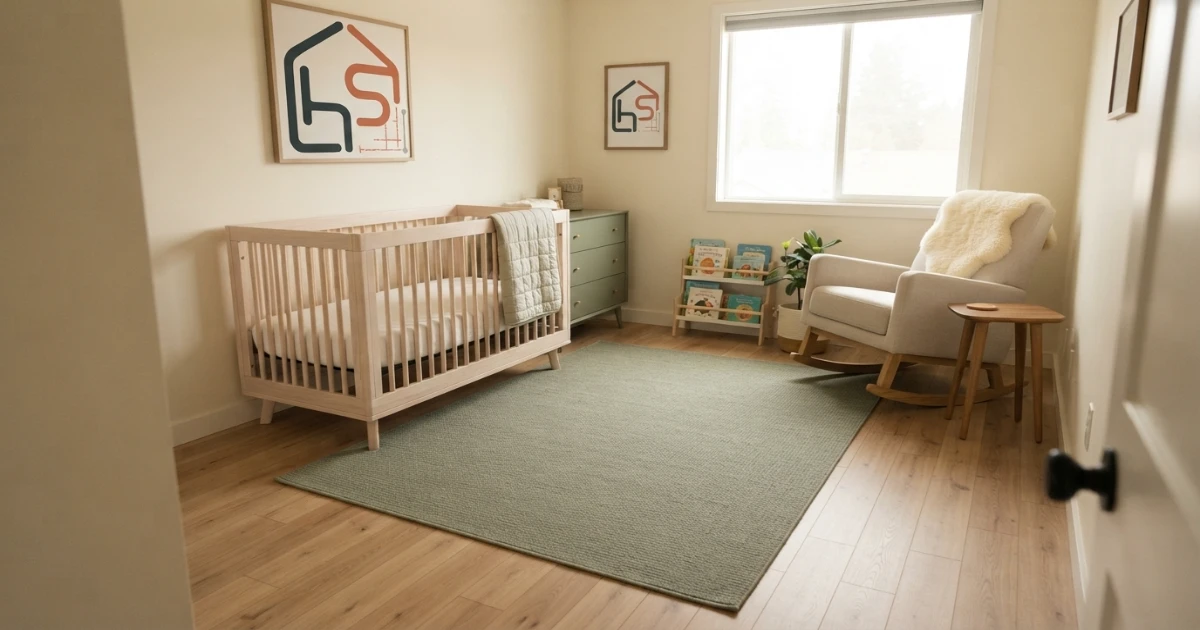
Small nursery
A 4×6 or 5×7 rug can define the main zone without filling the room.
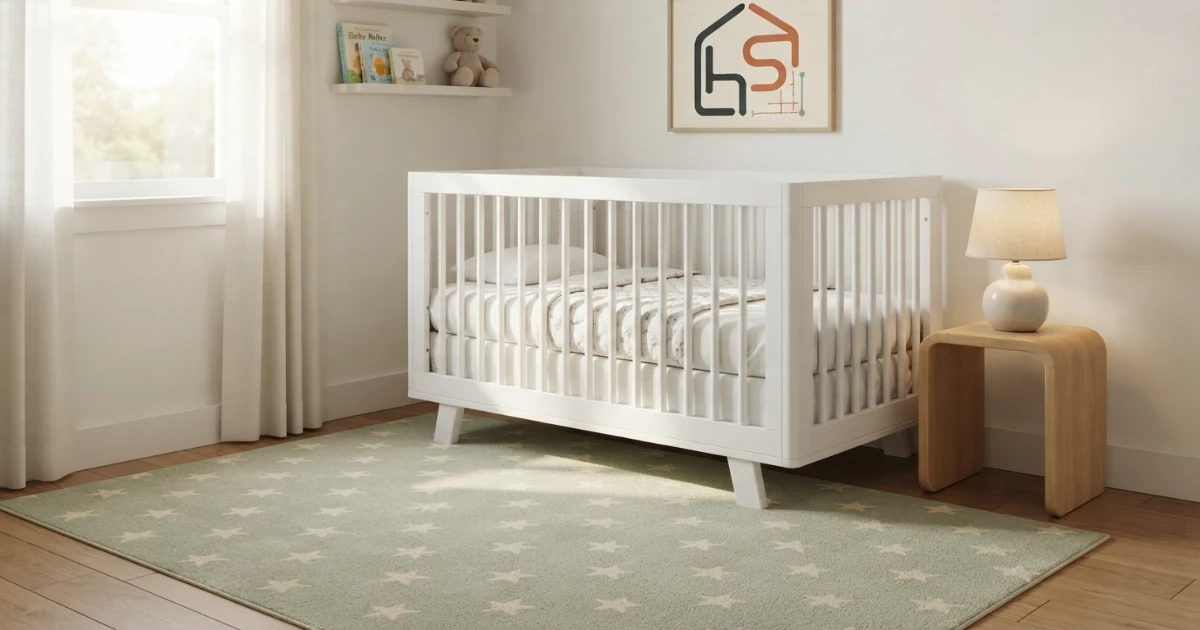
Crib placement
Use enough rug to remain visible and stable beyond the crib footprint.
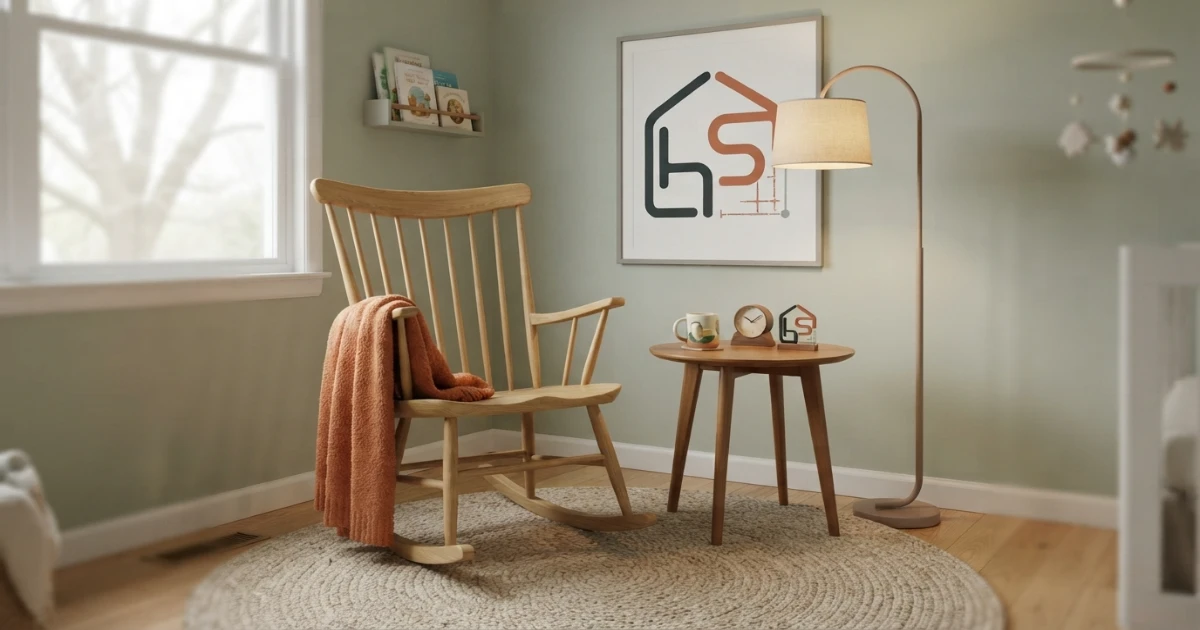
Rocking-chair zone
The full chair movement and side table should remain supported.
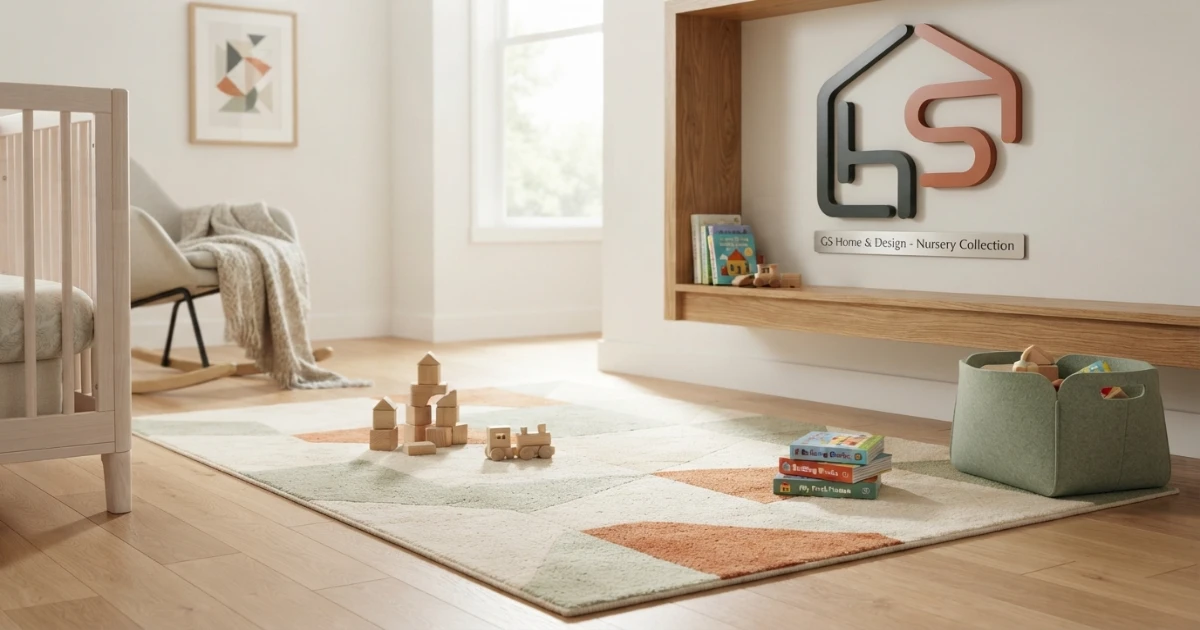
Play area
A 5×7 or 6×9 rug can create a clear floor zone for play and reading.
Nursery rug size: complete chart
A nursery rug can anchor the whole room, soften the floor beside the crib, support a rocking chair, define a changing area or create a play zone. The correct size depends on which job matters most.
Measure after placing the main furniture. Cribs, dressers, gliders, storage baskets and changing tables reduce the usable floor and change the best rug shape.
| Nursery setup | Common rug size | Alternative | Best placement |
|---|---|---|---|
| Small nursery | 4×6 ft | 3×5 ft | Crib-side, chair or central accent. |
| Standard nursery | 5×7 or 6×9 | 4×6 ft | Room anchor with crib and chair connected. |
| Large nursery | 8×10 ft | 6×9 ft | Anchor crib, chair and play zone. |
| Crib-side rug | 3×5 or 4×6 | Runner | Beside the long crib side with clear route. |
| Rocking-chair zone | 4×6 or 5×7 | 5 ft round | Support chair movement and side table. |
| Play area | 5×7 or 6×9 | 6 ft round | Open floor away from door and storage. |
| Twins nursery | 6×9 or 8×10 | Custom rectangle | Center between or in front of both cribs. |
Quick answer
A 4×6 rug suits many compact nurseries. A 5×7 or 6×9 works in many standard rooms. An 8×10 can anchor a large nursery with the crib, chair and play zone.
How to measure for a nursery rug size
Measure the room width and length, then subtract the areas that cannot practically hold a rug. Include door swing, floor vents, built-in storage and tight furniture gaps.
Place the crib, changing table, dresser and chair on a floor plan. The rug should support the intended zone without forcing furniture into unsafe or inconvenient positions.
Measure the crib footprint, including any projecting base, drawers or conversion rails. Measure the rocking chair or glider in its full normal movement.
Decide how much floor should remain visible around the rug. A deliberate border helps the room feel open and makes cleaning around edges easier.
Tape at least two options, such as 5×7 and 6×9. Check the view from the doorway, the chair, the crib side and the changing area.
Measure the exact rug listing before ordering. Retail categories may be rounded and handmade products may vary slightly.
Should the nursery rug go under the crib?
A rug can sit partly or fully under a crib, but it should remain flat, stable and accessible for cleaning.
Partial placement often works well. The front crib legs may sit on the rug while the back remains on the floor, or the rug may extend from beneath the long side into the room.
Full placement requires enough rug to remain visible around the crib. A rug ending exactly at the crib rails can look hidden and may be difficult to maintain.
A 5×7 or 6×9 rug can work with a standard crib, depending on orientation and room size. An 8×10 may anchor the complete nursery.
Do not allow thick edges or pads to create instability beneath furniture. Follow the crib and rug manufacturer’s instructions.
Many parents prefer the rug beside the crib rather than beneath it because the edge stays visible and cleaning is simpler.
Nursery rug size for a crib-side layout
A crib-side rug provides a soft standing area without placing the full crib on the rug. Three-by-five and 4×6 sizes are common starting points.
Place the long rug side parallel with the crib. Keep enough space to stand comfortably while opening drawers or reaching nearby storage.
A narrow runner can work along the crib side in a small nursery, but check the route from the door and chair.
Keep rug corners away from door swing and the main turning point. The rug should not shift when an adult steps quickly toward the crib.
If the crib sits in a corner, shift the rug toward the open room so more of the pattern remains visible.
The correct nursery rug size should relate to the crib but also connect with the chair or central play area when possible.
Nursery rug size for a rocking chair or glider
A chair-zone rug should support the full base and normal movement of the rocking chair or glider.
Measure the chair at rest and at its furthest usual movement. Include a side table, footstool or ottoman when those items normally stay in the zone.
A 4×6 or 5×7 rug works for many chair arrangements. A 5-foot round rug can create a softer reading corner.
Choose a pile that keeps the chair stable and allows smooth movement. Very thick pile may change how the chair rocks or glides.
Keep the rug clear of curtains, cords, heaters and storage baskets. The reading zone should remain simple and easy to navigate.
When the chair sits beside the crib, a larger 6×9 rug can connect both pieces and reduce the number of separate floor edges.
Nursery rug size near a changing table or dresser
A rug near the changing table provides softness underfoot, but it must not interfere with drawers, doors or storage baskets.
Place the rug far enough beneath the furniture to look intentional or keep it fully in front. Avoid an edge that sits directly under only the front feet.
A 3×5 or 4×6 rug can serve a focused changing zone. A larger room-anchor rug may support both the dresser and central floor.
Choose a material that is easy to clean. This zone may experience frequent spills and dropped items.
Keep the route from crib to changing table clear. A loose edge in the middle of that route is less practical than a larger, stable rug.
Use the Wall Art Size Calculator for safely positioned wall decor away from furniture and sleep areas.
Nursery rug size for a play area
A play-area rug should provide enough open surface for floor play, books and age-appropriate toys without becoming crowded by storage.
A 5×7 or 6×9 rug works in many nurseries. A 6-foot round rug can define a centered play zone in a square room.
Choose a low or medium pile that supports sitting and crawling while remaining practical to vacuum and clean.
Keep toy bins beside the rug rather than covering most of it. The rug should remain an open floor surface.
As the child grows, the play zone may need more area. A larger nursery rug size can adapt better than a tiny accent rug.
Inspect the rug regularly for loose fibers, curled edges, damaged backing or small detached parts.
Nursery rug size for a small room
Small nurseries need clear priorities. Decide whether the rug should support the crib side, chair or central floor instead of trying to cover everything.
A 4×6 rug is a practical starting point. A 3×5 can work in a focused zone, while a 5×7 may fit when furniture sits near the walls.
Use front-furniture placement rather than pushing the rug under every large piece. This keeps more of the rug visible.
Low contrast between rug and floor can make the room feel calmer. Strong patterns may overwhelm a small nursery with several furniture pieces.
Use the Small Room Design Guide and Bedroom Layout Planner to improve circulation.
Measure closet doors and under-crib storage before choosing the final rug position.
Nursery rug size for a large room
A large nursery can support 6×9 or 8×10 rugs, especially when the crib, chair and play zone should feel connected.
A large rug reduces visual fragmentation and can define the nursery within a spacious bedroom or multipurpose room.
Keep enough floor visible at the walls and door. The rug should anchor the furniture rather than resemble wall-to-wall carpet.
When the nursery includes a daybed, sofa or guest sleeping area, include that furniture in the rug plan or create a separate zone.
Large rugs require delivery planning and may need professional cleaning. Check doors, stairs and storage before ordering.
An 8×10 rug can support future changes as the crib converts or the room becomes a toddler bedroom.
Nursery rug size for twins or two cribs
A twins nursery needs more floor planning because two cribs, storage and seating create a larger footprint.
A 6×9 rug can work in a compact layout, while 8×10 or a custom rectangle may better connect both cribs.
Center the rug between the cribs or in front of them rather than hiding most of it beneath one crib.
Keep clear access to both sleep spaces and storage. The rug should not narrow the central route.
A single larger rug usually creates fewer loose edges than two small crib-side rugs.
Measure the chair, changing table and feeding zone as part of the same plan. Use the rug to support the most active shared area.
Can a round rug work in a nursery?
Round rugs work well in square rooms, reading corners and play zones. They soften the straight lines of cribs, dressers and storage.
A 4-foot round rug suits a small accent area. Five-to-six-foot diameters create a more usable reading or play zone.
Center the rug beneath a pendant, chair group or open floor zone. Do not force it beneath a rectangular crib if the shape becomes mostly hidden.
Use the Round Rug Sizes Guide to compare diameters and floor borders.
A round rug can also work beside the crib when enough open floor remains for the full circle to be visible.
Check edge stability because curved edges may cross more walking directions than a rectangular rug.
Nursery rug size, materials and pile height
Material and pile influence comfort, cleaning and furniture stability. Size alone does not determine whether a rug suits a nursery.
Low-pile rugs
Low pile is easy to vacuum and less likely to interfere with doors, storage drawers or moving furniture.
Medium-pile rugs
Medium pile provides more softness for sitting and play while remaining easier to maintain than shag.
High-pile and shag rugs
High pile can feel soft but may trap dust, crumbs and small objects. It can also make furniture less stable.
Wool and natural fibers
Wool can be resilient and comfortable. Jute and sisal add texture but may feel rough and react differently to moisture.
Synthetic fibers
Polyester, nylon and polypropylene can offer stain resistance and lower cost. Review the exact product construction and care guidance.
Are washable rugs good for nurseries?
Washable rugs can be practical where spills, feeding, pets or frequent floor play make regular cleaning important.
Check whether the rug fits the household washing machine. A 6×9 or 8×10 cover may need a large-capacity washer.
Review whether the product uses a separate pad and cover. Reassemble each layer carefully so no ridge or loose corner remains.
Follow the recommended detergent, water temperature and drying method. Heat can affect shape, backing and edge flatness.
Inspect the rug after every wash. Do not return it to the room until it is fully dry and lying flat.
A washable label does not replace routine vacuuming, spot cleaning and following the manufacturer’s instructions.
Nursery rug size, color and pattern
A large rug becomes one of the room’s main color fields. Compare it with the crib finish, walls, curtains, chair and storage.
Soft contrast can create a calm nursery, while stronger patterns can define the play zone. Avoid making every surface equally busy.
Large-scale patterns need enough rug area to remain visible. A tiny rug may hide the design beneath furniture.
Border patterns emphasize the rug edge and alignment. All-over patterns are more forgiving around asymmetrical furniture.
Dark solid colors can show lint, while very pale rugs may show marks quickly. Choose based on real cleaning habits.
Use the Room Color Palette Generator to coordinate the rug with walls, curtains and furniture.
Nursery rugs, allergies and cleaning routines
Rugs can collect dust and debris, so regular maintenance matters. Follow the product’s vacuuming and cleaning instructions.
Choose a pile and construction that match the household’s cleaning equipment. Very thick rugs may be harder to vacuum thoroughly.
Review fiber, backing, dyes and treatments when allergies or sensitivities are a concern. Seek medical advice for individual health questions.
Allow new rugs to air according to the manufacturer’s guidance before placing them in the nursery.
Clean spills promptly and dry the floor beneath the rug. Moisture trapped below can affect both rug and flooring.
Rotate the rug when practical to reduce uneven wear and fading from sunlight or repeated chair movement.
Nursery rug size, safety and accessibility
The rug should lie flat and remain stable. Use a pad or movement-control method compatible with both rug and floor.
Keep edges away from door swing, floor vents, heaters, stairs and the main route between crib, chair and changing table.
Do not allow fringe, loose fibers or curled corners to become part of the walking path.
Follow all crib, furniture and nursery-product instructions. A rug is a decorative floor product, not a sleep or safety device.
Decorative clearances are not accessibility standards. Seek qualified guidance where mobility or compliance needs apply.
This nursery rug size guide is not medical or child-safety advice. Consult appropriate professionals for individual concerns.
Common nursery rug sizing mistakes
- Choosing a rug before placing the crib and chair.
- Using a tiny accent rug that connects with no furniture.
- Hiding the entire rug beneath the crib.
- Ignoring full rocking-chair or glider movement.
- Placing an edge in the main route between crib and changing table.
- Choosing thick pile without checking doors and storage.
- Buying “washable” without checking machine capacity.
- Ignoring exact dimensions and manufacturing variation.
- Using two small rugs when one larger rug would reduce loose edges.
- Skipping regular inspection for curling, damage or loose fibers.
Nursery rug size buying checklist
Before ordering, compare the exact rug dimensions with the taped floor outline and the nursery furniture plan.
- Measure the usable room width and length.
- Measure the crib, changing table, chair and storage.
- Choose room-anchor, crib-side, chair, play or round placement.
- Check doors, vents, drawers, closets and main routes.
- Confirm visible rug beyond furniture edges.
- Review material, pile, backing and pad compatibility.
- Check cleaning, washing and drying instructions.
- Inspect product labels and manufacturer guidance.
- Measure delivery access for large rugs.
- Review return terms before buying.
Use the Rug Size Calculator for the final room-specific check. Compare common dimensions with the Standard Rug Sizes Chart.
Nursery rug size quick-reference decisions
The best nursery rug size begins with the usable floor after the crib, chair, dresser and storage are planned.
A practical nursery rug size should connect the most important zone without placing loose edges in the main route.
For a small room, a nursery rug size of 4×6 feet often creates a useful crib-side or chair zone.
For a standard room, a 5×7 or 6×9 nursery rug size can connect the crib, chair and central floor.
For a large room, an 8×10 nursery rug size can anchor the complete furniture arrangement.
For a reading or play corner, a round nursery rug size of 4 to 6 feet can create a clear focal zone.
Before buying any nursery rug size, tape the exact footprint and test doors, storage, chair movement and walking routes.
How this nursery rug size guide was prepared
This guide uses a measurement-first method. The usable floor is calculated after accounting for the crib, chair, changing table, storage, doors and vents.
The recommendation changes according to the rug role. A room anchor needs more area than a crib-side rug, while a chair or play zone may use a round or focused rectangle.
Standard sizes are treated as starting categories. The exact product listing remains the source of truth for length, width, fringe and manufacturing variation.
The interactive planner compares the room and selected role with common 3×5, 4×6, 5×7, 6×9, 8×10 and round sizes.
The guide separates decorative planning from professional child-safety, medical, allergy, accessibility and flooring advice.
It also considers real nursery use: cleaning, feeding, pets, chair movement, storage, future room changes and play.
For a complete nursery plan, compare the Bedroom Layout Planner, Round Rug Sizes Guide, Lighting Calculator, Paint Calculator, Curtain Calculator and Interior Size Guide.
Best planning order
Place the main furniture, measure the usable floor, choose the rug role, tape two size options, check chair and storage movement, then compare real product dimensions.
Measurement, indoor-air and rug-safety resources
These followed external links support unit conversion, indoor-air research and carpet or rug safety checks.
NIST length units
Use the official reference when converting inches, feet, centimeters and meters.
Read NIST length guidanceEPA indoor air quality
Review official indoor-air information when product materials, emissions or ventilation are a concern.
Read EPA indoor-air guidanceCPSC carpets and rugs
Review official information about carpet and rug requirements and surface-flammability standards.
Read CPSC rug guidance