TV above fireplace height: Best safe placement guide
TV above fireplace height cannot be chosen from one universal gap. Start with the fireplace manual, required clearances and measured wall temperature, then calculate the lowest comfortable screen center that keeps the TV within its operating limits.
Written and reviewed by Rehana K · Safety-first, measurement-first method.
TV above fireplace height: use the lowest position that passes heat and clearance checks.
First follow the fireplace manufacturer’s required clearances and the TV manufacturer’s operating-temperature and ventilation limits. Then place the TV bottom edge above the approved mantel gap and calculate the screen center from the TV’s actual height.
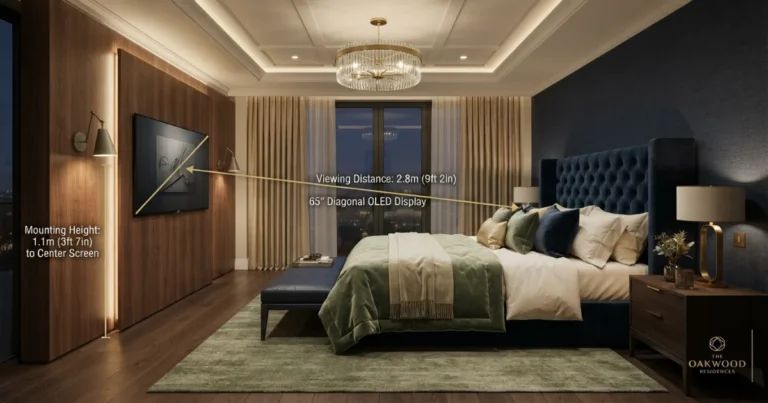
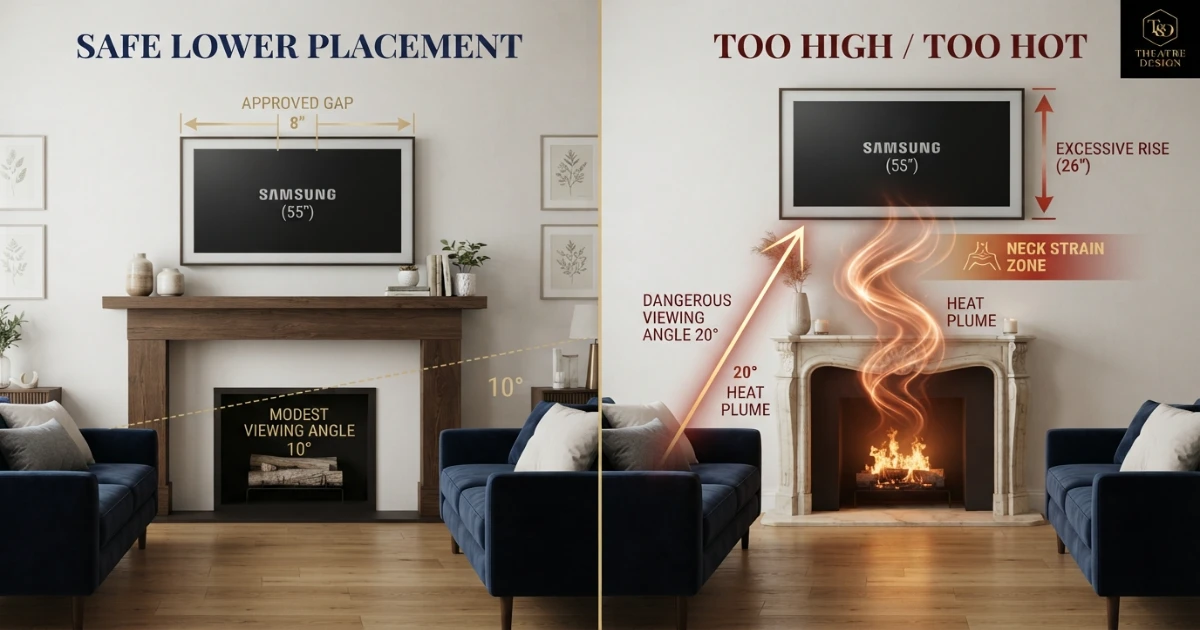
Check the upward viewing angle from the main sofa. THX suggests keeping the line of sight within about 15 degrees of screen center. When the screen must sit much higher, another wall or a pull-down mount may be more comfortable.
Combine fireplace safety with TV dimensions and mounting height
Confirm the diagonal, screen height, fireplace restrictions, furniture relationship and the main viewing angle before drilling.
Safe placement from fireplace clearance to viewing comfort
TV above fireplace height calculator
Enter mantel height, approved gap, TV size, eye level and viewing distance. The calculator estimates bottom, center, top and vertical viewing angle.
Floor-to-screen measurements
Mantel plus selected gap.
Bottom plus half screen height.
Approximate visible top edge.
Near the upper comfort range.
This geometric result does not prove heat safety. Confirm fireplace clearances, measured temperature, TV operating limits and wall structure before installation.
TV above fireplace height formula
Calculate the geometric position only after the selected fireplace and TV manuals confirm that an above-fireplace installation is allowed.
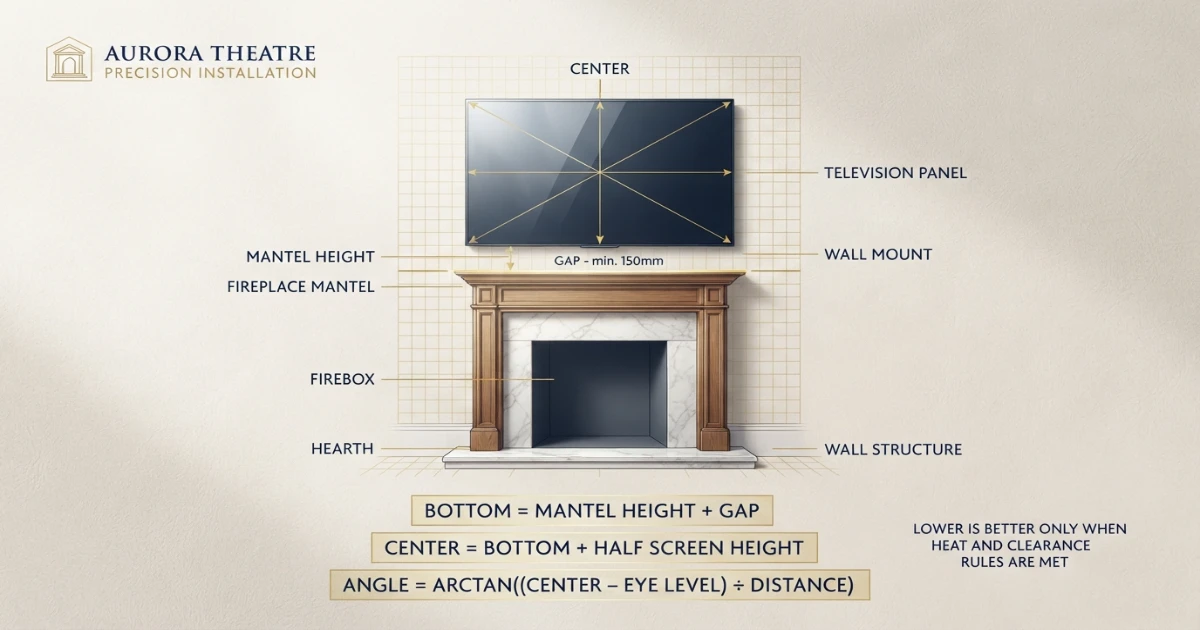
Add the approved gap to the mantel-top height.
Bottom = mantel height + approved gapAdd half the visible screen height.
Center = bottom + screen height ÷ 2Compare center rise with eye level and distance.
Angle = arctan((center − eye level) ÷ distance)Convert viewing distance to inches before calculating the angle. A 10-foot sofa distance equals 120 inches.
For a 65-inch screen, visible height is approximately 31.9 inches. If the bottom edge is 56 inches above the floor, the center is about 72 inches high. From a 42-inch eye level and 10-foot distance, that creates an upward angle of roughly 14 degrees.
The result may be geometrically acceptable but still unsafe if the fireplace wall becomes too hot, required clearances are not met or the mounting surface cannot support the load.
How to check heat before mounting a TV
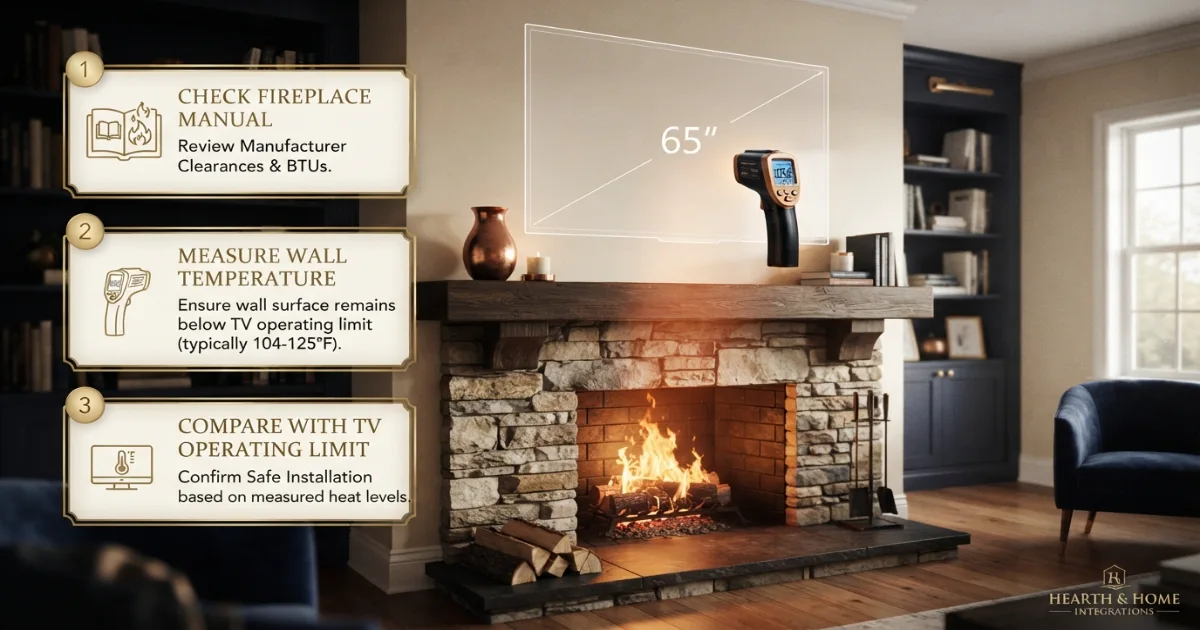
Heat is the first technical reason an above-fireplace installation may fail. Televisions generate their own heat and depend on ventilation, so added fireplace heat can shorten component life or push the set outside its specified operating range.
Safety-first heat-check sequence
Read the fireplace instructions, identify the approved TV or combustible-material zone, operate the fireplace under the manufacturer’s test conditions and measure the planned wall location. Compare the result with the television’s stated operating-temperature range.
Do not rely on touching the wall with a hand. Human perception is not a precise temperature measurement, and the hottest point may be above or behind the planned screen.
Use an appropriate thermometer or infrared temperature tool according to its instructions. Record several locations across the planned TV footprint, including lower areas where rising heat first reaches the installation.
Repeat the test during realistic high-output use. Gas fireplaces with heat-management channels may behave differently from conventional gas units, electric fireplaces and wood-burning fireplaces.
If measured temperatures approach or exceed the TV manufacturer’s limits, choose another location or use a fireplace system specifically engineered for an above-TV installation.
How fireplace type changes TV placement
Gas fireplaces
Gas fireplaces vary widely. Some direct-vent and heat-management models are designed to redirect heat away from the wall above the opening, while conventional units can create a much hotter vertical plume.
Use the exact installation manual, not advice for another gas fireplace. Clearances can change with mantel depth, finishing materials, heat ducts and optional accessories.
Electric fireplaces
Electric fireplaces often produce less wall heat than wood-burning or conventional gas units, especially when the heat outlet directs air forward. However, models and installation details differ.
Confirm where heated air exits and whether the manufacturer permits a television above the unit. Keep TV ventilation openings clear.
Wood-burning fireplaces
Wood-burning fireplaces create variable heat, soot, smoke and spark conditions. Chimney and masonry construction also affect the mounting surface.
Combustible-material clearances and mantel rules are governed by the fireplace design, installation instructions and applicable building codes. Professional evaluation is often appropriate.
Ventless or unvented fireplaces
Ventless systems release combustion heat and moisture into the room and may create different temperature patterns. Follow the exact unit’s instructions and local rules, which may restrict their installation or use.
Does a mantel protect the TV?
A mantel can redirect some rising heat away from the wall above it, but its effectiveness depends on projection, material, fireplace opening, heat output and airflow.
Do not treat every mantel as a certified heat shield. A shallow decorative shelf may provide little protection, while a fireplace manufacturer may specify exact mantel depths and vertical clearances.
Combustible mantels themselves must satisfy applicable fireplace and building-code clearances. The International Building Code includes projection-based limits for combustible material near masonry fireplace openings, but the selected fireplace instructions and local enforcement remain essential.
Measure the mantel’s floor height, projection and material. Include any soundbar or decorative object that would sit between the mantel and TV.
When a mantel makes the TV too high, changing the fireplace design or using another wall can be more comfortable than increasing the viewing angle.
Keep the TV viewing angle comfortable
Above-fireplace screens commonly sit much higher than standard eye-level installations. Calculate the angle rather than judging height only from appearance.
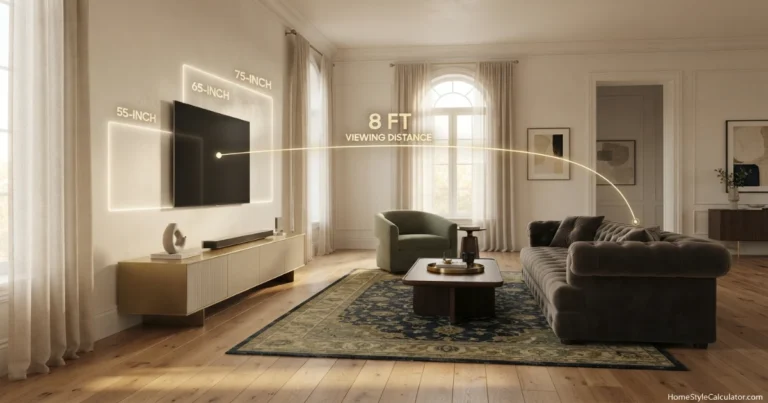
THX suggests keeping the line of sight within about 15 degrees above or below screen center. The closest regular seat experiences the steepest angle and should control the comfort check.
Close to eye-level placement and generally comfortable for long viewing.
Noticeably elevated but often workable at normal sofa distances.
Upper comfort range; test carefully during longer viewing.
Consider a lower location, pull-down mount or another wall.
A tilt mount can aim the screen downward and reduce reflections, but it does not eliminate neck extension. A pull-down mount lowers the screen for viewing, provided it is compatible with the fireplace environment and installed correctly.
How TV size changes fireplace placement
Larger televisions have taller screens, so the same bottom edge produces a higher center and top edge.
A 55-inch screen is about 27 inches high. A 65-inch screen is about 31.9 inches high. A 75-inch screen is about 36.8 inches high, and an 85-inch screen is about 41.7 inches high.
| TV size | Screen height | Center above bottom | Example center with 56-inch bottom |
|---|---|---|---|
| 55 in | 27.0 in | 13.5 in | 69.5 in |
| 65 in | 31.9 in | 16.0 in | 72.0 in |
| 75 in | 36.8 in | 18.4 in | 74.4 in |
| 85 in | 41.7 in | 20.8 in | 76.8 in |
Do not raise the bottom edge unnecessarily to make a larger TV look centered over the mantel. Start from the lowest approved bottom position and calculate the resulting center.
Use the TV Dimensions Chart for other screen sizes.
Wall structure, chimney and mounting hardware
A fireplace wall may contain masonry, metal framing, wood framing, flue components, heat ducts, plumbing or electrical runs. Do not drill until the wall construction is understood.
The mount must support the television’s weight and VESA pattern. Hardware suitable for wood studs is not automatically suitable for brick, stone veneer, concrete block or metal framing.
Stone and tile finishes can conceal the structural wall. The decorative surface alone may not be capable of supporting the mount.
Keep mount hardware and fasteners away from chimney or flue components unless the approved installation design specifically allows the location.
Professional installation is appropriate when structural support, chimney location or wall materials are uncertain.
Power, cables and heat-safe routing
Do not run ordinary power cords or signal cables through a wall unless the cable and method are approved for that use. Follow electrical codes and use a qualified electrician where required.
A recessed outlet behind the television must remain accessible and compatible with the heat and wall construction. Avoid placing connections where rising heat or mount movement stresses cables.
Full-motion and pull-down mounts need enough cable slack for their complete travel. Secure cables so they cannot touch hot fireplace surfaces or become pinched.
External media boxes, soundbars and game consoles also need ventilation. The mantel should not become a crowded shelf that blocks heat flow or cable access.
TV above fireplace height examples
Low electric fireplace: A low unit with a forward heat outlet may allow a modest TV center, but the fireplace manual and measured wall temperature still control the installation.
Gas fireplace with heat management: A system designed to redirect heat may permit a lower TV location than a conventional unit. Use the exact approved configuration.
Tall traditional mantel: A high mantel can push the TV center beyond a comfortable angle even when heat is controlled. Another wall or pull-down mount may be preferable.
Wood-burning masonry fireplace: Combustible clearances, soot, heat and masonry drilling require careful professional evaluation.
Large 85-inch TV: The screen’s 41.7-inch height raises the center substantially above the same mantel gap. Check angle and ceiling clearance.
Short sofa distance: A close sofa increases the vertical angle. Relocating the sofa farther back may help, but screen-size suitability should also be reviewed.
Better alternatives when the TV would be too high
Place the television on an adjacent wall and let the fireplace remain a separate focal point. This often improves eye-level comfort and furniture flexibility.
Use a low media console beside the fireplace. An asymmetrical arrangement can feel intentional when artwork, shelves or cabinetry balance the composition.
Choose a pull-down mount that is specifically compatible with the television, wall and fireplace conditions. Confirm heat exposure when the screen is stored above the mantel.
Redesign the mantel or fireplace surround only with professional guidance and compliance with the fireplace instructions and local code.
Use a smaller TV only when it also suits the viewing distance. A smaller screen lowers the center slightly, but it may not solve an excessively tall mantel.
Step-by-step safe placement process
Find the installation manual and all clearance diagrams.
Record operating temperature, ventilation and mounting requirements.
Confirm building, electrical and fireplace rules for the installation.
Record the floor-to-top height and shelf depth.
Operate the fireplace as directed and record the planned TV footprint.
Use manufacturer clearance, not a generic internet gap.
Use the visible screen height and complete body measurements.
Use the closest regular seat and measured eye height.
Check every seat, glare, ceiling space and room balance.
Confirm VESA, weight, fasteners, studs or masonry and cable routes.
Fireplace, structural and electrical work may require licensed professionals.
Common TV above fireplace height mistakes
- Using one universal mantel-to-TV gap for every fireplace.
- Ignoring the fireplace installation manual.
- Ignoring the TV operating-temperature range.
- Using a hand-touch test instead of measured temperature.
- Assuming any mantel protects the TV from heat.
- Choosing height from appearance without calculating viewing angle.
- Letting a tilt mount substitute for comfortable placement.
- Measuring screen size but not complete TV body height.
- Drilling into an unknown chimney or wall assembly.
- Using hardware that does not match masonry, studs or TV weight.
- Routing ordinary cords inside the wall.
- Blocking TV ventilation or cable access.
- Testing only the center sofa and ignoring the closest seat.
- Mounting above the fireplace when another wall is clearly safer.
TV above fireplace height safety checklist
- Exact fireplace make and model identified.
- Fireplace installation manual reviewed.
- TV operating-temperature range recorded.
- Required clearances confirmed.
- Local building and electrical rules checked.
- Mantel height, material and projection measured.
- Wall temperature tested at the planned TV footprint.
- TV bottom edge calculated from approved clearance.
- Screen center and top edge calculated.
- Closest-seat viewing angle checked.
- Complete TV dimensions and weight verified.
- VESA pattern and mount capacity confirmed.
- Wall, chimney and framing structure understood.
- Power and cable routing approved.
- TV ventilation remains open.
- Glare and room lighting tested.
- Alternative wall considered.
- Professional help arranged where required.
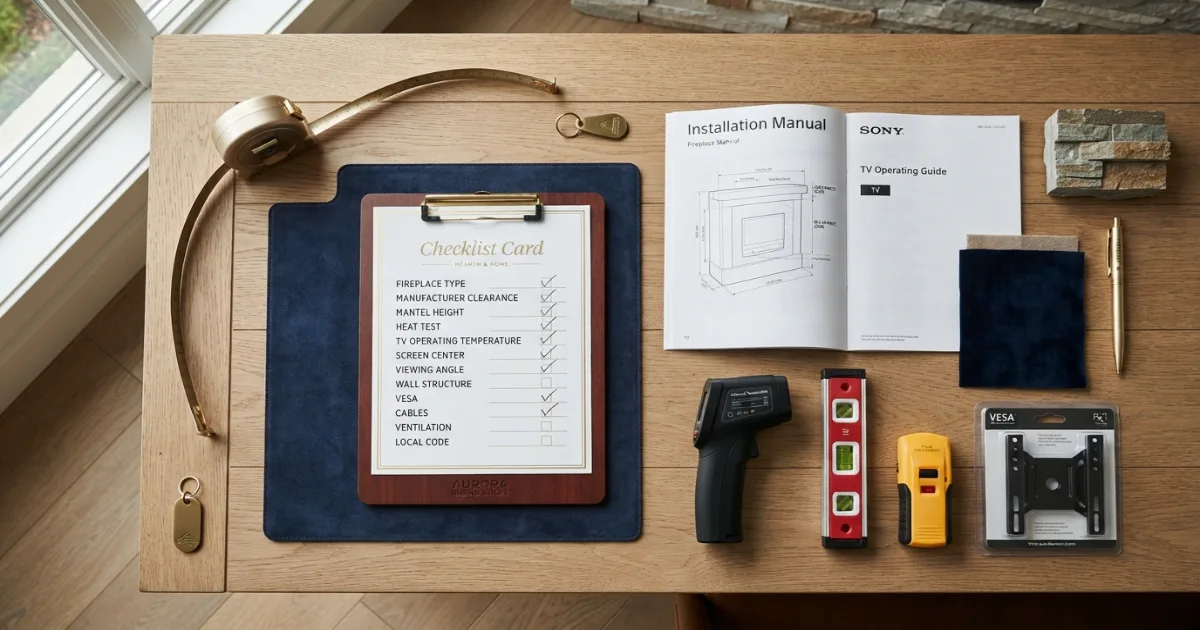
Professional review is especially valuable when several acceptable-looking measurements conflict—for example, safe heat clearance creates an uncomfortable viewing angle.
For masonry fireplaces, local code requirements and combustible-material rules may also need confirmation from the authority having jurisdiction.
A fireplace professional can interpret the appliance clearances and heat-management design. A qualified installer can assess the mount, wall structure and VESA requirements. An electrician can provide code-compliant power and cable pathways.
Use qualified help when the fireplace model is unknown, manuals are missing, the wall contains a chimney or flue, the finish conceals structure, or new power must be installed.
When professional review is the right choice
Annual fireplace maintenance is also a useful time to review clearances, mount fasteners, cable condition and wall finishes.
Inspect the TV for unexpected shutdowns, discoloration, unusual heat, cable damage or ventilation blockage. Stop using the fireplace-and-TV combination if signs of overheating appear.
Recheck wall temperature after fireplace servicing, changes to logs or burners, a new mantel, added doors, modified vents or changes to the heat-management system.
Room temperatures, fireplace output and airflow can change between mild weather and the coldest part of the heating season. Retest the planned or completed installation during realistic high-use conditions.
Retest the installation after seasonal changes
The stored position still needs to pass the fireplace heat test. Lowering the TV only during use does not protect it while the fireplace operates and the screen is parked above the mantel.
Plan cables for both stored and lowered positions. They need enough slack to move without pinching, rubbing against masonry or touching heated areas.
Confirm the mount’s weight range, VESA pattern, handle clearance, locking mechanism and required wall structure. The television must remain clear of the mantel, fireplace opening and hot surfaces through the entire movement path.
A pull-down mount can lower the screen closer to eye level during viewing and return it above the mantel afterward. It can improve comfort, but it adds moving parts, cable travel and heat-position questions.
Using a pull-down mount above a fireplace
If soot deposits or moisture appear on the wall, stop treating the location as a normal media wall and have the fireplace system assessed.
Inspect the fireplace for correct drafting, sealed doors, clean vents and proper maintenance. A television should not be used to hide staining, cracking or ventilation problems above the opening.
Ventless appliances can add moisture and combustion byproducts to the room. These conditions may affect screens, connectors, speakers and wall finishes even when the surface temperature appears acceptable.
Heat is not the only concern. Wood-burning and improperly vented fireplaces can expose the television and nearby electronics to soot, smoke residue and airborne particles.
Soot, moisture and air-quality considerations
When the television manual does not clearly address fireplace placement, contact the manufacturer or an authorized installer rather than assuming that a cool-feeling wall is acceptable.
Keep photographs of the wall, mantel, thermometer readings, mount attachment and cable route. These records do not guarantee warranty coverage, but they create a useful installation history.
Record the permitted operating-temperature range and required ventilation clearances. Compare those limits with measured temperatures across the complete planned TV footprint, not only one point near the mantel.
A television warranty may exclude damage caused by heat, moisture, soot, incorrect ventilation or installation outside the product instructions. Before mounting, save the exact TV manual and warranty terms with the fireplace documentation.
TV warranty and operating-temperature limits
Final answer: safe TV above fireplace height
TV above fireplace height should be the lowest position that satisfies the exact fireplace clearances, keeps the television within its operating-temperature limits and leaves safe ventilation and installation access.
Calculate the bottom edge from mantel height plus the approved gap. Add half of the visible screen height to find the center, then calculate the upward viewing angle from the closest regular seat.
When the angle is uncomfortable, the wall becomes too hot or the structure and wiring cannot be verified, use another wall or an appropriately engineered alternative rather than forcing the installation.
Need the correct TV diagonal before planning the fireplace wall?
Use the free TV Size Calculator, then return with the selected screen height.
Official and primary safety references
Clearances and heat limits are installation-specific. The sources below support the placement, viewing-angle and combustible-material principles used in this guide.
- Sony wall-mount FAQ: eye-level placement, glare and viewing distance
- THX viewing guide: approximately 15 degrees or less from screen center
- 2024 International Building Code: combustible material near masonry fireplace openings
- Valor Fireplaces: manufacturer clearances, heat management and TV planning
Two safety and installation categories to compare
Product tools do not replace manufacturer instructions, local requirements or qualified installation.
Infrared Thermometers
Useful for mapping surface temperatures at the planned TV footprint when used correctly.
- Check temperature range
- Review emissivity guidance
- Compare with TV limits
Tilting and Pull-Down TV Mounts
Compare only after verifying TV weight, VESA, wall structure and fireplace conditions.
- Confirm rated capacity
- Check travel and clearances
- Plan heat-safe cable movement
Affiliate disclosure: As an Amazon Associate, HomeStyle Calculator may earn from qualifying purchases. Product specifications, prices and availability can change.
TV above fireplace height FAQs
How high should a TV be above a fireplace?
There is no universal height. The safe position depends on fireplace-manufacturer clearances, mantel height, heat at the TV location, screen size, seated eye level and viewing distance.
How much space should be between a mantel and TV?
Use the fireplace and TV manufacturer instructions first. The practical gap must satisfy required clearances, keep the TV within its operating-temperature limits and leave enough room for ventilation and installation.
Is it safe to mount a TV above a gas fireplace?
It can be safe only when the fireplace is approved for that installation, required clearances are met, wall temperatures remain within the TV’s limits and the wall can support the mount.
Is it safe to mount a TV above a wood-burning fireplace?
Wood-burning fireplaces often create more variable heat, soot and spark exposure. Follow the fireplace manual, building-code requirements and professional guidance before considering a TV above one.
What is the best TV center height above a fireplace?
Choose the lowest center height that still meets all heat, mantel and clearance requirements. Then calculate the viewing angle from the main seat and try to keep it within about 15 degrees.
How do I calculate TV center height above a mantel?
Add the mantel height and the selected safe gap to get the TV bottom edge, then add half of the visible screen height to find the screen center.
Will a mantel protect a TV from fireplace heat?
A mantel may redirect some heat, but it is not a universal heat shield. Its dimensions and effectiveness must be evaluated with the fireplace manufacturer’s instructions and actual temperature testing.
Can a tilting mount fix a TV that is too high?
A tilt mount can aim the screen toward viewers and reduce reflections, but it does not remove the neck angle caused by looking upward.
Should I test the wall temperature before mounting?
Yes. Operate the fireplace as directed and measure temperature at the planned TV location, then compare the result with the TV’s allowed operating-temperature range and fireplace guidance.
When should I avoid putting a TV above a fireplace?
Avoid the location when required clearances cannot be met, wall temperatures exceed TV limits, the viewing angle is uncomfortable, the wall cannot safely support the mount or local rules prohibit the installation.