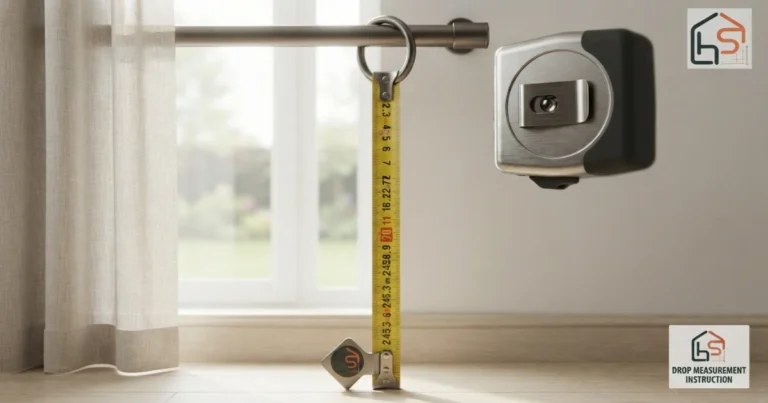
Entryway Rug Size: choose the right fit for doors, foyers and narrow entrances.
Entryway rug size: measure the usable floor, check the full door swing, choose whether the rug acts as a mat, foyer anchor or runner, and compare the result with 2×3, 3×5, 4×6, 5×7, 6×9 or custom sizes.
Written by Rehana K · Updated July 16, 2026 · Includes a quick answer, interactive planner, size charts, image guidance and a 3,500+ word guide.
What entryway rug size should you choose?
A 2×3 rug works as a compact interior door mat. A 3×5 or 4×6 rug suits many small foyers. A 5×7 or 6×9 rug can anchor a larger entry with a console or open floor. A narrow entry may work better with a runner. Always check the door swing before buying.
Choose an entryway rug size with real measurements
Measure usable floor
Record clear width and length between walls, doors, stairs, console and room openings.
Test the door swing
Measure the lowest clearance and mark the full path of single or double doors.
Choose the rug role
Decide whether it is a door mat, foyer anchor, runner, console accent or zone marker.
Confirm the product
Check exact dimensions, pile, backing, moisture, cleaning and return terms.
Entryway rug size quick planner
Choose the entry type, enter the usable floor dimensions and select the rug role.
Your entryway rug starting point
Confirm this result against the door swing, console, stairs, thresholds and exact product dimensions.
Balanced for a small-to-medium foyer.
Defines the arrival zone without filling the floor.
Leaves deliberate flooring around the rug.
Use for stronger visual coverage when the door allows it.
Entryway rug size calculators and guides
Use the rug calculator for the final room-specific recommendation, then coordinate the entry with the hallway, lighting, paint and adjoining rooms.
Entryway rug size examples
These five branded WebP image slots include styled fallbacks, so missing uploads will not leave broken-image icons.
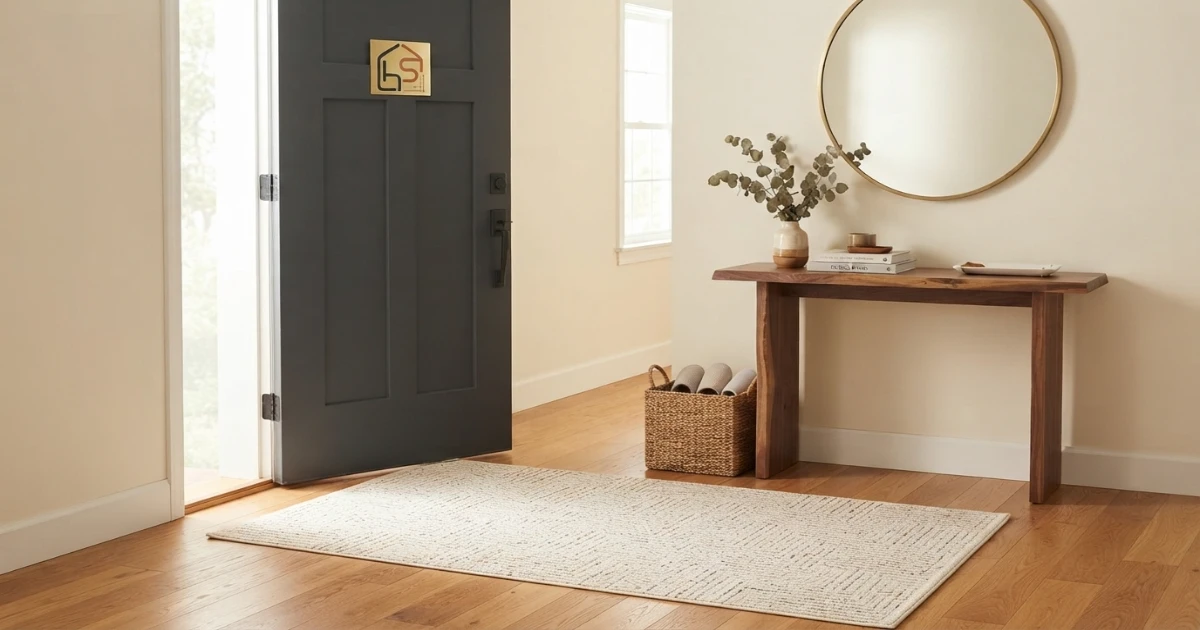
Small foyer
A 3×5 or 4×6 rug can define the arrival zone without crowding the door.
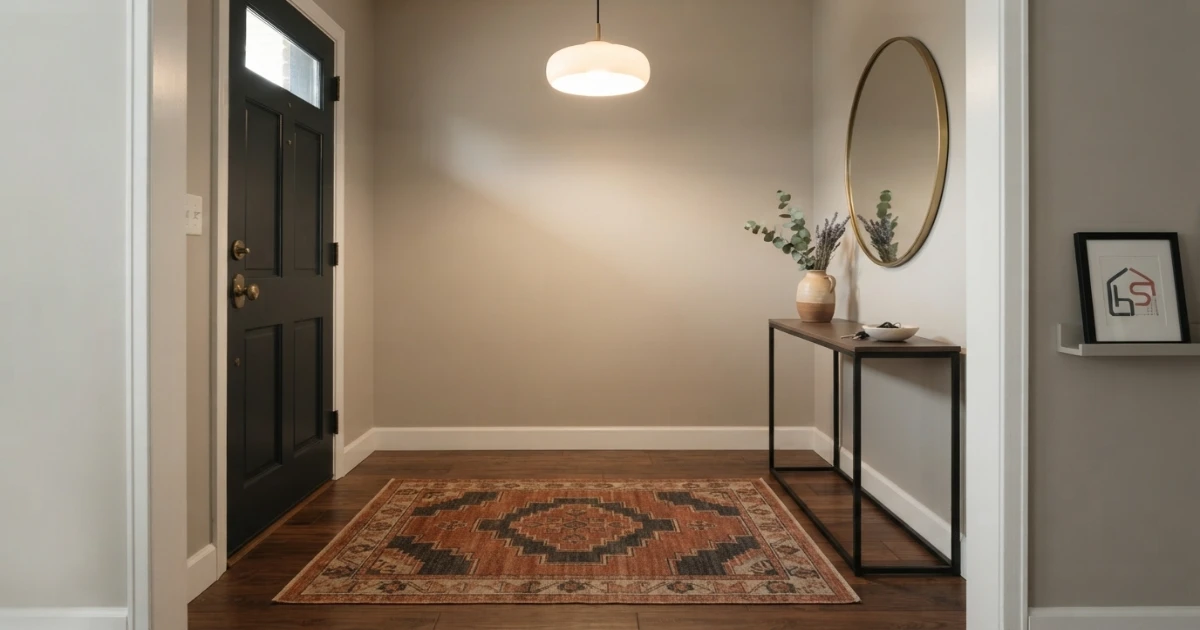
Double doors
Choose enough width to relate to the complete opening while preserving door movement.
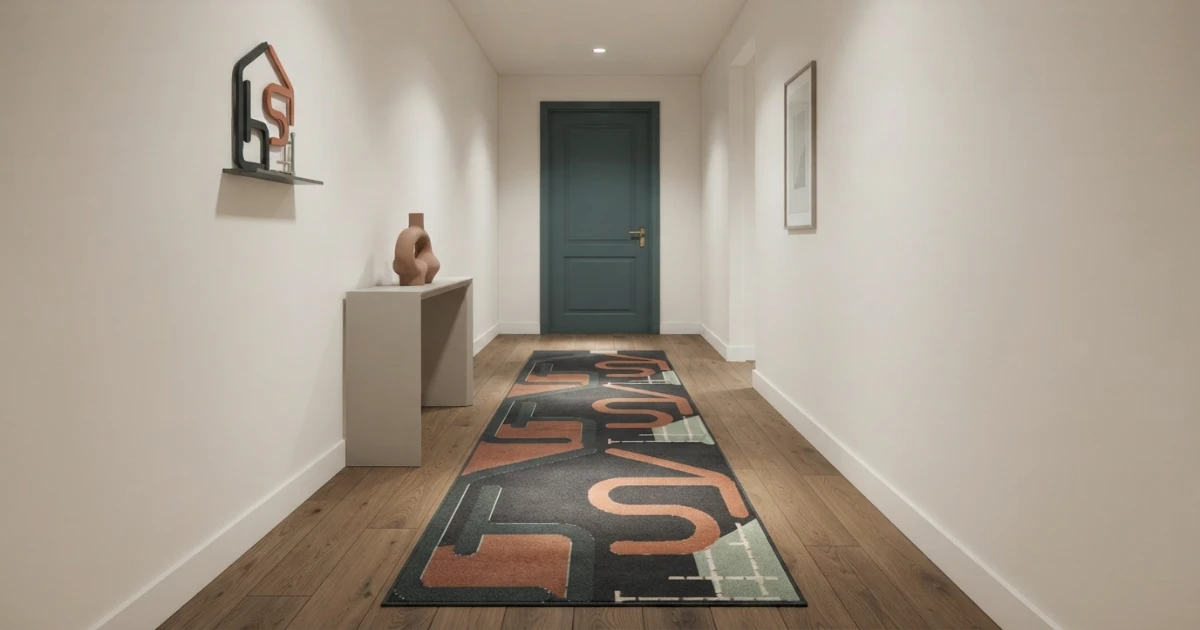
Narrow entry
A runner can lead the eye inward while leaving useful flooring on both sides.
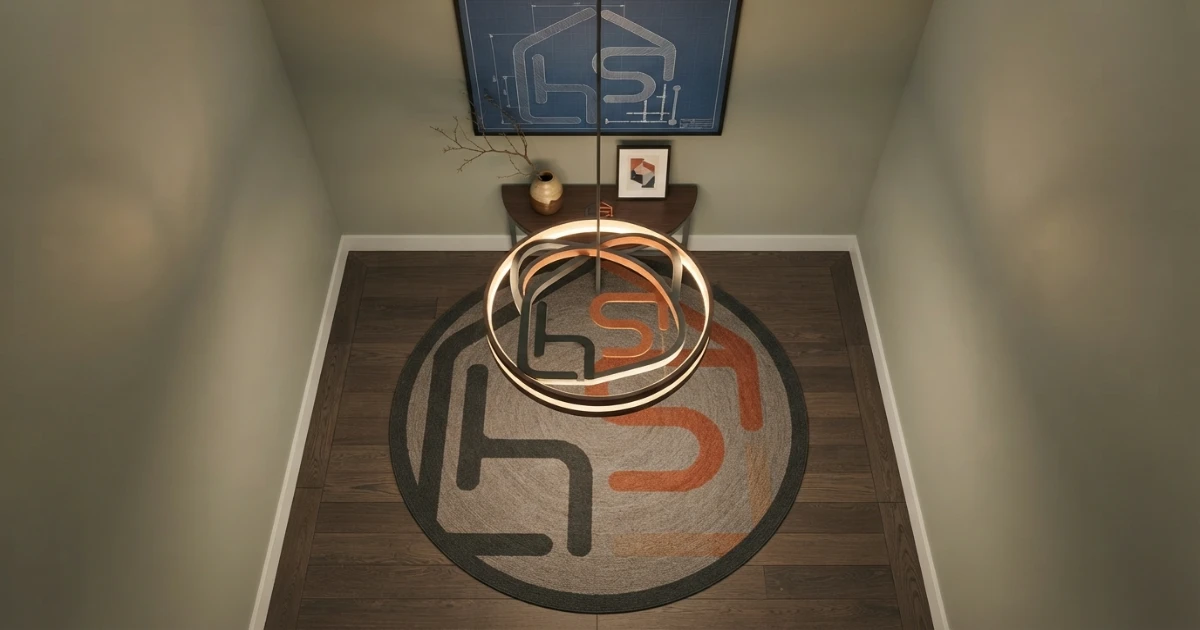
Round foyer
A 4-to-6-foot round rug can anchor a square foyer or centered table.
Entryway rug size: complete chart
An entry rug may act as a compact door mat, a foyer anchor, a runner, a console-table accent or a visual transition into the home. The correct size depends on which job it needs to perform.
Measure the usable floor, not the full architectural room. Door swing, stairs, thresholds, console depth and open routes can reduce the practical footprint.
| Entryway type | Common rug size | Alternative | Best placement |
|---|---|---|---|
| Single-door interior mat | 2×3 ft | 2.5×4 ft | Inside the door with clear swing. |
| Small foyer | 3×5 or 4×6 | Round 4 ft | Centered in the usable floor area. |
| Double front doors | 4×6 or 5×7 | Custom wide mat | Relate to full door opening and swing. |
| Narrow entry hall | 2×6 to 2.5×10 | Short 3×5 rug | Centered on the main walking route. |
| Large foyer | 5×7 or 6×9 | Round 6 ft | Anchor console, bench or centered feature. |
| Open-plan entry | 5×7 or 6×9 | Custom rectangle | Define arrival without blocking adjoining zones. |
| Console-table accent | 3×5 or 4×6 | Runner | Center on console and arrival sightline. |
Quick answer
A 3×5 or 4×6 rug suits many foyers. A 5×7 or 6×9 rug works in larger entries. A narrow space may need a runner, while a square foyer can support a round rug.
How to measure for an entryway rug size
Start by measuring the clear floor width and length. Use the shortest practical measurement if the walls, trim or furniture create an uneven space.
Mark the front door swing, double-door swing or sliding panel. Measure the clearance beneath the lowest part of the door, including any rug pad.
Note thresholds, floor registers, stairs, closets, coat storage, benches and console tables. These features may change the useful rug shape.
Decide whether the rug should sit immediately inside the door or farther into the foyer. A moisture-control mat may sit at the threshold while a decorative rug begins beyond it.
Choose a visible floor border. The rug should not automatically fill the whole foyer. A deliberate border often makes the entry feel more spacious and intentional.
Tape the outline of two sizes if possible. Compare the first impression from outside the door, inside the home and from adjoining rooms.
Entryway rug size and front-door clearance
Door clearance is the first practical check. A rug that catches the door can fold, move or become difficult to clean.
Measure the gap beneath the door at several points because floors and doors may not be perfectly level.
Add the rug and pad thickness together. A low-pile rug without a pad may clear the door while the same rug with a thick pad does not.
Open the door through the full normal swing. Check the edge, corners and any fringe. Do not assume the center clearance applies to the entire door path.
When the front door opens outward, interior swing may not be a concern, but thresholds, closet doors and secondary doors still need checking.
The correct entryway rug size should leave the door easy to operate. Shifting the rug farther into the foyer is often better than forcing it beneath the swing.
Entryway rug size for single and double front doors
Single front doors
A 2×3 rug can work as a compact mat, but it may look small in a wide foyer. A 3×5 rug usually creates a stronger visual connection with the door and surrounding floor.
Position the rug so it relates to the door centerline. When a console or stair changes the layout, center it on the usable arrival zone instead.
Double front doors
Double doors create a wider architectural opening. A 4×6 or 5×7 rug often feels more proportionate than a narrow 2×3 mat.
Measure both door leaves and their swing. If one door is used daily and the other remains closed, the rug should still look balanced across the complete opening.
A custom wide mat can work when standard proportions do not suit the door width. Confirm custom returns before ordering.
Doors with sidelights
Sidelights make the entrance appear wider than the operating door. Choose a rug based on the visual composition and the usable floor, not only the door slab.
Entryway rug size for a small foyer
A small foyer needs enough rug to feel intentional without covering every strip of floor. A 3×5 or 4×6 is a common starting range.
Use the rug to define where guests step into the home. Keep closet doors, stairs and the main route clear.
When the foyer is nearly square, a centered 4×4 or 4-foot round rug can work better than a long rectangle.
In a narrow small foyer, a 2×6 runner may create better direction than a 4×6 rug that crowds the walls.
Use lower contrast between rug and floor when the entry already contains several strong elements, such as patterned tile, a bright door or decorative wallpaper.
Entryway rug size for a large foyer
A large foyer can support 5×7, 6×9, larger round rugs or custom sizes. The rug should anchor a clear function rather than float in unused floor.
Center it beneath a pendant, console grouping, bench, round table or architectural axis. The rug and lighting fixture can share a centerline.
Keep enough floor visible around the rug so the space does not feel like a living room with missing furniture.
When the foyer opens to stairs, leave the landing path clear and visually distinct. The rug should not approach the first step too closely.
In a double-height foyer, a larger rug can balance the vertical scale. Compare 5×7 and 6×9 outlines before choosing.
A round rug can soften a large square foyer, while a rectangular rug can guide the eye toward the living room or hallway.
Entryway rug size for a narrow entrance
A narrow entry behaves like a short hallway. Measure the narrowest clear width and choose a runner that leaves visible floor on both sides.
Two-to-2.5-foot widths work in many narrow entries, but the exact border depends on door casing, trim, console depth and accessibility needs.
Choose length according to the straight visual run. A 2×6 or 2×8 runner suits many compact entrances, while 2.5×10 may work in a longer entry hall.
Do not push the runner against the front threshold. Leave enough space for the door and any separate outdoor or moisture-control mat.
Use the Hallway Runner Guide for detailed runner width and length calculations.
Entryway rug size with a console table or bench
A console table creates a visual anchor, but the rug does not always need to sit beneath it. It can center on the open floor in front of the console.
When the console legs sit on the rug, confirm that the rug extends enough beyond the furniture to look intentional.
A 3×5 or 4×6 rug can work with a small console. Larger foyers may need 5×7 or 6×9 to balance a long table and wall art.
For a bench, decide whether all legs sit on the rug or remain on the floor. Avoid a position where only one pair of legs touches the edge.
Use the Wall Art Size Calculator to coordinate artwork or a mirror above the console.
Keep drawers, cabinet doors and baskets easy to access. The rug edge should not interfere with daily storage.
Entryway rug size in an open-plan home
An open-plan entry may not have clear walls. The rug can create the arrival zone through contrast, shape and alignment.
Use the front door, console, pendant or ceiling line as the reference. Do not center the rug randomly in the entire open floor.
A 5×7 or 6×9 can define a generous open entry while remaining separate from the living-room rug.
Keep enough floor between rugs so each zone reads independently. Matching colors are useful, but matching patterns are not required.
When the living room begins immediately, align the entry rug with the main path rather than pushing it toward the sectional or sofa.
Use the Living Room Layout Guide to coordinate the arrival route with the main seating area.
Entryway rug size near stairs, thresholds and closets
Keep the rug clear of stair edges and landings. A loose entry rug is not a substitute for a professionally installed stair runner.
At raised thresholds, stop the rug before the transition unless the product and installation are designed to cross it.
Open coat-closet doors through their full movement. Check sliding, bifold and hinged doors because each affects floor space differently.
Floor registers and vents should remain functional. Avoid covering them or creating an uneven section beneath the rug.
When the entry includes a step down, keep the change in level visually obvious. Do not allow the rug edge to hide the step.
In an apartment corridor, check building rules and fire-safety requirements before placing a rug near a shared exit route.
Round rugs, runners and rectangular rugs in entryways
Rectangular rugs
Rectangular rugs suit most foyers because they align with doors, consoles and hallways. Common sizes include 3×5, 4×6, 5×7 and 6×9.
Round rugs
Round rugs work in square foyers, beneath centered tables or under circular pendant lights. Four-to-six-foot diameters suit many homes.
Use the Round Rug Sizes Guide to compare diameter and floor border.
Runner rugs
Runners suit long, narrow entrances and can guide the eye toward the rest of the home. Check the door swing and side borders carefully.
Square rugs
Square rugs can work in compact square foyers, especially when the door and console create a symmetrical arrangement.
Entryway rug size, materials and pile height
Entryways receive shoes, grit, moisture and frequent turning. Material and construction matter as much as size.
Low-pile rugs
Low pile is practical beneath doors and easy to vacuum. It creates less height difference from the surrounding floor.
Flatweave rugs
Flatweaves are often lightweight and easy to clean, but they may move without a compatible pad.
Medium-pile rugs
Medium pile adds softness, but door clearance and dirt retention need more attention.
High-pile rugs
High pile is usually less practical immediately inside a front door because it can catch the door and hold debris.
Natural and synthetic fibers
Wool can be durable. Jute and sisal add texture but may react to moisture. Synthetic fibers can offer stain resistance and lower cost.
Are washable rugs good for entryways?
Washable rugs can be useful where shoes, pets or weather bring frequent dirt into the home.
Check whether the rug fits the washing machine. A 5×7 or 6×9 product may require a larger washer or commercial cleaning.
Follow the recommended drying method. Heat can affect backing, shape and corner flatness.
Inspect the rug after washing to make sure every edge lies flat before returning it to the entry.
A washable label does not remove the need for routine vacuuming and prompt moisture cleanup.
When the rug uses a separate pad or cover, reassemble it carefully so no ridge appears near the door or route.
Entryway rug size, color and pattern
The entry rug creates the first interior color impression. Connect it with the front door, wall paint, console, lighting and adjoining room.
Patterns can disguise minor dirt, but very busy designs may compete with patterned tile or wallpaper.
Dark solid colors can show lint and pet hair. Very light rugs brighten the entry but may need more frequent cleaning.
A border emphasizes the rug edge and alignment. All-over patterns are more forgiving in irregular foyers.
Long patterns can guide the eye through a narrow entry. Round medallions can create a centered focal point in a square foyer.
Use the Room Color Palette Generator to coordinate the rug with walls, trim, door and console.
Entryway rugs for pets, children and busy homes
Busy entries need a rug that lies flat, cleans easily and handles frequent turning.
Pets may scratch or shift lightweight rugs near the door. Choose compatible slip control and inspect the corners regularly.
Children may drop wet shoes, bags or sports equipment. Washable or stain-resistant construction can be useful.
Low or medium pile is usually easier for strollers, toys and everyday cleaning.
Keep the main route clear when coats, bags or shoes collect near the door. The rug should not become part of the clutter.
For older adults, mobility devices or balance concerns, minimize loose edges and seek qualified accessibility guidance.
Entryway rug size, safety and accessibility
An entryway is a circulation and exit route. The rug must not interfere with doors, stairs, thresholds or emergency movement.
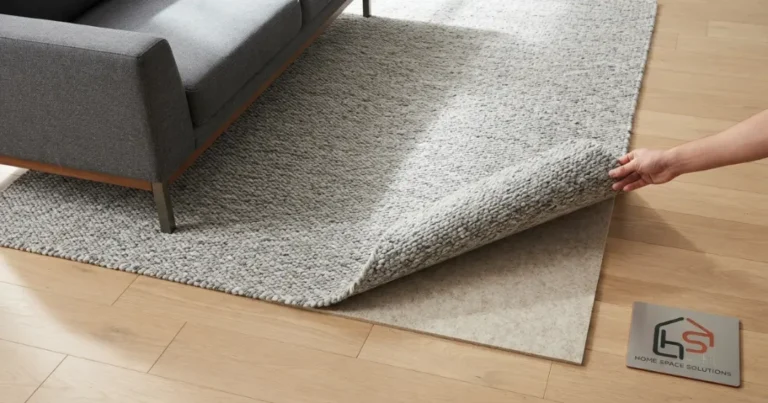
Use a pad or movement-control method suitable for the rug and floor. The pad should remain hidden and should not create a raised ridge.
Dry wet footwear and spills promptly. Moisture beneath the rug can reduce grip and may affect the flooring.
Decorative floor borders are not official accessibility dimensions. When compliance or mobility needs matter, follow applicable guidance and seek professional review.
Inspect corners, fringe, backing and wear. Replace or repair the rug when it no longer lies flat.
The right entryway rug size supports a clear arrival path, but installation, maintenance and user needs remain equally important.
Common entryway rug sizing mistakes
- Choosing a rug before checking the front-door swing.
- Measuring the full foyer but ignoring stairs, console or closets.
- Using a 2×3 mat in a large double-door entry.
- Filling the entire floor without leaving a deliberate border.
- Placing a thick rug beneath a low-clearance door.
- Using a short mat in a long narrow entry that needs a runner.
- Centering the rug in the room instead of the arrival route.
- Covering thresholds, vents or step edges.
- Buying “washable” without checking washer capacity.
- Ignoring exact product dimensions and return terms.
Entryway rug size buying checklist
Before ordering, compare the exact product dimensions with the taped floor outline and the complete door movement.
- Measure the usable width and length.
- Measure the lowest door clearance.
- Open single or double doors through the full swing.
- Check stairs, thresholds, closets, vents and console furniture.
- Choose mat, foyer, runner, round or console placement.
- Confirm visible floor border around the rug.
- Check pile, backing and rug-pad compatibility.
- Review moisture, cleaning and drying instructions.
- Measure delivery access for large or custom rugs.
- Review return terms before buying.
Use the Rug Size Calculator for the final room-specific check. Compare common dimensions with the Standard Rug Sizes Chart.
Entryway rug size quick-reference decisions
The best entryway rug size starts with the usable floor and full door swing rather than the architectural room dimensions.
A practical entryway rug size should relate to the door opening while leaving enough flooring and route clearance.
For a small foyer, an entryway rug size of 3×5 or 4×6 feet often creates a balanced starting point.
For a double-door foyer, a wider entryway rug size such as 4×6 or 5×7 feet may feel more proportionate.
For a narrow entrance, a runner-style entryway rug size can guide the eye inward without crowding the walls.
For a large open foyer, a 5×7, 6×9 or round entryway rug size can create a clearer arrival zone.
Before buying any entryway rug size, tape the exact footprint and test the door, console, stairs and main route.
How this entryway rug size guide was prepared
This guide uses a measurement-first method. The usable floor is measured after accounting for doors, stairs, consoles, thresholds, closets and open routes.
The recommendation changes according to the rug role. A door mat needs less area than a foyer anchor, while a narrow entry may need a runner.
Standard sizes are treated as starting categories. The exact product listing remains the source of truth for length, width, fringe and manufacturing variation.
The interactive planner compares the usable floor and selected role with common 2×3, 3×5, 4×6, 5×7, 6×9, runner and round sizes.
The guide separates decorative planning from professional accessibility, fire-safety, slip-resistance and flooring advice.
It also considers real entry use: wet shoes, pets, children, storage, console furniture, stairs, thresholds and adjoining sightlines.
For a complete entry plan, compare the Hallway Runner Guide, Round Rug Sizes Guide, Lighting Calculator, Paint Calculator, Tile Calculator and Interior Size Guide.
Best planning order
Measure the usable floor, test the full door swing, choose the rug role, tape two size options, check stairs and furniture, then compare real product dimensions.
Measurement, route and rug-safety resources
These followed external links support unit conversion, accessible-route research and carpet or rug safety checks.
NIST length units
Use the official reference when converting inches, feet, centimeters and meters.
Read NIST length guidanceU.S. Access Board routes
Review official accessible-route guidance when accessibility compliance affects the entrance route.
Read accessible-route guidanceCPSC carpets and rugs
Review official information about carpet and rug requirements and surface-flammability standards.
Read CPSC rug guidance