Twin vs Twin XL: Which Fits Your Room?
Five inches longer. The same width. A different room-fit decision.
This Twin vs Twin XL guide compares mattress dimensions, outside frames, foot clearance and bedding so you can choose a size that suits both the sleeper and the room.
By Rehana K · Updated October 23, 2026
Twin vs Twin XL: the quick answer
Choose Twin when the shorter bed suits the sleeper and preserves needed room space. Choose Twin XL when extra legroom matters and the room can accommodate the longer frame. Standard US mattress sizes are 38 × 75 inches for Twin and 38 × 80 inches for Twin XL. Both give the same nominal sleeping width.
The extra length is 5 inches / 12.7 cm. With otherwise identical frames, adding those inches reduces foot clearance by the same amount. It does not reduce the side gaps unless the frame widths also differ.
Twin: protect room length
A practical starting point for a smaller sleeper, a short room or a compatible existing Twin setup. Measure the sleeping fit first; keeping a few inches of floor space is less useful if the mattress is too short.
Twin XL: add legroom
A useful option for a sleeper who needs a longer single bed. It also matters when matching an assigned dorm mattress or planning a compatible Split King arrangement. Check the exact requirements in either case.
There is no automatic winner in Twin vs Twin XL. The best choice is the one that supports your sleeping position while leaving a workable route to the door, desk and storage.
Twin vs Twin XL dimensions chart
| Measurement | Twin | Twin XL |
|---|---|---|
| Nominal US mattress width | 38 in / 96.52 cm | 38 in / 96.52 cm |
| Nominal US mattress length | 75 in / 190.5 cm | 80 in / 203.2 cm |
| Length in feet and inches | 6 ft 3 in | 6 ft 8 in |
| Mattress surface area | 2,850 sq in / about 19.8 sq ft | 3,040 sq in / about 21.1 sq ft |
| Extra length compared with Twin | — | 5 in / 12.7 cm |
| Example frame used in room charts | 42 × 79 in | 42 × 84 in |
Twin XL adds 190 square inches of sleeping surface, about 1.32 square feet. That extra area is a strip at the foot, not a wider sleeping surface. If you want more room to turn sideways, compare a wider mattress category instead.
Some manufacturers label a Twin or Twin XL mattress around 39 inches wide rather than 38, and product tolerances can vary. A frame’s support platform and outer footprint can also differ. Use the exact product measurements when matching a mattress, frame and fitted sheet.
For a regional comparison, use the Bed Size Chart. “Single,” “Twin” and “extra long” are not interchangeable measurements in every country.
Twin vs Twin XL room-fit calculator
Enter the outside measurements of both frames, not only the mattress sizes. The checker tests the same rectangular room and selected clearances for each bed, assuming centered placement. It can show both fit, only one fits, or neither fits.
Swaps room width and length. Recheck fixed doors and furniture for the new orientation.
Twin frame
Enter your measurementsTwin XL frame
Enter your measurementsA passing result means the entered dimensions meet your targets. The tool does not map door swings, nightstands, open drawers or individual mobility needs.
How each size fits a small bedroom
| Room width × length | Each side: either frame | Twin foot gap | Twin XL foot gap |
|---|---|---|---|
| 7 × 9 ft | 21 in | 29 in | 24 in |
| 8 × 9 ft | 27 in | 29 in | 24 in |
| 8 × 10 ft | 27 in | 41 in | 36 in |
| 9 × 10 ft | 33 in | 41 in | 36 in |
| 10 × 10 ft | 39 in | 41 in | 36 in |
8 × 10 ft: both may fit before furniture
In a clear 96 × 120-inch room, both example frames leave 27 inches on each side. Twin leaves 41 inches at the foot; Twin XL leaves 36. A 24-inch side target and 30-inch foot target are met by both at this stage.
Add a 2-inch head gap and an 18-inch-deep dresser opposite the bed, and those foot gaps fall to 21 inches for Twin and 16 inches for Twin XL. The room did not change, but the complete furniture arrangement did.
8 × 9 ft: five inches can decide the result
At 108 inches long, the empty-room foot gaps are 29 inches for Twin and 24 inches for Twin XL. Both can meet a 24-inch foot target without a head gap. At a 26-inch target, only the example Twin meets it; at 30 inches, neither does.
That is the useful question in Twin vs Twin XL room planning: whether those inches cross a target that matters in your actual layout. Choose that target deliberately and walk the taped plan.
7 × 9 ft: width can remain the limiting factor
A centered 42-inch frame leaves only 21 inches on each side in an 84-inch-wide room. Choosing the shorter mattress does not widen these gaps. Repositioning the bed can move more available space to one side, but reduces access on the other.
A one-sided arrangement needs its own plan for getting in, changing bedding and reaching storage. The centered calculator does not automatically approve that arrangement.
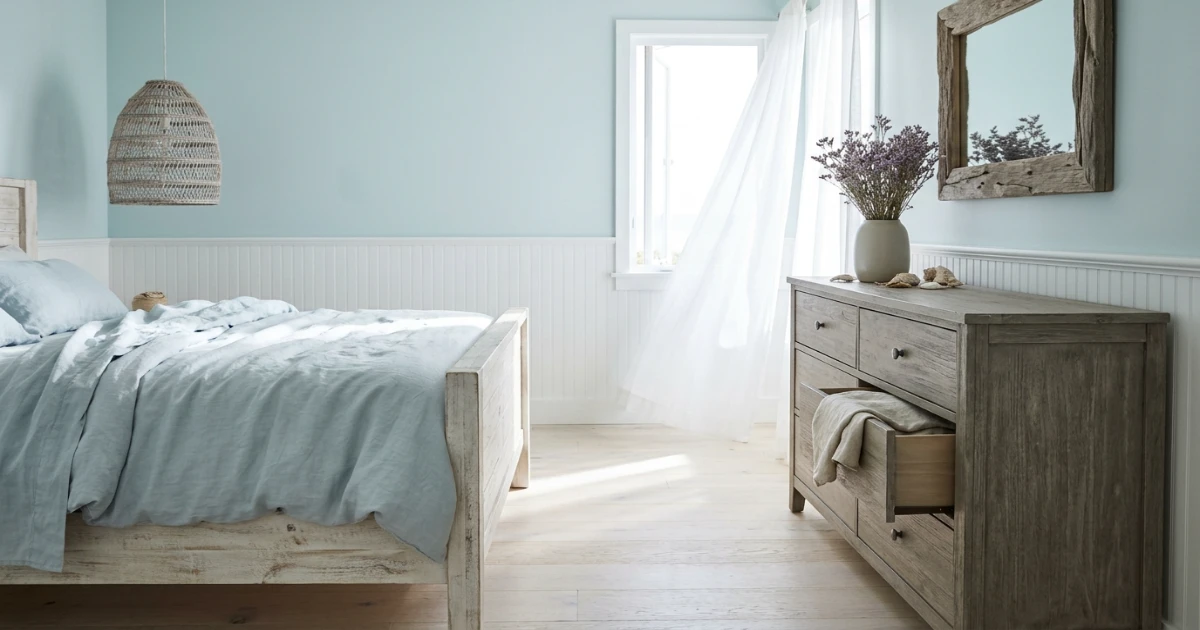
In an irregular room, do not count the area inside a closet or behind a projecting wall as usable bed space. Measure the clear rectangle where the bed will actually sit. Keep the main route continuous from the entrance to the furniture you use.
Measure the frames before deciding
Two beds with different size labels do not always differ by exactly 5 inches overall. One might have slim rails while the other has a deep padded headboard. Use the complete outside length and width of the models you are comparing.
- Measure the room’s usable dimensions. Mark the entrance, closet, windows and permanent projections.
- Record each frame’s outside footprint. Include projecting legs, headboard and footboard where they affect fit.
- Add the actual furniture. Measure the dresser body, desk, chair and nightstand rather than using a generic allowance.
- Mark movement separately. Draw door arcs and open drawers. Include the person using them.
- Tape both lengths on the floor. Keep the head position consistent so the effect of the longer frame is obvious.

The comparison formulas
Required width = outside frame width + left target + right target.
Required length = head gap + outside frame length + foot target + opposite furniture depth.
With two 24-inch side targets and a 30-inch foot target, the sample frames need 90 × 109 inches for Twin and 90 × 114 inches for Twin XL, excluding a head gap and opposite furniture. These are calculated furniture footprints, not legal minimum bedroom dimensions.
This guide uses 24 inches as a tight secondary gap, 30 inches as an everyday walking target and 36 inches as a more generous allowance. They are editorial planning targets. Use the space required by your household, furniture and any mobility equipment.
Twin vs Twin XL for taller sleepers
Choose the longer bed when a 75-inch mattress leaves too little usable length for the way you sleep. There is no single height cutoff that works for everyone: pillow position, sleeping posture and a projecting footboard can change how long the bed feels.
For illustration, a 72-inch-tall person is only 3 inches shorter than a 75-inch mattress and 8 inches shorter than an 80-inch mattress. Those differences are arithmetic, not guaranteed clear space beyond the feet, because the head and pillow are not positioned at the mattress edge.
Try the intended sleeping position when possible. If your main complaint is narrowness, the extra length of Twin XL will not solve it. Both sizes remain single-width beds; compare a Full or Queen if turning space is the priority and the room can accommodate it.
For a growing sleeper
Consider likely use over the next few years alongside present comfort. Buying extra length may avoid a later size change, but only if the longer frame and its bedding fit the room and budget now.
For a guest room
Think about who regularly stays. A longer single bed may suit taller guests, while the shorter version can preserve a desk or storage route. Check the finished room with the furniture you intend to keep.
Twin vs Twin XL sheets, frames and toppers
| Item | Can it be shared? | What to check |
|---|---|---|
| Fitted sheet | Usually size-specific | Twin or Twin XL length plus mattress/topper depth |
| Mattress protector | Usually size-specific | Exact width, length and depth range |
| Topper | Match the mattress | Avoid unsupported overhang or an unwanted uncovered strip |
| Flat sheet or comforter | Sometimes | Actual fabric dimensions and the drop you want |
| Bed frame or foundation | Only if expressly compatible | Approved mattress size and support requirements |
Do not stretch a Twin fitted sheet over a Twin XL and assume the elastic will compensate. Likewise, excess fabric from an oversized fitted sheet can bunch on a shorter mattress. Follow the sizing range printed by the bedding manufacturer.
Some comforters are sold as “Twin/Twin XL.” That can be reasonable because a loose cover does not fit like a fitted sheet, but verify its length and width. A thicker mattress or higher base can change the side drop you want without changing the nominal mattress category.
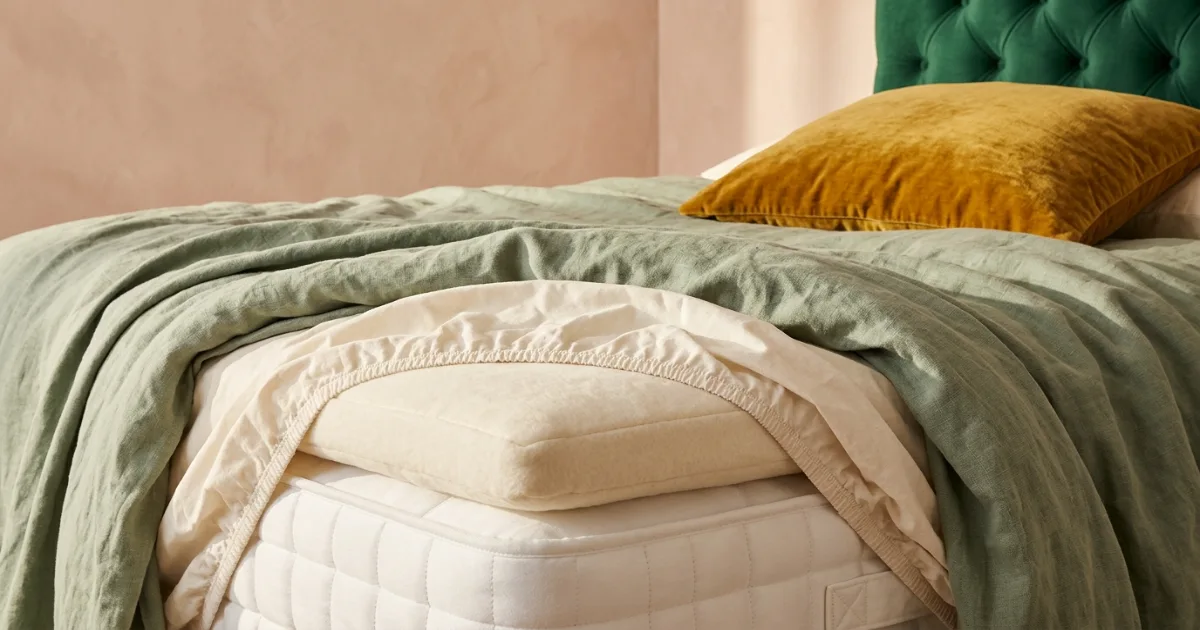
A shorter mattress placed inside a longer frame can leave a gap. A longer mattress on a short frame can overhang its support. Use a combination approved by the frame and mattress manufacturers, including their support and spacing requirements.
For a bunk or loft bed, follow its label for the permitted mattress length, width and thickness. The US Consumer Product Safety Commission’s bunk-bed guidance explains the importance of the specified mattress size and thickness. Do not improvise a size conversion.
Dorm rooms, desks and shared bedrooms
If you are buying for college, confirm the exact bed and mattress measurements with the housing office for the assigned building. A general dorm checklist cannot tell you whether your room has Twin, Twin XL or another supplied setup, or whether replacing the frame is allowed.
Ask about mattress thickness before choosing a fitted sheet or protector, and check whether there are rules for toppers, risers or additional furniture. If the mattress is already provided, the bedding choice follows its measurement; the room-fit task focuses on the supplied frame and movable furniture.
For a bed-and-desk arrangement, allow for the chair in use. A desk that fits against the wall can still block the route when the chair is pulled back. If it sits opposite the foot, subtract the desk’s depth first, then check the chair and the person sitting there separately.

For two single beds, draw both complete frames and the shared route. Do not simply apply a one-bed room recommendation twice. Identical Twin and Twin XL widths may make the side-by-side plan similar, but longer frames can narrow the cross-room passage at the foot.
Use the Bedroom Layout Planner after the size comparison to check the relationship between beds, work areas and storage. A second furniture function often determines which size is practical.
Two Amazon frame options: Twin vs Twin XL
Affiliate disclosure: As an Amazon Associate I earn from qualifying purchases. These are researched specification comparisons, not products we have personally tested. Confirm your chosen size, seller, support compatibility and return terms.
Amazon Basics Foldable Frame · Twin
Shorter platform optionThe linked 14-inch Twin model lists 75 × 39 × 14 inches (length × width × height), steel construction and tool-free setup. Its listed platform footprint is smaller than our illustrative padded frame.
Why compare it: a simple foundation can preserve space in a compact plan. Check first: mattress support requirements, the selected 14-inch Twin variant and whether under-bed items can slide out into the available route.
Amazon Basics Foldable Frame · Twin XL
Longer platform optionThe linked Twin XL model lists 80 × 39 × 14 inches (length × width × height), steel construction and tool-free setup. That listed footprint adds 5 inches of length while retaining the same width as the Twin option.
Why compare it: it supports an extra-long single-bed plan without a bulky surrounding frame. Check first: the exact size, mattress compatibility, package access and current seller offers. The 39-inch frame width is a product specification, not a correction to the nominal mattress chart.
Specifications checked October 23, 2026. Offers and availability can change. We do not assume a current price, rating or bestseller status.
Compare the complete setup cost
For Twin vs Twin XL shopping, price the mattress, compatible frame, protector, sheets and delivery together. The longer size is not guaranteed to cost more in every model or promotion. Existing compatible bedding may change the total more than the frame price alone.
Do two Twins or two Twin XLs make a King?
Two nominal 38 × 80-inch Twin XL mattresses create a 76 × 80-inch sleeping surface. That matches a standard US King’s nominal width and length. Two regular 38 × 75-inch Twins create a 76 × 75-inch surface, which is 5 inches shorter.
A combined mattress surface still needs compatible support. Two independent bases can have hardware, spacing or moving-part requirements that change the finished footprint. Match mattress thicknesses if you want their top surfaces to align, and consider how the center join will feel.
With an independently adjustable Split King, each half typically needs appropriately sized fitted bedding. Follow the base and bedding manufacturers’ instructions rather than assuming every King accessory works across two moving halves.

For a larger-room decision, read King vs Queen. Twin XL’s ability to form a nominal Split King is useful context, but it should not outweigh the immediate needs of a single sleeper in a small room.
Which size should you choose?
Choose Twin when…
- The 75-inch mattress suits the sleeper’s normal position.
- A shorter outside frame protects a needed foot route.
- The existing bed system explicitly takes Twin.
- Your complete Twin setup meets the room and budget requirements.
Choose Twin XL when…
- The sleeper benefits from the extra length.
- The actual longer frame meets the room-clearance targets.
- You are matching a confirmed Twin XL dorm mattress.
- You need a compatible Twin XL component for a planned Split King.
The most useful Twin vs Twin XL decision combines three checks: enough sleeping length, approved mattress-to-frame fit and usable room space. If either option fails one of those checks, revise the setup before ordering.
Check the bed before you buy the room around it
Compare both frames above, then explore wider mattress sizes if sleeping width remains the problem.
Open the Bed Size CalculatorTwin vs Twin XL FAQs
What is the difference between Twin and Twin XL?
A standard US Twin mattress is 38 × 75 inches; Twin XL is 38 × 80 inches. Twin XL adds 5 inches of length and no extra width. Check the actual mattress and outside frame dimensions before ordering.
Is Twin XL wider than Twin?
No. Both are nominally 38 inches wide in the US comparison used here. A product may list a slightly different width, and a frame can be wider than its mattress, so confirm the specifications of each item.
Can a Twin XL fit in an 8 × 10 room?
It may. A 42 × 84-inch example frame centered in a clear 96 × 120-inch room leaves 27 inches per side and 36 inches at the foot with no head gap or furniture. A dresser or door swing can reduce usable access.
Will a Twin mattress fit a Twin XL frame?
Do not assume it is an approved combination. A Twin mattress is nominally 5 inches shorter than Twin XL, which can leave an unwanted gap or incompatible support. Use a mattress size the frame manufacturer explicitly supports.
Will Twin fitted sheets fit a Twin XL?
Standard Twin fitted sheets are made for the shorter mattress and are generally not interchangeable with Twin XL fitted sheets. Buy for the exact mattress length and depth; use any dual-size label only when the manufacturer confirms both sizes.
Is Twin XL better for taller adults?
The extra 5 inches can help when a 75-inch mattress feels short. Test your normal pillow position and sleeping posture. Twin XL does not add shoulder or turning width, so a wider size may be more useful if width is the problem.
Do college dorms always use Twin XL?
No universal dorm size should be assumed. Confirm the mattress dimensions, thickness, allowed bedding and furniture rules with the housing office for your assigned building before buying sheets or a replacement bed.
Do two Twin XL mattresses make a King?
Two nominal 38 × 80-inch Twin XL mattresses form a 76 × 80-inch sleeping surface, the same nominal dimensions as a standard US King. Compatible bases, a center join and the required bedding still need to be checked.
Do two regular Twin mattresses make a King?
Two nominal 38 × 75-inch Twins make a 76 × 75-inch surface. That is 5 inches shorter than a standard US King, so it is not the same size. King fitted bedding and supports are not automatically compatible.
Which saves more room: Twin or Twin XL?
Twin saves 5 inches of mattress length while keeping the same width. If the two selected frames differ by the same 5 inches, Twin leaves 5 inches more foot clearance in the same orientation. Compare actual frames because their overall dimensions can differ by another amount.
Sources and editorial method
Casper’s Twin and Twin XL size information supports the nominal US dimensions used here. The two linked Amazon listings support the frame specifications in the shopping cards. CPSC bunk-bed guidance is linked alongside the relevant compatibility advice. Sources checked October 23, 2026.
Metric conversions, area differences and room gaps are calculated from the dimensions shown. The 42 × 79-inch Twin and 42 × 84-inch Twin XL frames are editorial examples, not universal product sizes. Clearance targets are planning assumptions; illustrations do not establish a room’s measurements.
Rehana K
Rehana K creates measurement-first furniture and room-planning guides for HomeStyle Calculator. This comparison connects mattress length with frame fit, bedding compatibility and the furniture around the bed.