What size TV for living room? Best complete size guide
What size TV for living room viewing works best depends on the main eye-to-screen distance, preferred viewing style, physical screen width, wall space, media-console fit and mounting height—not room square footage alone.
Written and reviewed by Rehana K · HomeStyle Calculator measurement-first method.
What size TV for living room viewing is best? Most rooms suit 55 to 85 inches.
What size TV for living room viewing works best? At roughly 8 feet, compare 55 and 65 inches. At 10 feet, compare 65 and 75 inches. At 12 feet, compare 75 and 85 inches. Viewers who want a cinematic field of view may choose the larger end, while mixed broadcast viewing or a visually quiet room may favor the smaller end.
Measure from the main viewer’s eyes to the planned screen surface. Then confirm the TV’s physical width, stand-foot spacing, wall clearance and center height before ordering.
What size TV for living room? Complete every measurement
Start with distance and screen size, then confirm physical dimensions, mounting height, furniture fit and the closest comparison page.
Living-room TV sizing from sofa distance to final installation
What size TV for living room? Working calculator
Enter the eye-to-screen distance and choose a viewing style. The result estimates a diagonal, nearest common TV size and approximate 16:9 screen dimensions.
Recommended screen estimate
Preset-based estimate from viewing distance.
Compare the sizes immediately above and below.
Screen only; model bezels vary.
Useful for mounting-height planning.
At 10 feet, a 75-inch TV is a balanced starting point. Outline 65 and 75 inches on the wall before buying.
What size TV for living room distance? Complete size chart
What size TV for living room viewing should you choose from the chart below? Use the ranges as a practical starting point rather than a fixed rule. The same distance can support different sizes depending on field of view, eyesight, subtitles, sports, gaming, content resolution and room layout.
| TV size | Approx. screen width | Approx. screen height | Practical starting distance | Common fit |
|---|---|---|---|---|
| 43 in | 37.5 in | 21.1 in | 5–7 ft | Compact room |
| 50 in | 43.6 in | 24.5 in | 6–8 ft | Compact room |
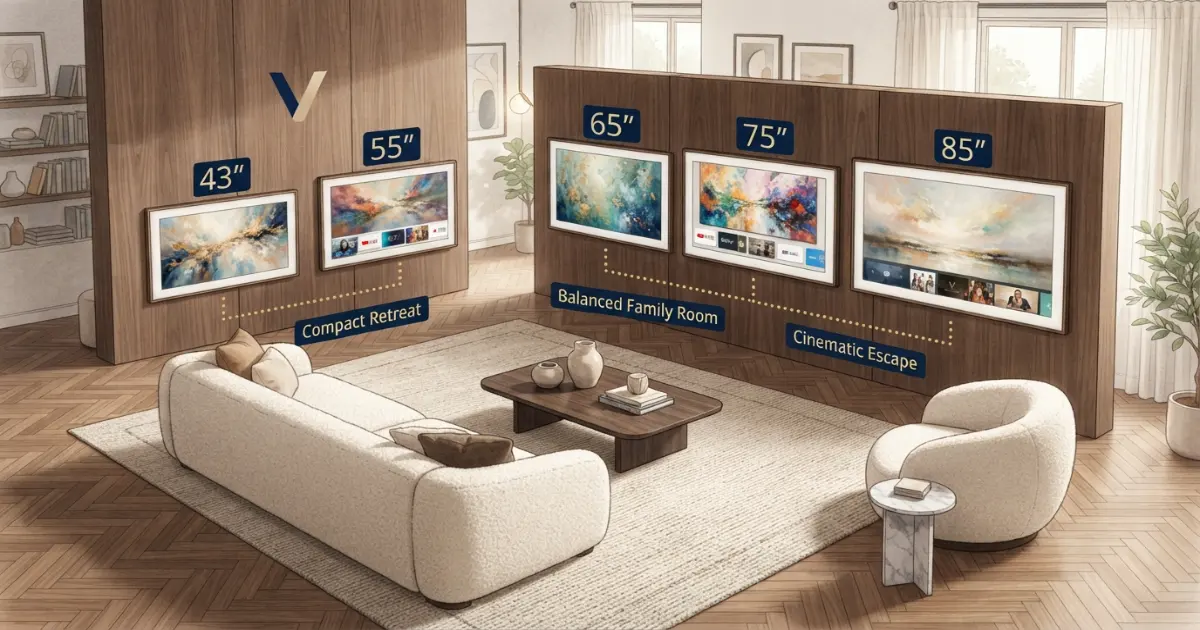
| 55 in | 47.9 in | 27.0 in | 6.5–9 ft | Balanced family room |
| 65 in | 56.7 in | 31.9 in | 7.5–10.5 ft | Balanced family room |
| 75 in | 65.4 in | 36.8 in | 8.5–12 ft | Large or cinematic room |
| 85 in | 74.1 in | 41.7 in | 9.5–13.5 ft | Large or cinematic room |
| 98 in | 85.4 in | 48.0 in | 11–15 ft | Large or cinematic room |
A living room at the shorter end of a distance range feels more immersive. The longer end feels more relaxed. When uncertain, outline two sizes with painter’s tape and watch from every seat.
How to measure distance when choosing what size TV for living room
Measure from the main viewer’s eyes—not the front edge of the sofa—to the planned screen surface. If the TV will be wall mounted, measure to the wall position. If it sits on a console, account for the stand depth and how far the screen projects forward.
Measure the primary seat first. Then check side seats and the farthest regularly used seat. A sectional can create a wide range of distances, so optimize for the seat used most often rather than averaging the entire room.
Do not size the TV from room dimensions alone. A 15-by-15-foot room can have a 7-foot viewing distance when the sofa floats in the center, while a smaller room can create a longer diagonal sightline.
For exact distance-specific pages, use the TV Size for 8 Feet, TV Size for 10 Feet and TV Size for 12 Feet guides.
Relaxed, balanced or immersive viewing
The answer to what size TV for living room viewing feels comfortable also depends on whether you want a relaxed, balanced or immersive experience.
A relaxed setup keeps the screen visually quieter and works well for news, casual television and rooms where conversation or architecture should remain dominant. A balanced setup gives the TV a clear presence without creating a front-row cinema feeling. An immersive setup uses more of the viewer’s field of view and suits movies, sports and games.
There is no single perfect field of view for every household. One person may find a 75-inch TV at 8 feet exciting, while another prefers 65 inches at the same distance. Subtitles often favor a larger screen because text is easier to read without leaning forward.
The calculator provides presets instead of pretending one ratio is universal. Compare the nearest standard size above and below the result.
What size TV for living room walls? Check the physical width
After deciding what size TV for living room viewing suits the distance, convert the diagonal into physical width before choosing furniture or a mount.
TVs are advertised by diagonal screen size. A 65-inch TV is not 65 inches wide. For a 16:9 screen, the visible width is about 87.2 percent of the diagonal and the visible height is about 49 percent.
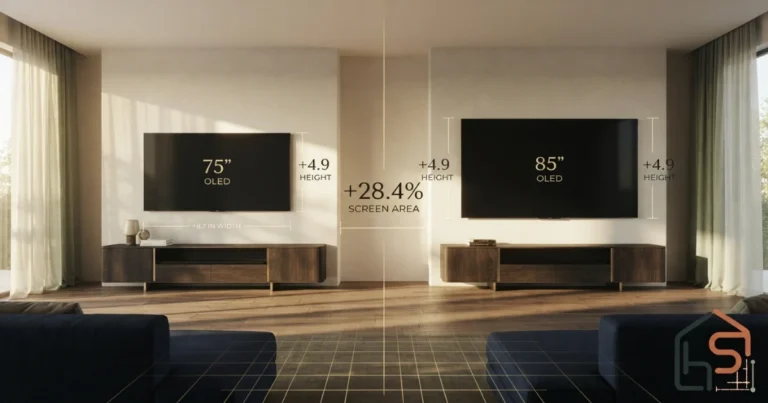
A 65-inch screen is approximately 56.7 inches wide and 31.9 inches high. A 75-inch screen is about 65.4 inches wide and 36.8 inches high. An 85-inch screen is about 74.1 inches wide and 41.7 inches high.
Bezels add a small amount to the product dimensions, while feet and stands affect depth and support width. Always check the model specification sheet.
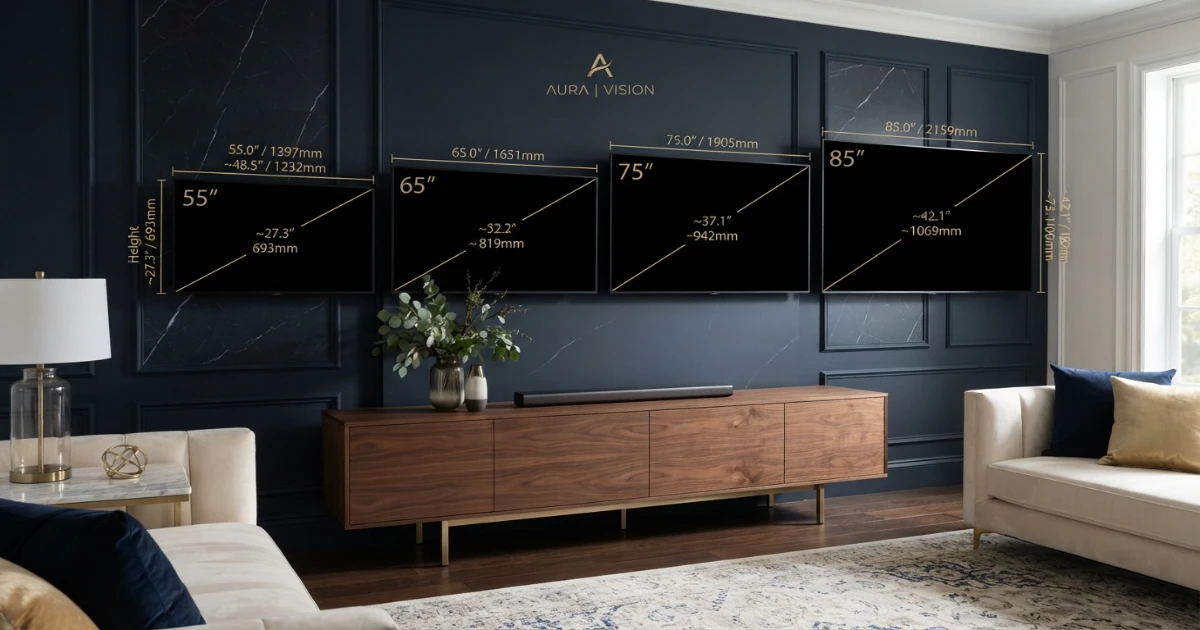
Use the TV Dimensions Chart, How Wide Is a 65 Inch TV? and How Wide Is a 75 Inch TV? pages before ordering furniture or a wall mount.
How 4K resolution changes the decision
What size TV for living room use works best can change when most content is clean 4K rather than compressed HD or older broadcasts.
Higher-resolution 4K content can support closer viewing or a larger screen because the pixel structure is less visible than on lower-resolution material at the same size. This does not mean every living room should choose the largest possible TV.
Streaming quality, compression, internet speed and source resolution still affect image quality. A large 4K TV can reveal flaws in heavily compressed cable channels or old video. If the household watches mostly lower-resolution broadcasts, a relaxed size may be more comfortable.
For movies, modern streaming, sports and current game consoles, a larger 4K screen often provides more benefit. Use the 4K Viewing Distance Guide for a resolution-focused comparison.
Room layout matters more than room area
Room dimensions alone cannot decide what size TV for living room placement will work because sofa position controls the real viewing distance.
Measure the uninterrupted wall area, not only the total wall width. Door swings, windows, fireplaces, shelves, speakers, sconces and architectural trim can reduce the usable TV zone.
A television should not crowd adjacent features. Leave enough space for ventilation, cable access and visual breathing room. Check whether a soundbar will sit below the screen and whether its width should align with the TV or console.
In an open-plan room, the screen may be visible from the kitchen or dining area, but the primary sofa distance should still control the main size. Secondary long-distance viewing may justify a slightly larger screen if the primary seat remains comfortable.
For compact layouts, see the TV Size for a Small Room guide.
What size TV for living room mounting height and eye level
When planning what size TV for living room mounting will support, calculate screen height as well as diagonal size because larger screens change the centerline.
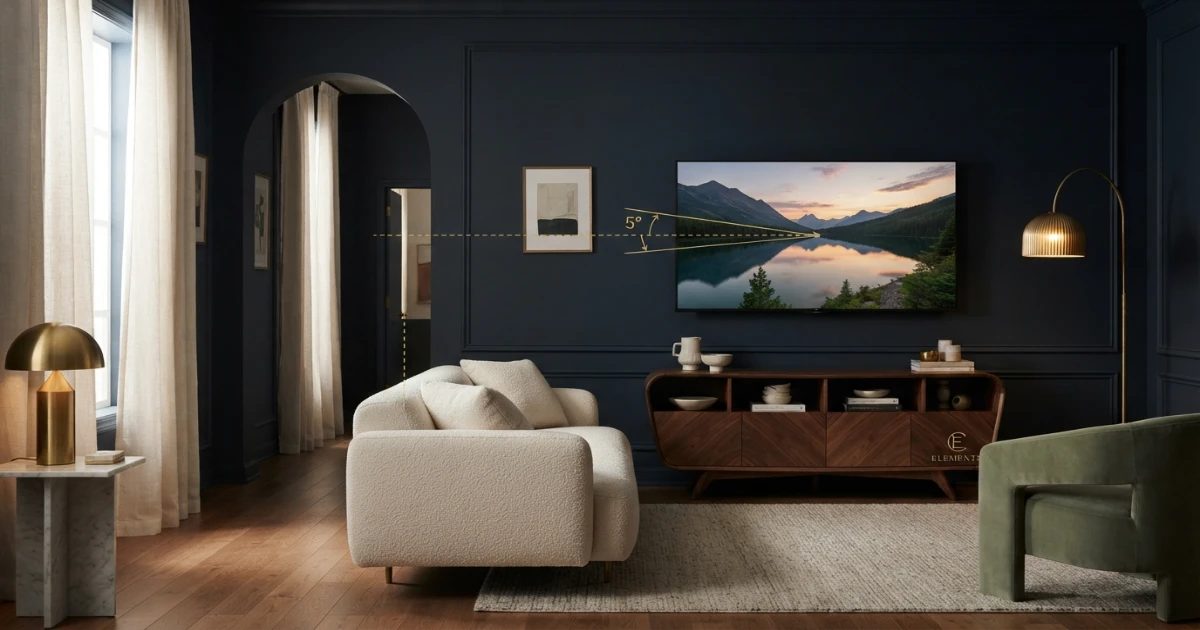
A comfortable starting point places the center of the screen close to seated eye level. The correct center height depends on sofa seat height, viewer height, reclining posture, viewing distance and whether the screen tilts.
A larger TV extends farther above and below the center. When upgrading from 55 to 75 inches, keeping the bottom edge at the same height raises the screen center and may increase neck strain. Recalculate the mounting position from the new screen height.
Test the centerline with painter’s tape. Sit normally for several minutes rather than judging while standing. Use the TV Mounting Height Guide for the full formula.
TV above a fireplace
A fireplace can force the screen higher than a normal eye-level installation and may expose the TV to heat. Check the fireplace manufacturer’s clearances, mantel depth, wall temperature and viewing angle. Use the TV Height Above a Fireplace guide before mounting.
TV stand and media-console fit
The best answer to what size TV for living room furniture can support must include complete product width, foot spacing, depth and weight.
If the TV sits on furniture, confirm the complete product width, foot spacing, foot depth and weight. Some TVs use wide-set feet near the outer edges, while others use a central pedestal or adjustable feet.
The stand top must fully support every foot. A console that is wider than the TV often looks more balanced and provides space for speakers, but the safety requirement is more important than the visual rule.
Check the console’s weight rating, cable openings, ventilation and anti-tip provisions. Use the TV Stand Size vs TV Size Guide for model-independent planning.
55 vs 65 vs 75 vs 85 inches
Use these comparisons after the calculator suggests what size TV for living room distance and viewing style is most suitable.
55-inch TV
A 55-inch TV suits compact living rooms, apartments and households that prefer a quieter screen. It is approximately 47.9 inches wide before bezels.
65-inch TV
A 65-inch TV is a balanced family-room choice. It offers a noticeable upgrade from 55 inches without requiring the wall width of a 75- or 85-inch screen.
75-inch TV
A 75-inch TV suits longer seating distances, movies, sports and subtitles. Its approximate 65.4-inch screen width should be checked against the console and wall.
85-inch TV
An 85-inch TV creates a strong cinematic presence. It needs a broad wall, suitable mounting hardware and careful height planning because the screen is about 41.7 inches tall.
Use the dedicated 55 vs 65 Inch TV, 65 vs 75 Inch TV and 75 vs 85 Inch TV comparisons.
TV size for gaming in a living room
Gaming may favor a larger field of view, but competitive play can become tiring when interface elements sit near the edges of a very large screen. Input lag, refresh rate, variable refresh support and motion performance matter in addition to size.
Measure from the gaming seat, which may be closer than the normal sofa position. If players move a chair forward, calculate both distances. Use the Best TV Size for Gaming Distance guide.
What size TV for living room? Six worked examples
Example one: 8-foot apartment living room. A balanced starting range is 55 to 65 inches. A 65-inch TV provides a stronger movie and sports experience, while 55 inches keeps the wall visually calmer.
Example two: 10-foot family room. Compare 65 and 75 inches. The 65-inch screen is about 56.7 inches wide; the 75-inch screen is about 65.4 inches wide. Outline both before choosing.
Example three: 12-foot large living room. Compare 75 and 85 inches. The larger screen helps subtitles and sports but requires about 74 inches of visible screen width plus bezels.
Example four: sectional seating from 7 to 11 feet. Optimize for the primary seat around 8 or 9 feet and check whether side viewers remain comfortable. A 65- or 75-inch screen may balance the range.
Example five: mixed cable and 4K streaming. Choose the balanced preset rather than the most immersive size because lower-quality channels can look rough on a large screen.
Example six: movie-first room with 10-foot distance. A 75- or 85-inch screen may be appropriate if wall width, budget and mounting height allow a cinematic field of view.
Common living-room TV sizing mistakes
A common mistake is asking what size TV for living room use without measuring from the main viewer’s eyes to the planned screen surface.
- Choosing from room square footage instead of eye-to-screen distance.
- Confusing diagonal size with physical TV width.
- Measuring from the sofa front instead of the viewer’s eyes.
- Ignoring stand-foot spacing and console depth.
- Mounting the bottom edge first without checking screen center height.
- Choosing only from the farthest occasional seat.
- Ignoring glare from windows and lamps.
- Assuming every source is clean 4K.
- Forgetting space for a soundbar, speakers and cable access.
- Skipping a painter’s-tape wall outline.
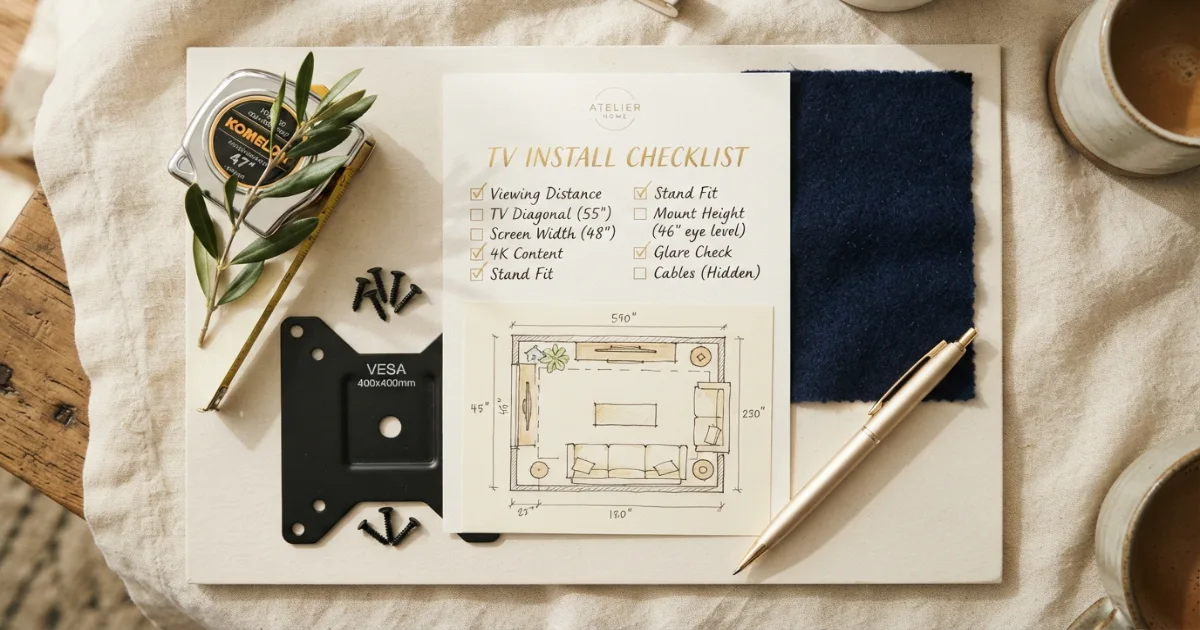
What size TV for living room buying checklist
- Main eye-to-screen viewing distance.
- Distance from secondary seats.
- Preferred relaxed, balanced or immersive viewing style.
- Main content: cable, sports, movies, streaming or gaming.
- Approximate screen width and height.
- Complete product dimensions with stand.
- Foot spacing, foot depth and TV weight.
- Usable wall width and ventilation clearance.
- Seated eye level and screen-center height.
- Soundbar, outlet and cable-routing space.
- Window glare and daytime viewing.
- Painter’s-tape test from every seat.
Compare total installed cost across two adjacent sizes. The larger model may require a stronger mount, wider stand and different soundbar arrangement, changing the real price difference.
Do not reduce picture quality, warranty support or installation safety merely to reach the largest diagonal. A well-positioned 65-inch television can produce a better everyday experience than a poorly mounted 85-inch model with severe glare or weak source quality.
The purchase cost is not only the television. Include a suitable wall mount or console, professional installation where needed, cable management, surge protection, sound equipment and possible wall repair. Very large TVs can also require two-person delivery and installation.
Budget should include the complete installation
If family members have very different preferences, choose the balanced size and preserve the ability to move the main seat slightly. A flexible room layout can be more useful than maximizing the diagonal.
A household decision should not rely on one person standing near a showroom display. Sit at the real living-room distance and compare taped outlines. Ask regular viewers whether the proposed size feels comfortable for news, sports, movies and menus—not only dramatic demo footage.
Subtitles, vision differences and seating posture can justify a larger screen even at a moderate distance. Text should be readable without constant leaning or squinting. Test subtitle size on the streaming services and devices the household actually uses.
Subtitles, eyesight and household preferences
Side speakers and subwoofers also need clearance. Do not select an 85-inch screen that fills the entire wall if it leaves no workable position for the audio system, media storage or ventilation.
For a tabletop installation, measure the distance from the stand surface to the bottom of the picture. Some TVs sit low, leaving little room for a tall soundbar. Wall mounting can create more space, but the screen center should remain comfortable.
A larger TV may need a wider console, but it does not automatically need a soundbar as wide as the screen. The important measurements are the available width, soundbar height, TV foot placement and whether the soundbar blocks the screen or remote sensor.
Soundbar and speaker space
When the living room receives strong daylight, compare brightness, reflection handling and screen finish in addition to diagonal size. Curtains, shades and careful lamp placement can improve the room without turning it into a dark theater.
Record the direction of windows, ceiling lights and table lamps. A slight change in wall position or sofa angle may improve visibility more than changing TV size. Tilting mounts can redirect reflections, but excessive downward tilt usually means the screen is mounted too high.
Screen size does not solve glare. A large television opposite an uncovered window can look washed out during the day, while a smaller screen in the same position has the same basic reflection problem. Before buying, sit in the main seat at the brightest time of day and inspect the planned screen area.
Window glare and daytime viewing
What size TV for living room daytime viewing feels comfortable also depends on window glare, screen reflections and available brightness.
Final answer: what size TV for living room viewing should you buy?
What size TV for living room viewing should you buy? Measure from the main viewer’s eyes to the planned screen surface. At approximately 8 feet, compare 55 and 65 inches. At 10 feet, compare 65 and 75 inches. At 12 feet, compare 75 and 85 inches. Choose the larger option for movies, sports, subtitles and immersive gaming, or the smaller option for casual mixed viewing.
Then convert the diagonal into physical screen width, confirm the complete model dimensions, verify stand or mount compatibility and test the screen outline at seated eye level.
Calculate your exact starting size
Use the free TV Size Calculator and compare the nearest standard sizes before buying.
Measurement references
This guide uses multiple viewing-style presets rather than claiming one universal distance rule. For additional comparison, review the normal dofollow references below.
Two practical TV installation categories to compare
Confirm VESA pattern, TV weight, screen dimensions and furniture measurements before ordering.
Full-Motion TV Wall Mounts
Compare mounts only after checking the TV’s VESA pattern, weight and planned viewing angle.
- Confirm VESA compatibility
- Check weight rating
- Review extension and tilt
TV Stands and Media Consoles
Compare stand width, top depth, weight capacity and cable management against the selected TV.
- Check TV foot spacing
- Confirm top depth and weight
- Allow soundbar space
Affiliate disclosure: As an Amazon Associate, HomeStyle Calculator may earn from qualifying purchases. Product specifications, prices and availability can change.
What size TV for living room FAQs
What size TV is best for a living room?
The best TV size depends mainly on the eye-to-screen viewing distance, preferred field of view, content type and available wall or stand width. Many living rooms fall between 55 and 85 inches, but the room should be measured rather than judged by floor area alone.
What size TV should I get for an 8-foot viewing distance?
At about 8 feet, a 55- to 65-inch TV is a common balanced starting range, while viewers seeking a more cinematic field of view may prefer 75 inches. Check the 8-foot distance guide and actual screen width before buying.
What size TV should I get for a 10-foot viewing distance?
At about 10 feet, 65 to 75 inches is a practical family-room starting range. An 85-inch screen can suit viewers who prefer a more immersive presentation and have enough wall or stand width.
Is a 65-inch TV too big for a living room?
Not necessarily. A 65-inch TV can work well at moderate living-room distances, especially with 4K content. It may feel too large only when seating is unusually close, the wall is narrow or the screen dominates the room visually.
Is a 75-inch TV too big for 10 feet?
A 75-inch TV is commonly comfortable at around 10 feet and provides a stronger cinematic effect than a 65-inch screen. Personal preference, subtitles, gaming and room layout still matter.
How is TV screen size measured?
TV size is measured diagonally from one visible screen corner to the opposite corner. The advertised diagonal does not include the stand and does not directly tell you the TV’s physical width.
How wide is a 65-inch TV?
A 16:9 screen with a 65-inch diagonal is about 56.7 inches wide before allowing for bezels. The complete product width varies by model.
Should the TV be wider than the TV stand?
The complete TV should generally fit safely on the stand, and the feet must sit fully on the top surface. Many layouts look balanced when the stand is wider than the TV, but exact support requirements come first.
Does 4K change the recommended viewing distance?
Yes. Higher-resolution 4K content can remain detailed at closer distances than lower-resolution material, allowing a larger screen or closer seat without making individual pixels as visible.
How high should a living-room TV be mounted?
A comfortable starting point places the center of the screen near seated eye level. Mounting height should account for sofa height, viewing distance, reclining posture and any furniture below the screen.