Grommet Curtain Length vs Rod Pocket: What Changes?
The same labeled panel length can land differently at the floor because grommet and rod-pocket headers position the curtain top differently around the rod.
Written by Rehana K · Published July 25, 2026.
Header style changes the installed drop—not the number printed on the package.
Grommet curtain length and rod pocket length are usually listed from the top edge of the panel to the bottom hem. However, the top edge does not sit in the same place relative to the rod.
Grommets place the rod through metal eyelets below the top edge, leaving visible fabric above the rod. A rod pocket wraps fabric around the rod and may include no header, a small heading or a decorative ruffle. That construction changes the rod-to-hem distance.
Use the right HomeStyle Calculator guide for every measurement
Header style changes the installed drop, but the complete order still depends on rod height, finished length, standard size, width and panel quantity.
Why grommet curtain length and rod pocket panels hang differently
The curtain panel has a total sewn length, but the installed drop begins at the rod. Header construction determines how much fabric sits above, around or below that reference point.
Rod passes through eyelets
The grommet center sits below the top edge. This leaves a visible band of fabric above the rod and changes the usable rod-to-hem drop.
Fabric surrounds the rod
The rod slides through a sewn channel. Pocket depth, rod diameter and any top ruffle determine where the top edge sits.
Product details control the answer
Two brands can use different grommet positions or pocket constructions. Use the exact panel rather than a universal adjustment.
Grommet vs rod pocket curtain length calculator
Enter the installed rod-to-floor distance, floor finish and the measured top allowance for each header. Adjustable allowances keep the result honest because curtain construction varies.
Measure from the rod top to the panel top, or use the retailer’s diagram.
Include any header ruffle above the pocket.
Header-adjusted result
Closest standard: 95 or 96 in
Closest standard: 95 in
Difference caused by the entered top allowances.
Rod reference to the selected floor finish.
Estimator formula: finished panel length = rod-to-target-hem drop + panel fabric above the selected rod reference point.
Grommet curtain length vs rod pocket length
| Comparison point | Grommet curtains | Rod pocket curtains |
|---|---|---|
| Panel length label | Usually top edge to bottom hem | Usually top edge to bottom hem |
| Rod position | Rod passes through eyelets below the top edge | Rod passes through a sewn fabric channel |
| Fabric above rod | Normally visible and measurable | May be minimal or may include a ruffled heading |
| Main variable | Grommet placement and rod diameter | Pocket depth, rod diameter and header ruffle |
| Installed drop | Can differ from a same-length rod-pocket panel | Can differ from a same-length grommet panel |
| Movement | Usually slides more easily on a compatible rod | Gathering can create more friction |
| Rod visibility | Rod and grommets remain visible | Rod is mostly concealed by the pocket |
| Best measurement | Rod reference to hem plus exact top allowance | Rod reference to hem plus exact pocket/header allowance |
| Safe buying rule | Check grommet diameter and top-edge offset | Check pocket size, rod diameter and heading height |
Grommet curtain length vs rod pocket: the complete guide
The difference between grommet and rod-pocket curtains is often described as a style choice, but it is also a measuring choice. Both panels may carry the same 84-inch, 96-inch or 108-inch label while reaching the floor differently after installation. The label normally describes the sewn panel from the top edge to the bottom hem. It does not guarantee the same distance from the installed rod to the floor.
For grommet curtain length, the rod passes through metal or plastic eyelets positioned below the fabric’s top edge. A strip of curtain remains visible above the rod. With a rod pocket, the rod passes through a sewn channel, and the panel may have a flat top, a small heading or a decorative ruffle above that channel. Each construction consumes or displays fabric differently around the rod.
The practical result is simple: do not transfer a successful rod-pocket length directly to a grommet order when planning grommet curtain length without checking the header allowance. Measure the new header from the same rod reference point and compare its actual rod-to-hem drop.
The answer in one sentence
The length printed on the package may be the same, but the installed hem position changes when the header places a different amount of fabric above or around the rod.
How grommet curtain length works from rod to hem
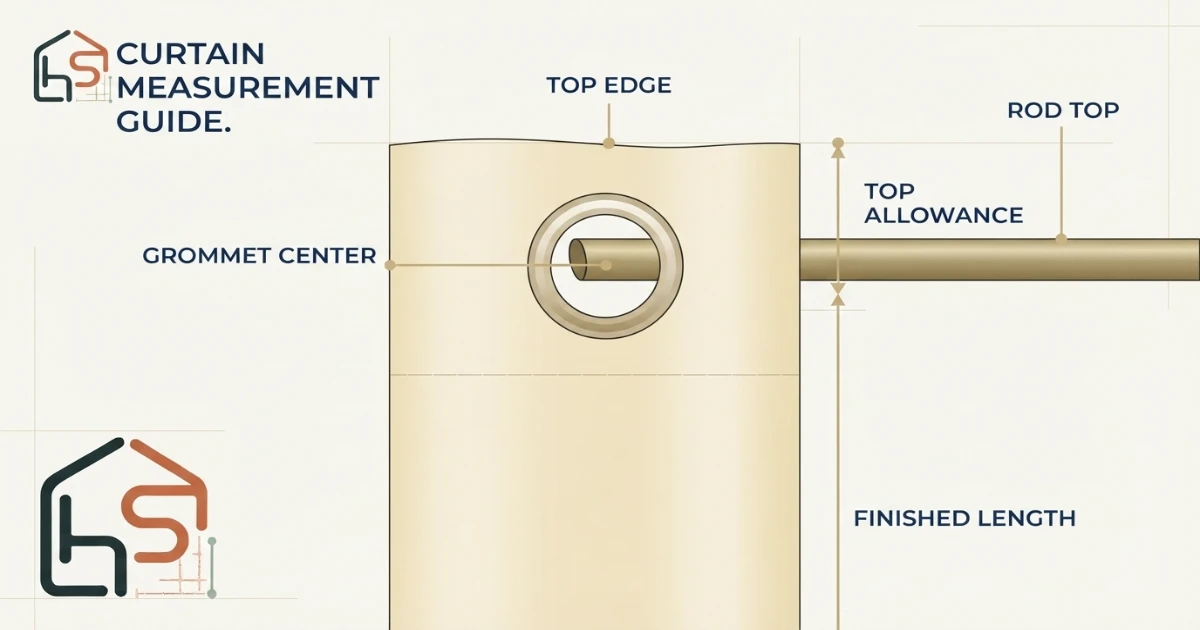
A grommet panel has reinforced circular openings near the top. The rod passes directly through these openings, creating broad, regular waves. Because the center of each opening is below the panel’s top edge, a visible band of fabric rises above the rod.
This band is the top allowance that matters for length planning. If the top edge sits 1.25 inches above the top of the rod, a panel with a 95.25-inch finished length creates roughly a 94-inch rod-top-to-hem drop. The exact number depends on the position and diameter of the grommet, the rod diameter and the way the panel settles.
Why grommet placement matters
Two grommet panels can use the same finished length while placing the eyelet at different distances from the top edge. A larger eyelet or deeper top band can change where the rod sits. That is why a generic “add two inches” instruction is less reliable than the product diagram.
Rod diameter also matters. The rod must fit inside the grommet with enough clearance to slide. A thick rod can sit differently inside the opening and may slightly change the apparent top position, although the largest visual effect usually comes from the grommet location itself.
How rod pocket construction changes grommet curtain length comparisons
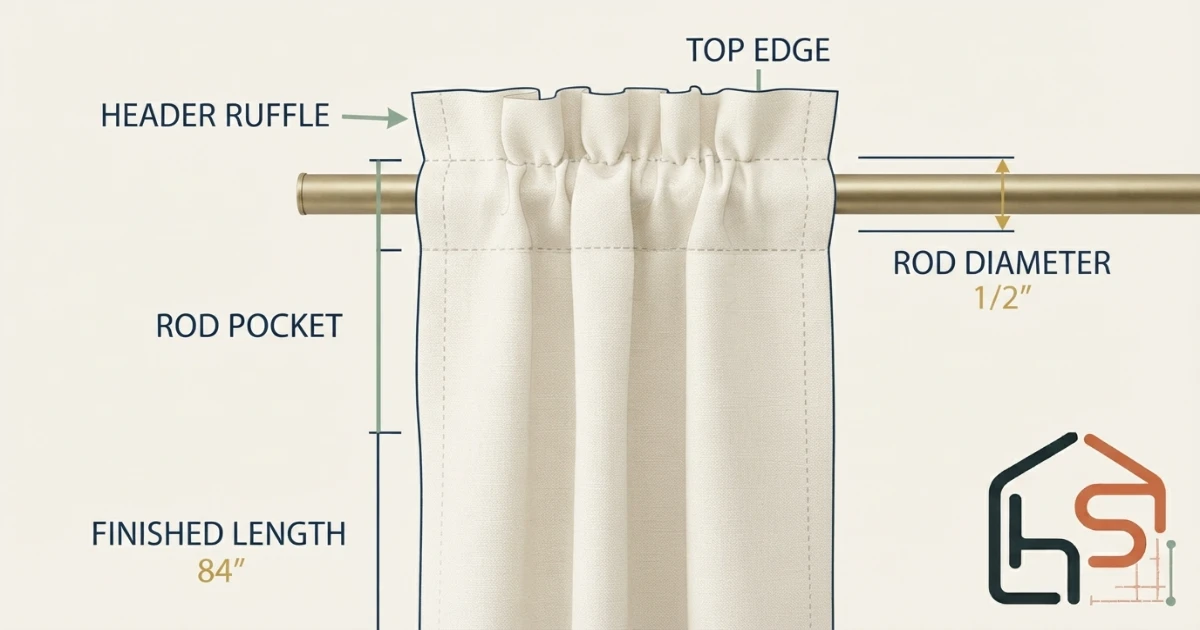
A rod-pocket panel has a horizontal fabric tunnel sewn near the top. The rod slides through this tunnel and gathers the fabric. Some panels end immediately above the pocket. Others include a header ruffle, sometimes called a heading, that rises above the rod.
The pocket must also accommodate the rod’s circumference. A thicker rod fills more of the channel and can pull the fabric differently. If the pocket is tight, the panel may bunch and sit unevenly. If the pocket is generous, the panel may gather smoothly but still place the top edge differently from a grommet panel.
Flat pocket vs ruffled pocket
A flat pocket with almost no fabric above the channel may create a smaller top allowance. A ruffled pocket can place one or more inches of decorative fabric above the rod. Those two rod-pocket styles should not be treated as the same measurement.
The sewn pocket depth is also important when buying new rods. A pocket designed for a slim tension rod may not fit comfortably over a decorative one-inch rod. Forcing a large rod through a small pocket can alter the gathers and make the hem appear uneven.
Why the same panel length changes a grommet curtain length comparison
Imagine two panels, each labeled 96 inches. The grommet panel has 1.25 inches of fabric above the top of the rod. The rod-pocket panel has a half-inch flat heading above the same reference point. Their finished lengths are equal, but the grommet panel’s rod-to-hem drop is about three-quarters of an inch shorter or longer depending on the exact reference used and how the header surrounds the rod.
This example demonstrates why the reference point must remain consistent. Measuring from the rod center for one header and the rod top for another creates a false comparison. Choose one reference—normally the top of the installed rod or the manufacturer’s specified measuring point—and use it for both.
How to measure grommet curtain length and rod pocket curtains correctly
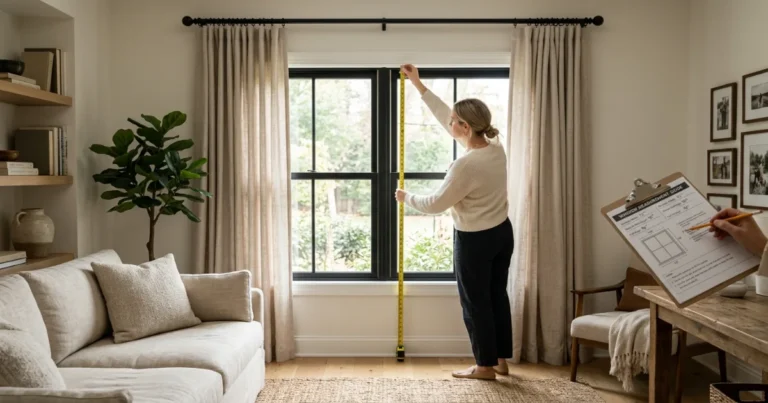
Install and position the curtain rod whenever possible. The rod height controls the required drop, while the header determines the extra fabric above the rod. Measuring from the window frame alone cannot resolve both variables.
- Choose the rod height. Confirm the brackets are level and the rod is in its final position.
- Select the floor finish. Decide whether the hem should float, kiss, break or puddle.
- Measure vertically. measure the window and rod-to-hem drop.
- Measure the header allowance. Find the distance from the rod reference to the panel’s top edge.
- Add the two measurements. This gives the required finished panel length.
- Check the actual product. Confirm pocket size, grommet diameter, finished length and whether fringe or trim is included.
Use a steel tape and measure both sides
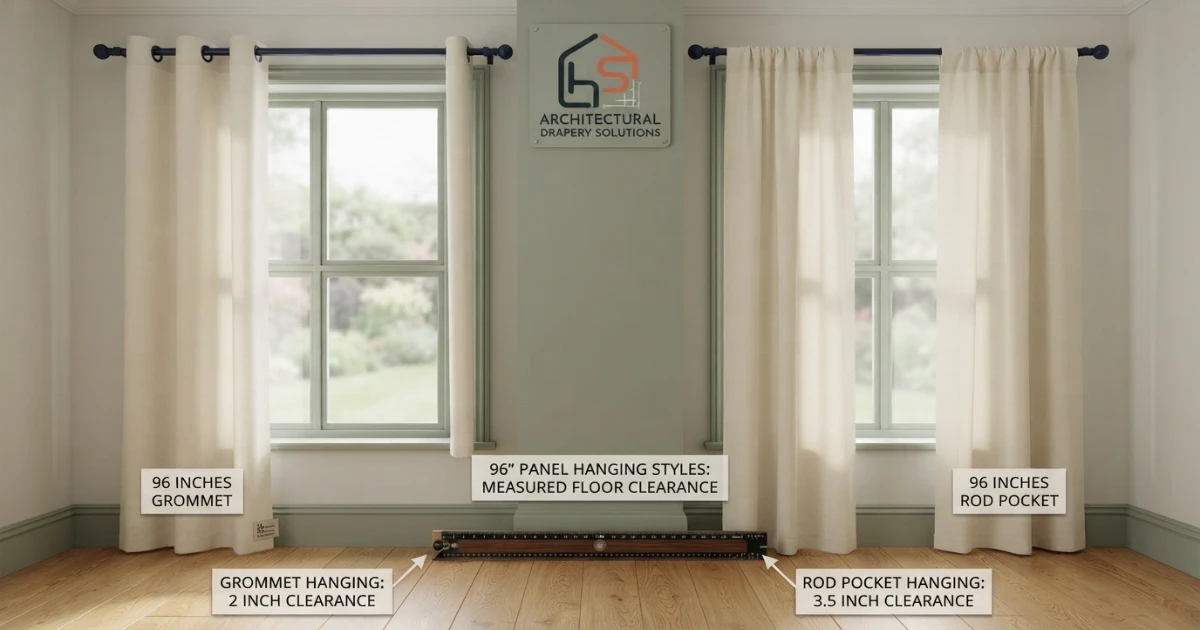
Floors, rods and ceilings are not always perfectly level. Measure at the left and right edges of the intended panel. For a wide pair, check the center as well. A small difference can become visible with a crisp floor-kiss finish.
If the measurements differ, avoid cutting or hemming immediately. Hang the panels, let the fabric relax and recheck. Natural fibers can settle, and packaged folds may temporarily shorten one section.
How floor finish changes grommet curtain length
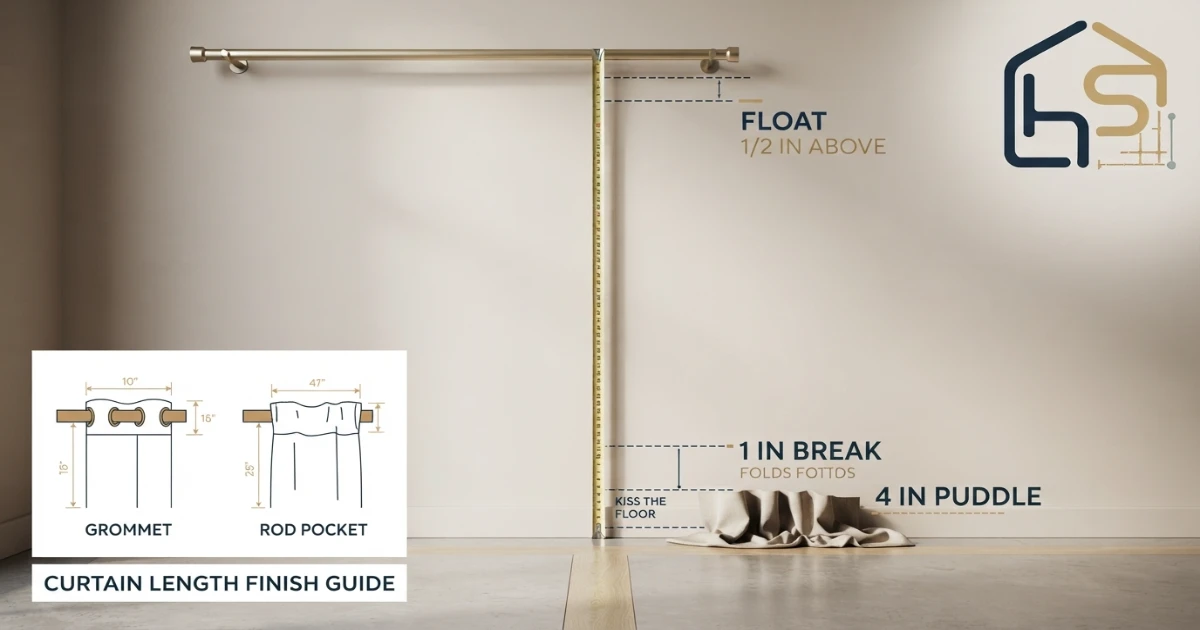
Curtain length and floor-finish rules regardless of header style. A float keeps the hem approximately half an inch above the floor, making cleaning and opening easier. A kiss finish lightly touches the floor with minimal excess. A break adds approximately one inch for a relaxed fold. A puddle may add four to eight inches or more for a decorative effect.
Grommet curtains are commonly used in frequently opened rooms, so a float or kiss is practical. Rod-pocket panels are often used for decorative or less frequently moved curtains, which can support a soft break or puddle. These are style tendencies rather than rules.
For kitchens, children’s rooms, pet-friendly spaces and high-traffic doors, avoid unnecessary fabric on the floor. For formal bedrooms or low-traffic sitting rooms, additional length may be acceptable if the fabric and cleaning routine support it.
Standard curtain lengths and grommet curtain length cautions
Standard curtain sizes such as 63, 72, 84, 90, 95, 96, 108 and 120 inches, although availability varies by brand. The correct size depends on rod height, floor finish and header allowance—not only ceiling height.
| Panel length | Typical starting use | Header caution |
|---|---|---|
| 63 inches | Short windows or sill/apron treatments | Check whether the header raises or lowers the visible hem |
| 72 inches | Compact rooms and lower rods | Limited adjustment if the rod is mounted high |
| 84 inches | Common ready-made floor-length category | Same label can land differently by header |
| 90 inches | Intermediate option for slightly higher rods | Useful when 84 floats too high and 96 is excessive |
| 95/96 inches | Higher rods or near-ceiling installations | Confirm whether the brand uses 95 or 96 inches |
| 108 inches | Tall rooms and high-mounted rods | Header allowance becomes more noticeable at floor level |
| 120 inches | Very tall ceilings or intentional puddling | Weight and fabric stretch may affect final drop |
Grommet curtain length for 84-inch and 96-inch replacement panels
A homeowner may remove an 84-inch rod-pocket panel and assume an 84-inch grommet replacement will touch the floor at the same point. That may fail because the old header and new header use different top allowances. The safer process is to measure the existing rod-to-hem drop and the new panel’s top construction.
If the old panel floats two inches above the floor, switching header style cannot correct the problem automatically. You may need a longer panel, a lower rod or a custom hem. Compare the result with the 84 vs 96 Inch Curtains Guide before changing bracket height.
When the rod is already installed, the calculator on this page gives a useful starting estimate. Enter the product-specific allowance rather than relying on the defaults.
Grommet curtain length and header choice in a living room
Grommet curtains create broad, regular folds and normally move more easily across a compatible rod. They expose the hardware, giving the rod, brackets and finials a visible design role. In a living room where curtains open daily, this movement can be convenient.
Rod-pocket panels conceal most of the rod and create softer gathers. They can suit a layered or traditional room, especially when the panel remains mostly stationary. A tight pocket can be slower to move, so it is less convenient for windows that require frequent opening.
Length still controls the final impression. Crisp grommet waves look unfinished when the hem stops several inches above the floor unintentionally. Soft rod-pocket gathers can look heavy if a panel puddles where regular vacuuming or foot traffic occurs.
Grommet curtain length and header choice in a bedroom
Both styles can work in a bedroom. Grommets provide a clean, modern rhythm and make blackout panels easier to slide. Rod pockets create a softer upper edge and conceal the hardware, which can suit relaxed, cottage or traditional interiors.
For light control, the header opening matters as much as the hem. Grommet holes can leave visible gaps around the rod, while rod pockets may reduce top light leakage but can still allow light through the sides. A higher rod, wider panels and adequate overlap often improve coverage more than switching header style alone.
Use the Blackout Curtain Sizing Guide when room darkening is the main goal. That page covers overlap, side return and mounting height in addition to length.
Length is not the only difference: fullness and width
Grommet and rod-pocket panels also gather differently across the rod. Grommets create structured waves determined by eyelet spacing. Rod pockets form smaller, irregular gathers that depend on fabric width and how tightly the panel is compressed.
A panel that is wide enough when flat may look underfilled after installation. Measure the curtain rod length and choose the total panel width based on the desired fullness. For most decorative curtains, the combined flat width is commonly greater than the rod span.
Use the How Many Curtain Panels Do I Need? guide for a width and fullness calculation. Do not solve a width problem by changing panel length.
How rod diameter changes the comparison
Grommet curtains need a rod that fits through the eyelets with enough clearance to move. If the rod is almost as large as the opening, the panel can bind and the folds may not stack neatly. Check the inner grommet diameter before buying hardware.
Rod pockets also have a maximum usable rod size. A pocket may be described as two inches, but that does not mean every two-inch rod will slide comfortably because the fabric channel must wrap around the rod. A slimmer rod usually gathers more easily.
Rod diameter can change the header’s vertical position slightly. More importantly, it can change friction, gathering and the visual line at the top. Include the actual rod when testing sample panels.
Ceiling height and rod placement
Mounting the rod higher can make the window appear taller, but the rod height must be coordinated with available panel lengths. A 96-inch panel may reach the floor with one header and float with another. Moving the rod after installation can also expose holes or change how the curtain clears the window trim.
Measure from the proposed rod position to the floor before drilling. If the result falls between standard lengths, decide whether you can hem a longer panel, lower the rod slightly or order a custom size. Avoid mounting the rod solely from a general “four to six inches above the window” rule when the panel length has already been purchased.
Use the Curtain Size Calculator to coordinate rod height, desired floor finish and standard panel lengths.
Lining, fabric weight and settling
Heavy blackout lining, velvet and dense woven fabrics can settle after hanging. Lightweight sheers may react more to airflow and static. Natural fibers can change slightly with humidity, cleaning and steaming. These factors do not replace header measurement, but they can affect the final hem by a small amount.
After installation, let the curtains hang before completing a permanent hem. Steam or train the folds according to the care label. Recheck both outside edges and the center because the floor may not be level.
A weighted hem can improve the vertical fall of a light panel, but it also increases stress on the header. Confirm that the grommets, stitching, rod and brackets can support the combined weight.
Replacing rod pockets while preserving grommet curtain length
When replacing rod-pocket panels with grommet curtains, record four measurements from the existing installation: top of rod to floor, top of old panel to floor, old panel finished length and the amount of old fabric above the rod. Then compare those values with the new grommet layout.
For the opposite switch, measure the grommet top allowance and determine whether the new rod pocket includes a ruffle. Confirm that the existing rod fits the pocket and that the gathered panel can move if daily operation is required.
Do not rely on the old package label alone. Curtains can shrink, stretch, be hemmed or differ from nominal size. Measure the panel that is actually hanging.
Rental-friendly curtain planning
In a rental, changing rod height may not be desirable. Work from the installed hardware and choose the panel whose finished drop suits that fixed position. Grommet panels are straightforward to remove, while rod-pocket panels can conceal inexpensive rods and brackets.
Curtains that are too short or too long, temporary hemming tape may help, subject to the fabric care label. If it is too short, lowering the rod or adding rings can change the drop, but those modifications also change the header appearance and may create new light gaps.
Photograph the existing brackets and measure the rod diameter before shopping. This reduces the chance of buying a panel whose grommets or pocket will not fit.
Common grommet and rod-pocket length mistakes
- Assuming the same label means the same installed drop: header take-up changes the rod-to-hem distance.
- Measuring from the window frame: the installed rod is the critical reference.
- Mixing reference points: rod center, rod top and grommet center are not interchangeable.
- Ignoring a rod-pocket ruffle: fabric above the pocket changes the finished length requirement.
- Ignoring rod diameter: a thick rod can distort a pocket or bind inside a grommet.
- Buying before choosing the floor finish: float, kiss, break and puddle require different lengths.
- Trusting nominal measurements: actual finished dimensions may vary by brand.
- Hemming immediately: let the fabric relax and verify floor level first.
Grommet curtain length shopping checklist
- Install or mark the final rod height.
- Measure from one consistent rod reference point to the floor.
- Choose float, kiss, break or puddle.
- Check grommet inner diameter or rod-pocket channel size.
- Measure fabric above the rod for the specific header.
- Confirm actual finished panel length and width.
- Check whether the measurement includes fringe or decorative trim.
- Review fabric care, expected settling and return terms.
- Use the calculator instead of applying a universal adjustment.
Final answer: what is the grommet vs rod pocket length difference?
There is no single universal length difference. A grommet curtain and a rod-pocket curtain can share the same labeled panel length while hanging differently because their top edges sit differently relative to the rod.
For accurate grommet curtain length, measure from the installed rod reference point to the desired hem and add the actual amount of fabric above the rod. For rod-pocket curtains, repeat the process using the pocket depth, rod diameter and any header ruffle.
The safest buying decision is based on the finished product diagram, not a generic one-inch or two-inch rule. Tape the target hem, test the calculator and choose a standard or custom length that can be adjusted after the panels settle.
Calculate your exact curtain length
Use the free Curtain Size Calculator to compare rod height, floor finish, panel length and header style.
Two practical curtain categories to compare
Compare the header construction, actual finished length, rod compatibility, fabric care and return policy before ordering.
Grommet Curtain Panels
Compare panels with visible eyelets for smooth movement and structured folds.
- Confirm the finished panel length
- Check inner grommet diameter
- Measure fabric above the rod
- Review lining and care instructions
Rod Pocket Curtain Panels
Compare traditional gathered panels with a sewn rod channel and optional header ruffle.
- Check pocket depth and rod fit
- Confirm any top ruffle height
- Review the exact finished length
- Compare fabric fullness and care
Affiliate disclosure: As an Amazon Associate, HomeStyle Calculator may earn from qualifying purchases. Product dimensions, prices and availability can change. Confirm the current listing before ordering.
Grommet curtain length and rod pocket FAQs
Direct answers about panel labels, header take-up, rod diameter, floor finishes and replacement curtains.