Cafe curtain measurements guide: how to size tiers correctly
Measure the visible glass, decide how much of the lower window needs privacy, set the café rod at the correct height and calculate enough width for a gathered but practical finish.
Written and reviewed by Rehana K · HomeStyle Calculator measurement-first method.
Cafe curtains commonly cover the lower half to lower two-thirds of the window.
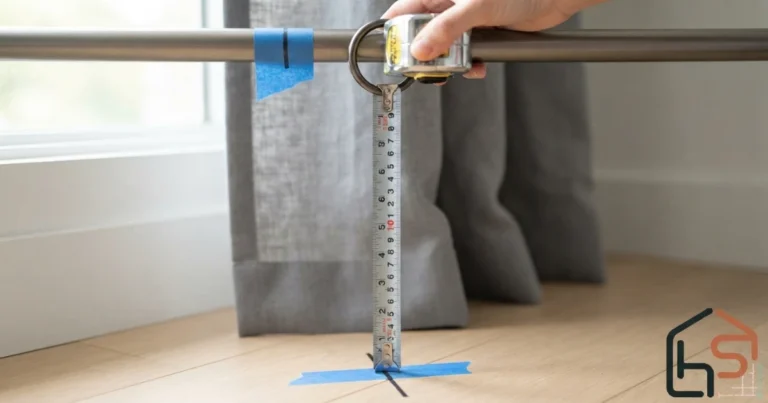
Measure the inside glass height, multiply it by the desired coverage percentage, then place the cafe rod at the top of that covered section. Measure from the actual ring, clip or pocket position to the sill or chosen stopping point.
For width, multiply the usable cafe rod span by about 1.5 to 2.5 times fullness. Most ordinary windows use two panels, but the exact quantity depends on finished width per panel.
Use the right HomeStyle Calculator page for every measurement
Cafe curtains need the correct rod position, tier length, fullness, panel count and safe sill clearance. These connected pages complete the order.
Cafe curtain measurements from privacy line to final panel order
Cafe curtain measurements calculator
Enter the visible glass height and width, desired coverage, sill clearance, fullness and panel width. The tool estimates rod height, finished tier length, total curtain width and panel quantity.
Two 30-inch panels provide enough width for a classic gathered cafe treatment on a 36-inch rod.
Compare 45%, 50%, 67% and 75% window coverage
The best cafe-curtain height balances privacy with daylight and view. Select a coverage level to compare the visual proportion.
Cafe curtain size chart
Ready-made cafe curtains are often sold as tiers in short standard lengths. The size label describes the panel length, not the amount of window coverage. Match the listed length to the measured drop from the cafe rod to the chosen hem.
| Listed tier length | Typical use | Likely window relationship | Important check | Metric reference |
|---|---|---|---|---|
| 18 in | Very small windows, shallow lower panels or decorative tiers | Covers a short lower section | May not reach typical eye-level privacy line | 46 cm |
| 24 in | Small kitchen, laundry or bathroom windows | Often suits lower half of compact glass | Confirm counter and sill clearance | 61 cm |
| 30 in | Medium cafe tiers and breakfast nooks | Classic half-window coverage on many windows | Header changes usable drop | 76 cm |
| 36 in | Larger windows or stronger privacy | Half to two-thirds coverage | May crowd a low upper valance | 91 cm |
| 45 in | Tall windows and high privacy lines | Two-thirds or greater coverage | Can reduce daylight more than expected | 114 cm |
How to measure window height for cafe curtains
Measure the usable visible glass from the sill or lower frame line to the top of the glass. Do not include wall area above the frame unless the cafe rod will mount outside the trim.
Take the measurement at the left, center and right because old sills can slope. For an inside-mounted tension rod, measure the actual recess height and depth. Confirm that the rod, finials and fabric can fit without rubbing the glass or hardware.
Multiply the usable glass height by the selected coverage percentage. A 60-inch glass height at 50% coverage produces a 30-inch lower section. At 67% coverage, the section is approximately 40.2 inches.
The percentage gives the target rod position, not always the final listed panel length. Ring, clip and pocket placement can shorten the usable fabric drop.
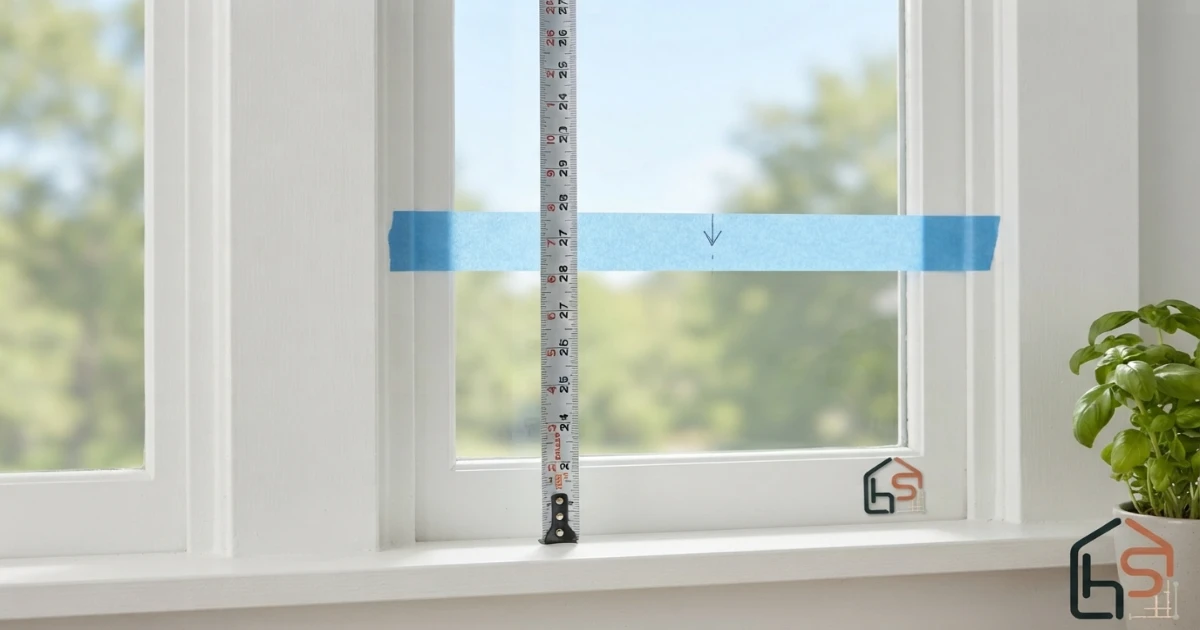
Where should the cafe curtain rod be placed?
The rod sits at the top of the section the curtain will cover. Mid-window placement is traditional, but exact center placement is not a rule. Raise or lower the rod according to privacy, outdoor sightlines and window proportions.
Mark the proposed height with painter’s tape and view it from inside and outside. A rod that looks balanced indoors may sit below the eye line of a sidewalk or neighboring property.
For a lower-half treatment, place the rod around 50% of the visible glass height above the sill. For stronger privacy, 60% to 70% coverage may be better. Leave enough open glass above the rod to preserve daylight and the cafe-curtain character.
Use a level. A sloped rod is especially visible because it crosses the middle of the glass rather than sitting near the top trim.
Measure the privacy sightline, not only the window center
Cafe curtains are chosen because they block the lower view while keeping the upper window open. The correct rod height therefore depends on who can see into the room and from what elevation.
Stand outside at the sidewalk, patio, neighboring window or shared walkway. Ask someone inside to move through the room. Raise the temporary tape line until the important activity zone is screened.
A ground-floor bathroom may need higher coverage than a kitchen facing a private garden. A window above a deep sink may already sit high enough that 50% coverage blocks the relevant sightline.
At night, interior lighting makes the room easier to see from outside. Test privacy after dark before final installation.
How long should cafe curtains be?
Measure from the actual attachment point to the desired hem. The hem can finish slightly above the sill, at the sill or just below it. In kitchens and bathrooms, a small clearance keeps fabric away from water and dirt.
A rod-pocket tier may include fabric above the pocket. A clip ring lowers the fabric below the rod. A tension rod inside the frame may sit farther from the sill than expected. Use the actual installed relationship instead of the package illustration.
When the measured drop falls between ready-made lengths, choose the next longer size and hem it. Check for decorative borders, scallops, embroidery and bottom weights before cutting.
Allow the panels to hang and relax before permanent alteration. Washable cotton and linen blends may shrink, so follow the care label and pre-treat when appropriate.
How wide should cafe curtains be?
Measure the usable cafe rod span between the outer stopping points. Multiply by the fullness factor. Around 1.5 times creates a tailored look, 2 times is a common balanced choice and 2.5 times suits lightweight sheers or a more gathered style.
A 36-inch rod at 2 times fullness needs 72 inches of combined curtain width. Two 36-inch panels provide exactly 72 inches. Two 30-inch panels provide only 60 inches and look flatter.
Do not use window-glass width when the rod extends beyond the frame. For an outside-mounted cafe rod, include the complete usable span.
Check whether the listing width applies to one panel or the full pair. Styled photos often show two tiers even when the price covers one.
Choose cafe curtain fullness by fabric
Light cotton, voile and lace usually look better with more gathering. Dense linen-look fabric, gingham and structured blends may need less. Pattern scale also matters: very high fullness can hide large checks or motifs in deep folds.
For a crisp tailored cafe curtain, use approximately 1.5 to 1.8 times fullness. For a classic gathered pair, use around 2 times. For sheer privacy, use 2.5 times or more when the rod and sill area can handle the extra stack.
More fullness adds weight and takes up more side space when the curtains are opened. Small kitchen windows can become crowded with excessively full tiers.
How many cafe curtain panels do you need?
Most ordinary cafe windows use two panels so the treatment opens from the center. Use the standard formula: rod width multiplied by fullness, divided by finished panel width. Round up.
If the minimum result is three panels, consider four for symmetry or switch to wider panels. One panel can work for a small one-way draw or a stationary decorative tier.
A pair package may already contain two panels. Verify quantity before ordering several sets. Use the How Many Curtain Panels Do I Need guide for wide or unusual windows.
Inside-mount versus outside-mount cafe curtains
Inside mounting places the tension rod or small brackets within the window recess. It creates a compact look and keeps the treatment close to the glass. The recess must be deep and square enough for the hardware.
Outside mounting places the rod on the trim or wall. It can make the tier slightly wider, cover trim gaps and create more room for rings or decorative finials. It may also interfere with cabinets, backsplashes or nearby walls.
Tension rods are renter-friendly and easy to reposition, but they have limited weight capacity. Heavy lined tiers or wide spans may need fixed brackets.
| Mounting style | Measure width from | Best use | Main advantage | Main caution |
|---|---|---|---|---|
| Inside tension rod | Inside recess | Light tiers and rentals | No-drill installation | Limited weight and depth |
| Inside fixed brackets | Inside mounting points | Neat permanent treatment | Stable and compact | Needs solid recess material |
| Outside trim mount | Full rod span over trim | Decorative rods and wider coverage | More hardware options | Can crowd cabinets or backsplash |
| Outside wall mount | Extended rod span | Covering uneven trim or wider sightlines | Flexible rod placement | Requires careful leveling |
Cafe curtain measurements for kitchens
Kitchen cafe curtains should remain clear of sinks, faucets, wet counters, burners and appliances. Measure the highest splash zone and the deepest faucet movement before choosing the hem.
A half-inch to one-inch sill or counter clearance is practical. Use washable fabric and review the care label. Natural fibers may shrink, so pre-wash before final hemming when permitted.
For a window above a sink, test the rod height from outside. The sink and counter may already block the lowest sightline, so a shorter tier can preserve more daylight.
Do not install fabric near open flame or high heat. Follow appliance clearance requirements.
Cafe curtain measurements for bathrooms
Bathrooms often need stronger privacy because the room is used at night with interior lights on. Raise the cafe rod until the critical sightline is blocked from outside.
Choose moisture-tolerant, washable fabric and maintain clearance from wet sills, tubs and showers. Fabric that rests on a damp sill can develop odors or mildew.
When upper-window privacy is also required, pair cafe curtains with frosted film, a top shade or full-height blind. Do not rely on a lower tier alone when an elevated neighboring view reaches the open glass.
How much sill clearance should cafe curtains have?
A clean sill-level finish can look tailored, but a slight float is easier to maintain. In dry rooms, approximately a quarter to half inch above the sill is often enough. In kitchens and bathrooms, half to one inch may be more practical.
For a projecting sill, decide whether the fabric finishes above the top surface or hangs in front of the sill edge. Outside-mounted curtains may need to extend below the apron rather than stop at the upper sill.
Open the window and test the sash movement. The curtain should not catch in latches, handles or crank mechanisms.
Pairing cafe curtains with a valance or top treatment
A valance can soften the upper frame and hide hardware while the cafe tier provides lower privacy. Measure the two treatments separately so they do not crowd the remaining open glass.
Keep enough exposed glass between the valance and cafe rod to preserve daylight. A deep valance plus high cafe tier can leave only a narrow strip of view.
Use coordinated fullness and fabric weight. The valance may use a different rod span or mounting depth from the lower tier.
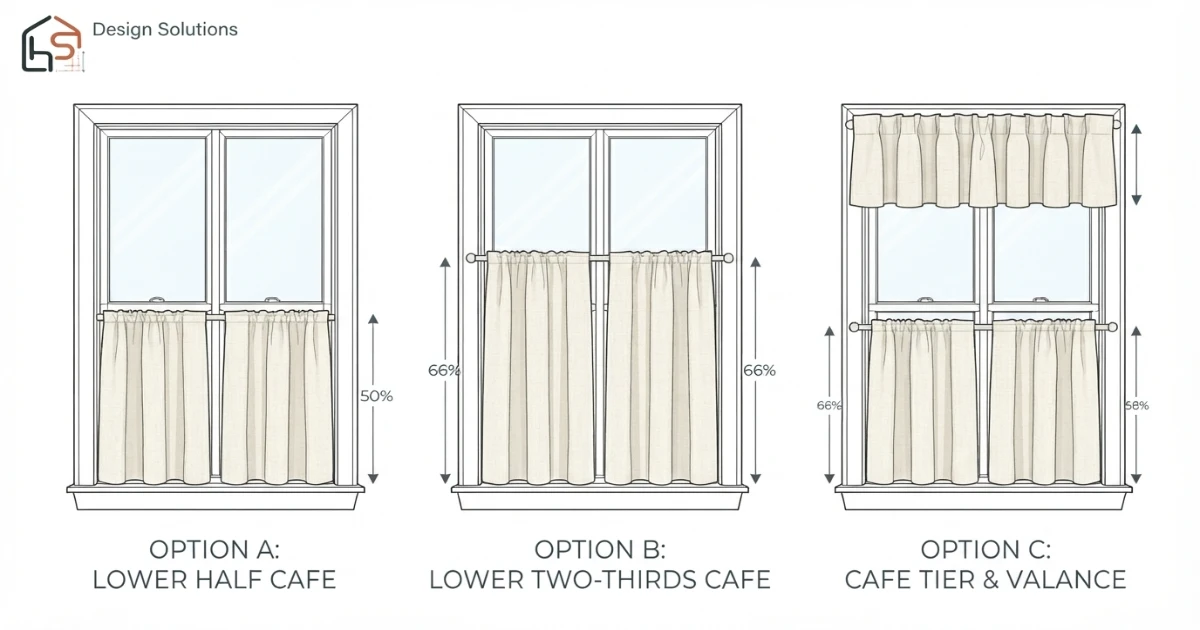
Worked cafe curtain measurement examples
Example one: 60-inch glass height. At 50% coverage, the cafe rod sits approximately 30 inches above the sill. A finished drop near 29.5 inches with a half-inch sill float suits a 30-inch ready-made tier.
Example two: stronger privacy. A 60-inch window at 67% coverage needs approximately 40.2 inches of covered height. A 45-inch tier can be hemmed, subject to the header position.
Example three: 36-inch rod. At 2 times fullness, the treatment needs 72 inches of combined width. Two 36-inch panels provide exactly 72 inches.
Example four: 42-inch rod. At 1.8 times fullness, target width is 75.6 inches. Two 42-inch panels provide 84 inches and create approximately 2 times actual fullness.
Example five: small kitchen window. The glass height is 44 inches and the desired coverage is 55%, producing 24.2 inches. A 24-inch tier is nearly exact, but the final choice depends on the pocket or clip position.
Example six: bathroom privacy. The outside sightline requires 70% coverage on a 54-inch window. Covered height is 37.8 inches. Choose a 45-inch tier and hem it, or order a custom 38-inch finished length.
Example seven: tension rod. The inside recess is 34 inches wide. At 2 times fullness, target width is 68 inches. Two 36-inch panels provide 72 inches and fit the calculation.
Example eight: projecting sill. The rod-to-sill distance is 30 inches, but the outside-mounted curtain needs to hang 2 inches below the sill edge. Finished drop is 32 inches, so a 36-inch panel is the safer starting size.
Common cafe curtain measurement mistakes
- Placing the rod at the exact window center without checking the privacy sightline.
- Measuring the whole frame height instead of the visible glass or intended covered section.
- Ignoring rod-pocket, clip-ring or tension-rod offsets.
- Buying one narrow panel when the treatment needs a center-opening pair.
- Confusing panel width with package width.
- Letting fabric rest on a wet sill or kitchen counter.
- Blocking window latches, cranks or opening sashes.
- Using heavy fabric on a light tension rod.
- Pairing a deep valance with a high cafe rod and losing too much daylight.
- Hemming before washing or allowing the fabric to settle.
Cafe curtain buying checklist
Record visible glass height, desired coverage percentage, rod position above the sill, finished drop, sill clearance, usable rod width, fullness, panel width, panel quantity and package quantity.
Check inside versus outside mounting, recess depth, tension-rod capacity, window hardware, faucet movement, splash zones, heat sources and moisture.
Verify fabric composition, care method, shrinkage risk, header type, decorative borders, listed length and return policy. Order matching panels together.
Mark the rod and hem with painter’s tape, test privacy from outside and then use the Curtain Size Calculator to confirm the complete order.
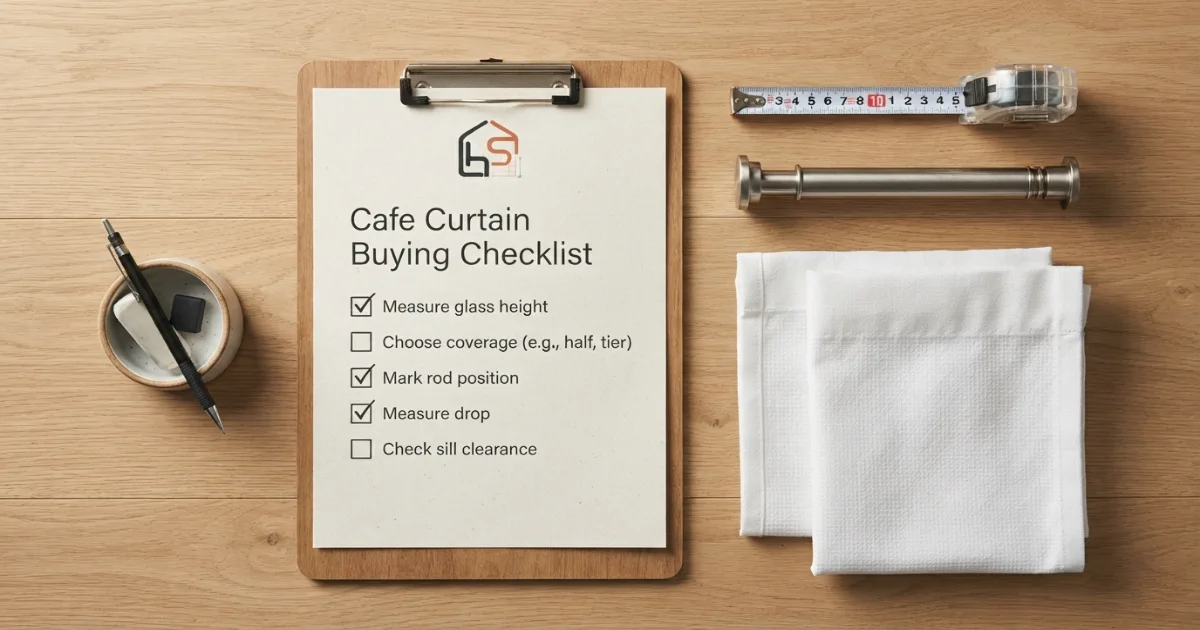
Two practical cafe-curtain product categories to compare
Search links are used because widths, lengths, package quantities and fabric options change. Confirm the current listing before ordering.
Cafe Curtain Tier Panels
Compare tier pairs in 24, 30, 36 and 45-inch lengths after confirming the measured rod-to-sill drop.
- Check finished width per panel
- Verify one panel or pair package quantity
- Review fabric care and shrinkage
Tension Rods and Small Cafe Rods
Compare adjustable rods after measuring the recess width and checking the combined weight of the tier panels.
- Confirm adjustment range and rod diameter
- Check no-drill versus fixed-bracket installation
- Verify weight capacity for the chosen fabric
Affiliate disclosure: As an Amazon Associate, HomeStyle Calculator may earn from qualifying purchases. Product specifications, prices and availability can change. Review the current listing before ordering.
Cafe curtain measurements FAQs
How long should cafe curtains be?
Cafe curtains commonly cover the lower half to lower two-thirds of the window. Measure from the actual rod, ring, clip or pocket position to the sill or chosen stopping point.
Where should a cafe curtain rod be placed?
Place the rod at the top of the section you want to cover. Mid-window placement is traditional, but the correct height depends on eye level, privacy and the outdoor view.
How wide should cafe curtains be?
Combined curtain width is commonly about 1.5 to 2.5 times the usable cafe rod span. Use more fullness for lightweight sheers and less for structured fabrics.
Should cafe curtains touch the sill?
They may finish at the sill, slightly above it or just below it. A small clearance is practical in kitchens and bathrooms where moisture or dirt may collect.
What are common cafe curtain lengths?
Common ready-made lengths include approximately 24, 30, 36 and 45 inches, with shorter 18-inch tiers and custom lengths also available.
How many cafe curtain panels do I need?
Most ordinary cafe windows use two panels. Calculate the exact count from rod width, fullness and finished panel width.
Do cafe curtains provide privacy?
Yes, when the rod height blocks the outside sightline and the fabric is sufficiently opaque. Test privacy in daylight and at night with interior lights on.
Are cafe curtains suitable for kitchens and bathrooms?
Yes, when they remain clear of water, cooking heat and damp surfaces. Choose washable fabric and practical sill clearance.
Calculate the exact cafe curtain measurements
Turn window height, desired coverage, rod width and panel width into a complete tier order.