What size TV for bedroom? Best complete size guide
What size TV for bedroom viewing works best depends on the normal pillow-to-screen distance, reclining posture, physical screen width, dresser or wall fit, nighttime brightness and how strongly the screen should dominate a restful room.
Written and reviewed by Rehana K · HomeStyle Calculator measurement-first method.
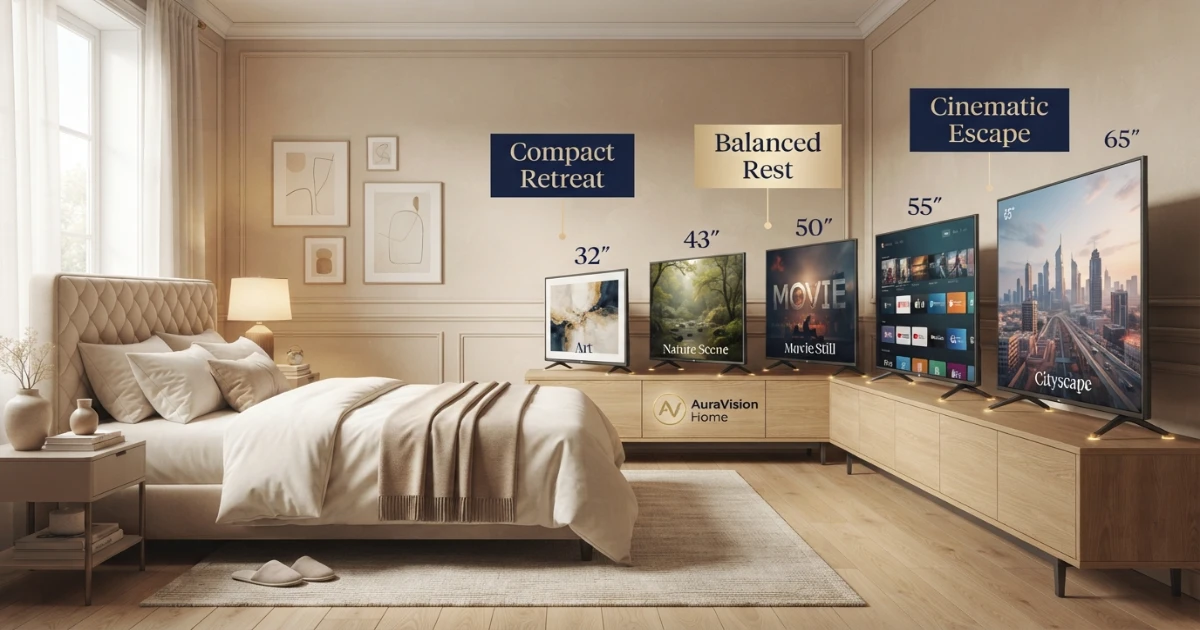
What size TV for bedroom viewing is best? Most bedrooms suit 32 to 55 inches.
What size TV for bedroom viewing works best? At roughly 6 feet, compare 32 and 43 inches. At 8 feet, compare 43 and 50 inches. At 10 feet, compare 50 and 55 inches. Large primary bedrooms can support 65 inches when the wall is broad and the screen remains comfortable from the normal pillow posture.
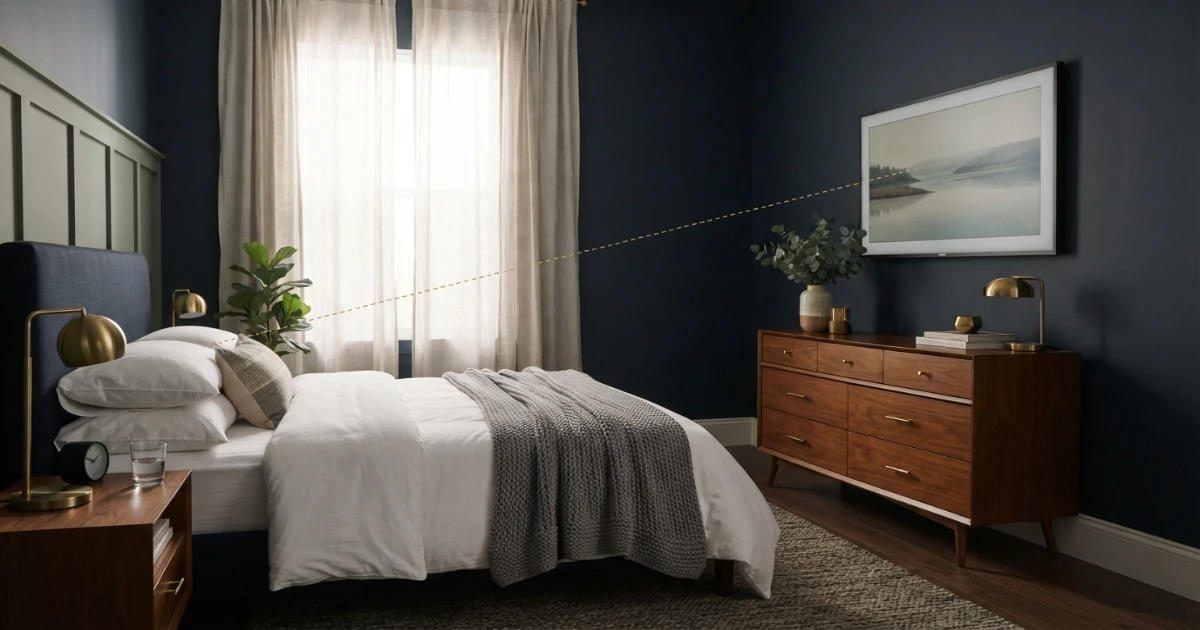
Bedroom TVs are often mounted slightly higher than living-room TVs because viewers recline. Test the full screen outline from the bed before drilling or ordering a dresser.
What size TV for bedroom? Complete every measurement
Start with bed distance and screen size, then confirm physical width, mounting height, furniture fit and the nearest comparison page.
Bedroom TV sizing from pillow distance to nighttime comfort
What size TV for bedroom? Working calculator
Measure from the normal pillow eye position to the planned screen surface. Choose the viewing style and main content quality.
Recommended screen estimate
Bedroom-specific preset estimate.
Compare the sizes above and below.
Visible 16:9 screen before bezels.
Useful for mounting-height planning.
At 8 feet, a 50-inch TV is a balanced bedroom starting point. Outline 43 and 50 inches on the wall before buying.
What size TV for bedroom distance? Complete size chart
What size TV for bedroom viewing should you choose from the chart below? Use the distance ranges as a practical starting point rather than a fixed rule. Bedroom viewing differs from living-room viewing because the viewer usually reclines, the screen may sit higher, the room is often darker and television should not overwhelm a space designed for rest.
| TV size | Approx. screen width | Approx. screen height | Practical bedroom distance | Common fit |
|---|---|---|---|---|
| 32 in | 27.9 in | 15.7 in | 4.5–6.5 ft | Guest room or compact bedroom |
| 40 in | 34.9 in | 19.6 in | 5.5–7.5 ft | Compact balanced setup |
| 43 in | 37.5 in | 21.1 in | 6–8 ft | Small or medium bedroom |
| 50 in | 43.6 in | 24.5 in | 7–9 ft | Balanced medium bedroom |
| 55 in | 47.9 in | 27.0 in | 7.5–10 ft | Primary bedroom |
| 65 in | 56.7 in | 31.9 in | 9–12 ft | Large primary bedroom |
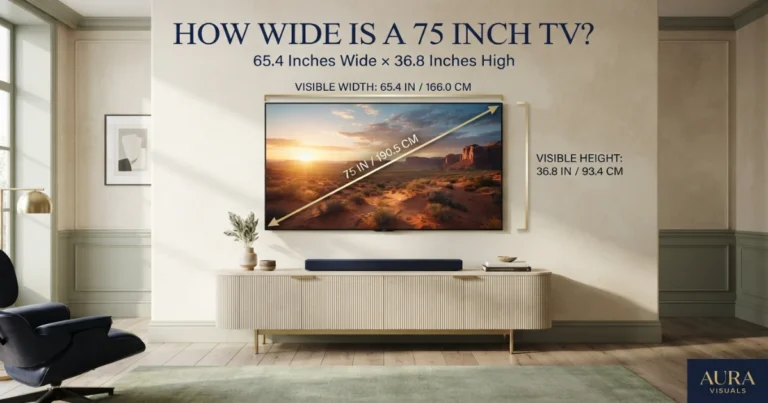
| 75 in | 65.4 in | 36.8 in | 10.5–14 ft | Very large immersive bedroom |
Use the smaller end when television is occasional or the room should remain visually quiet. Use the larger end for movies, subtitles, sports or a long bed-to-wall distance. Test two adjacent screen outlines from the bed.
How to measure distance when choosing what size TV for bedroom
Arrange the pillows as they are normally used when watching television. Then measure from the viewer’s eyes to the planned screen surface. Do not measure from the headboard, mattress edge or foot of the bed.
A wall-mounted screen may sit several inches behind a TV placed on a dresser. Account for that difference because even a small change matters in a compact bedroom. Measure in a straight horizontal line as closely as possible.
When two people share the bed, check both viewing positions. A screen centered on the wall may create a mild side angle for each person, while a TV aligned to only one pillow can be uncomfortable for the other.
If the bedroom has a chair or reading corner used for TV, record that distance separately. Choose the main bed position first unless the chair is the primary viewing seat.
What size TV for bedroom layouts and common room sizes
The answer to what size TV for bedroom use is rarely based on room dimensions alone. Bed orientation, dresser depth and the actual eye-to-screen distance create the usable viewing distance.
Small guest room or compact bedroom
A small bedroom commonly suits a 32- or 40-inch screen. The goal is clear visibility without filling the entire wall above a dresser. A smaller TV is also easier to position around wardrobes, doors and narrow circulation space.
10×10 bedroom
A 10×10 bedroom may create a viewing distance anywhere from about 5 to 9 feet depending on bed orientation. A 32- to 43-inch screen is a practical starting range. Do not assume the square room dimension equals the viewing distance.
12×12 bedroom
Many 12×12 bedrooms support 43 to 55 inches. A bed placed against one wall and a TV on the opposite wall often creates a moderate distance, but dresser depth can reduce the measurement.
Large primary bedroom
A long primary bedroom can support 55 or 65 inches, particularly when the bed is 9 feet or more from the screen. Larger screens need a broad uninterrupted wall and careful height planning.
Bedroom with a sitting area
When the TV serves both the bed and a sitting area, optimize for the position used most. A full-motion mount can improve side angles, but it should not be used to correct an oversized screen or poor wall choice.
What size TV for bedroom walls? Check the physical width
After deciding what size TV for bedroom viewing feels comfortable, convert the advertised diagonal into physical width before choosing a dresser or wall position.
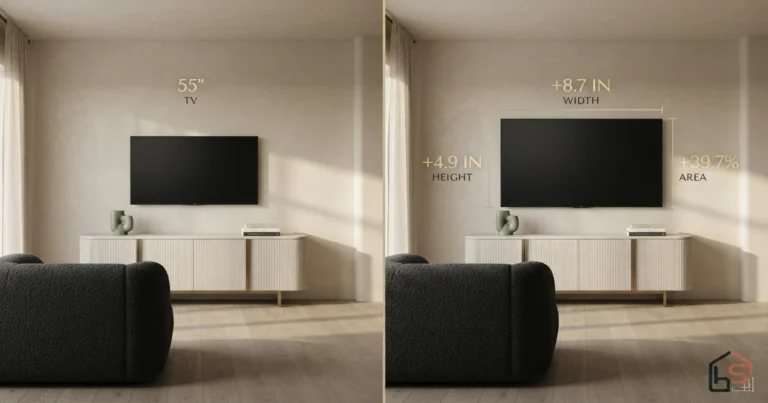
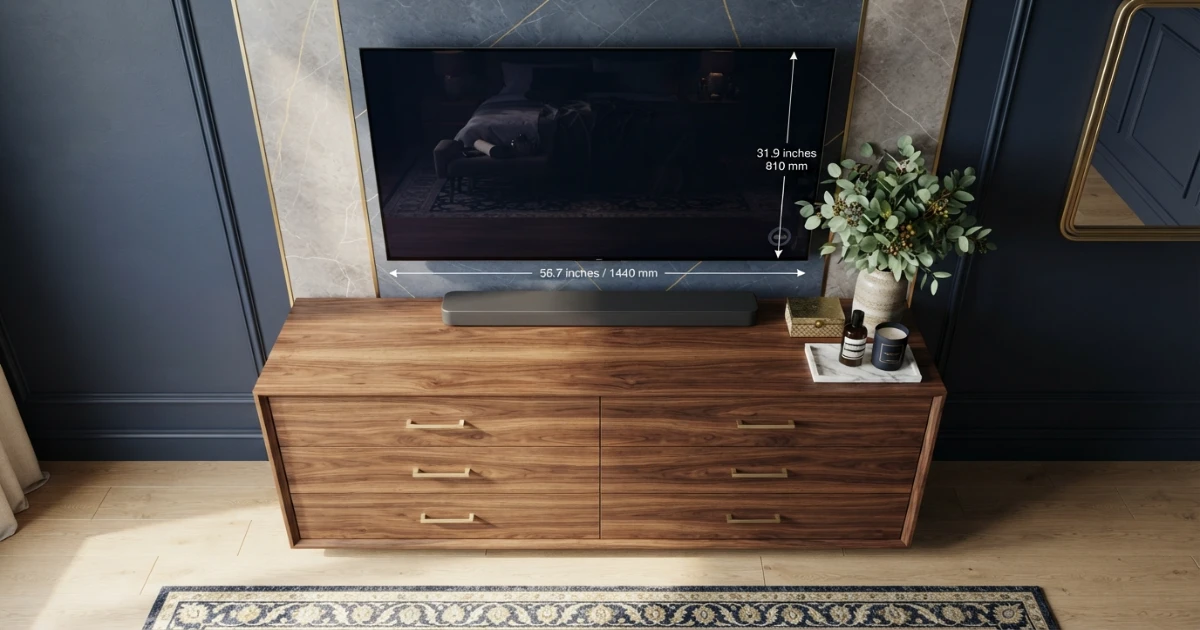
Advertised TV size is measured diagonally. A 55-inch television is not 55 inches wide. A 16:9 55-inch screen is approximately 47.9 inches wide, while a 65-inch screen is about 56.7 inches wide before bezels.
The complete product may be slightly wider. Feet can sit close to the outer edges, and a central pedestal may require more depth. Read the model specifications rather than choosing a dresser from the diagonal alone.
For exact physical dimensions, use the TV Dimensions Chart, How Wide Is a 65 Inch TV? and How Wide Is a 75 Inch TV? guides.
What size TV for bedroom mounting height and reclined viewing
When planning what size TV for bedroom mounting will support, calculate screen height as well as diagonal size because larger screens change the centerline.
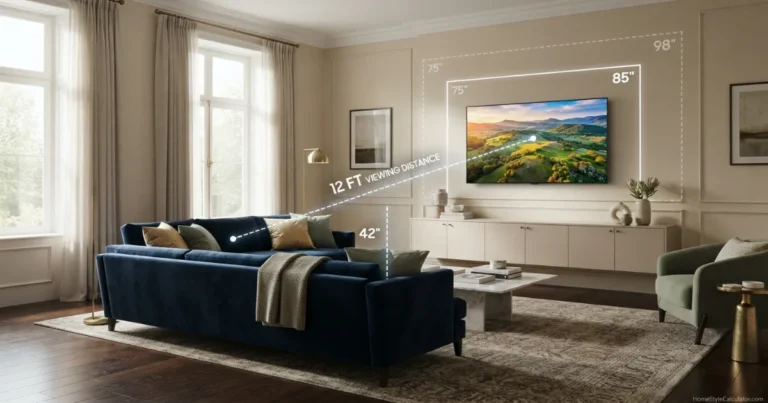
A bedroom TV is often higher than a living-room television because the viewer reclines and looks slightly upward. The correct height should be tested from the normal pillow posture, not while standing beside the bed.
Outline the screen with painter’s tape. Mark the screen center and watch that point for several minutes while reclining naturally. A modest upward angle is often comfortable, but a screen near the ceiling can cause neck strain.
A larger screen extends farther above and below its center. Upgrading from 43 to 65 inches while keeping the bottom edge fixed raises the screen center. Recalculate the mounting position for the new height.
A tilting mount can help when the screen must sit above a tall dresser. It should not be used to justify an extreme height. Use the TV Mounting Height Guide for detailed placement rules.
Wall mount versus dresser placement
The best answer to what size TV for bedroom furniture can support must include the TV’s complete width, feet, depth and weight—not only its diagonal.
TV on a dresser
A dresser installation avoids wall drilling and can work well when the top surface is deep, level and strong enough. Confirm the complete TV width, foot spacing, foot depth and weight.
The TV feet must sit fully on the dresser. Do not let them overhang. Secure the TV using an appropriate anti-tip system, especially in homes with children or pets.
Wall-mounted TV
Wall mounting saves dresser space and allows more control over height. Match the mount to the TV’s VESA pattern and weight. Confirm the wall construction, stud position, cable route and outlet access.
Use the TV Stand Size vs TV Size Guide when comparing furniture and mounts.
4K, HD and bedroom viewing distance
Higher-resolution 4K content can remain detailed at shorter distances than lower-resolution material. This can support a larger screen in a bedroom without making the pixel structure obvious.
Source quality still matters. Old television, compressed channels and low-quality streams may look rough on a large screen. Mixed viewing often suits a balanced size rather than the most immersive option.
Modern streaming, movies and current game consoles gain more from a larger 4K screen. Use the 4K Viewing Distance Guide for resolution-specific planning.
Nighttime brightness, glare and sleep comfort
What size TV for bedroom nighttime viewing feels comfortable also depends on brightness control, glare and how much of the dark room the screen fills.
Bedrooms are often viewed in low light. A screen that looks balanced in a bright store can feel intense at night. Check whether the TV offers automatic brightness, warm color modes, a low-luminance setting and easy control of status lights.
A larger screen produces a larger field of bright imagery. This does not mean it is unsuitable, but the bedroom should support comfortable nighttime settings. Avoid placing the TV where a bedside lamp reflects directly in the screen.
Windows can create morning or daytime glare. Sit on the bed at the brightest time and inspect the planned screen position. Curtains or shades can help, but the TV should not block a window or interfere with curtain operation.
Use a sleep timer or automatic shutoff when television is used before sleep. Keep charging lights, streaming boxes and power indicators from creating unnecessary bedroom glow.
Bedroom sound and household disturbance
Bedroom audio should be clear at low volume. A larger TV does not guarantee better speech clarity. Compare dialogue enhancement, night mode, headphone support and Bluetooth options.
A soundbar may improve dialogue but needs space below the screen. Check whether the dresser or wall arrangement leaves enough room without raising the TV excessively.
In shared homes, headphones can reduce disturbance. Confirm whether the television can send audio to headphones while preserving the preferred speaker behavior.
32 vs 43 vs 50 vs 55 vs 65 inches
Use these size comparisons after the calculator suggests what size TV for bedroom distance and layout is most suitable.
32-inch bedroom TV
A 32-inch TV is compact, affordable and easy to fit in guest rooms. It works best at short distances and for occasional viewing.
43-inch bedroom TV
A 43-inch TV is a balanced choice for many bedrooms. It is approximately 37.5 inches wide before bezels and fits many standard dressers.
50-inch bedroom TV
A 50-inch TV offers a noticeable step up for movies and subtitles while remaining manageable in a medium bedroom.
55-inch bedroom TV
A 55-inch TV works well in primary bedrooms with moderate to long distances. Its approximate 47.9-inch screen width should be checked against the dresser.
65-inch bedroom TV
A 65-inch TV can suit a large primary bedroom, but it creates a strong visual presence. Confirm the 56.7-inch screen width, wall clearance and mounting height.
For larger-size decisions, compare 55 vs 65 Inch TV and 65 vs 75 Inch TV.
What size TV for bedroom? Six worked examples
Example one: guest room at 5.5 feet. Compare 32 and 40 inches. A 32-inch screen keeps the room calm; 40 inches improves subtitles and occasional movies.
Example two: 10×10 bedroom at 7 feet. Compare 40 and 43 inches. Check dresser width and outline both sizes from the pillow position.
Example three: 12×12 bedroom at 8 feet. Compare 43 and 50 inches. A 50-inch screen suits stronger movie viewing, while 43 inches is visually quieter.
Example four: primary bedroom at 9.5 feet. Compare 50 and 55 inches. The larger screen is useful for subtitles and sports without requiring the width of a 65-inch TV.
Example five: large bedroom at 11 feet. Compare 55 and 65 inches. The 65-inch option works only when wall width, dresser fit and mounting height are comfortable.
Example six: TV above a tall dresser. Choose the screen size first, calculate its height and set the center from the reclined eye line. Do not mount from the bottom edge alone.
Common bedroom TV sizing mistakes
A common mistake is asking what size TV for bedroom use without first measuring from the normal pillow eye position.
- Measuring from the headboard instead of the viewer’s eyes.
- Choosing from bedroom square footage alone.
- Judging mounting height while standing.
- Confusing diagonal size with physical width.
- Ignoring dresser depth, foot spacing and weight capacity.
- Mounting too high because the dresser is tall.
- Choosing the largest TV without testing nighttime brightness.
- Ignoring window, mirror and bedside-lamp reflections.
- Forgetting space for a soundbar and cable access.
- Skipping the painter’s-tape outline from both pillow positions.
What size TV for bedroom buying checklist
- Normal pillow eye position.
- Eye-to-screen viewing distance.
- Distance from both sides of a shared bed.
- Preferred occasional, balanced or immersive viewing style.
- Approximate screen width and height.
- Complete product dimensions with feet.
- Dresser width, depth and weight capacity.
- VESA pattern and wall-mount weight rating.
- Reclined screen-center height.
- Window and lamp reflections.
- Night brightness and sleep timer.
- Soundbar or headphone requirements.
- Outlet, cable and streaming-device placement.
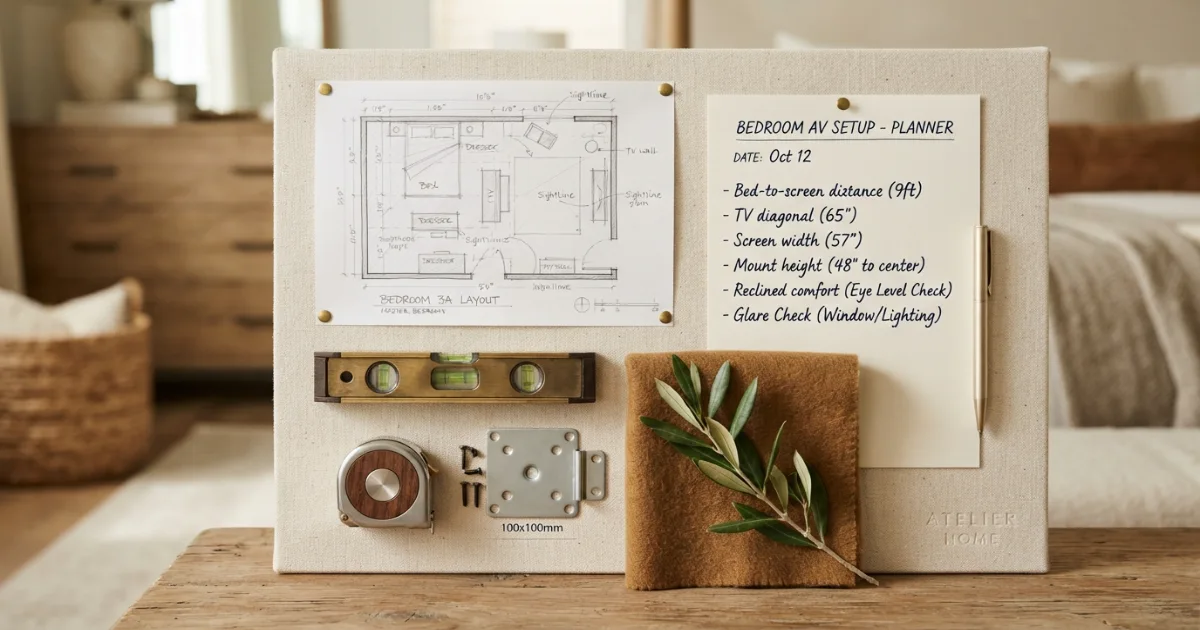
For temporary guest rooms, choose a size that is simple to operate and does not require visitors to adjust a complicated mount. A reliable 32- or 43-inch television often provides better usability than a large screen with awkward controls or poor viewing height.
In a rental, confirm whether wall drilling is permitted before selecting a mount. A stable dresser or freestanding TV stand may be easier to install and reverse. Measure elevators, stairs and bedroom doorways when buying a large screen.
Bedroom TV planning for rentals and temporary rooms
When the television is off, an art mode, low-reflection screen or darker wall color can reduce its visual impact. These features should not replace correct sizing, but they can help a larger screen integrate with the room.
Compare the TV outline with the bed width, dresser width, artwork and wall panels. The screen does not need to match the bed exactly, but it should look intentional rather than squeezed between trim or floating alone on a very broad wall.
A television can become the strongest visual object in a bedroom. A screen that fills most of the wall may suit a media-focused primary suite, but it can work against a soft, restful design in a guest room or compact bedroom.
How screen size affects the bedroom’s visual mood
Small streaming devices may fit behind the television, but they still need airflow and a reliable wireless signal. Leave access for resets, HDMI changes and future upgrades rather than sealing every connection behind fixed furniture.
Do not hide ordinary power cords inside a wall unless the installation method and cable type are approved for that use. Use suitable in-wall power solutions or surface cable channels, and keep ventilation openings clear.
Plan power and cable routing before choosing the final mounting position. A visible cord hanging down the center of a calm bedroom wall can make even a well-sized TV look unfinished. Check outlet height, antenna or cable connections, Ethernet access and the position of streaming boxes.
Power outlets, cables and streaming devices
When the bed is pushed against a side wall, the primary viewer may sit far from the room center. In that layout, a slightly smaller screen or a movable mount can feel more natural than an oversized fixed television.
A full-motion mount can rotate the screen toward one side, but the mount must return to a safe, centered position when not in use. Do not place the TV where an extended arm blocks a walkway, wardrobe door or bedroom entry.
A TV centered on the foot-of-bed wall is usually the simplest arrangement, but two sleepers rarely view it from exactly the same point. Test the screen from the left and right pillow positions. A moderate side angle may be acceptable, while a narrow viewing cone or strong reflections can make one side noticeably worse.
Side viewing angles in a shared bedroom
Final answer: what size TV for bedroom viewing should you buy?
What size TV for bedroom viewing should you buy? Measure from the normal pillow eye position to the planned screen surface. At approximately 6 feet, compare 32 and 43 inches. At 8 feet, compare 43 and 50 inches. At 10 feet, compare 50 and 55 inches. Large primary bedrooms can support 65 inches when wall width and mounting height are suitable.
Move toward the smaller option for occasional viewing and a calmer bedroom. Move toward the larger option for subtitles, sports, movies and high-quality 4K content.
Then confirm the TV’s physical width, dresser or mount compatibility, reclined viewing angle, nighttime brightness and glare before buying.
Calculate the bedroom TV size
Use the free TV Size Calculator and compare the nearest standard diagonals.
Measurement references
The page uses multiple bedroom viewing presets rather than claiming one universal distance. These normal dofollow references provide additional manufacturer and viewing-guide context.
Two practical bedroom TV installation categories to compare
Confirm the TV’s VESA pattern, product weight, foot spacing and dresser or wall dimensions before ordering.
Tilting Bedroom TV Wall Mounts
Compare mounts that allow a modest downward tilt from a bedroom wall position.
- Confirm VESA compatibility
- Check TV weight rating
- Review tilt and wall clearance
Compact TV Stands and Dressers
Compare furniture only after checking the TV’s complete width, feet, depth and weight.
- Check foot spacing
- Confirm top depth and capacity
- Allow cable and soundbar space
Affiliate disclosure: As an Amazon Associate, HomeStyle Calculator may earn from qualifying purchases. Product specifications, prices and availability can change.
What size TV for bedroom FAQs
What size TV is best for a bedroom?
The best bedroom TV size depends on the pillow-to-screen distance, viewing posture, wall or dresser width and how strongly the screen should dominate the room. Many bedrooms work well with 32- to 55-inch TVs, while larger primary bedrooms may support 65 inches.
Is a 43-inch TV big enough for a bedroom?
A 43-inch TV is often a practical bedroom size at moderate distances. It provides a larger image than a 32-inch screen without overwhelming a compact wall or dresser.
Is a 55-inch TV too big for a bedroom?
Not automatically. A 55-inch TV can work in a medium or large bedroom when the bed is roughly 7 to 10 feet from the screen and the wall or dresser has enough width.
What size TV should I get for a 10×10 bedroom?
A 32- to 43-inch TV is a common starting range, but measure the actual pillow-to-screen distance. Furniture placement can make two 10×10 bedrooms produce very different viewing distances.
What size TV should I get for a 12×12 bedroom?
A 43- to 55-inch TV is a useful starting range for many 12×12 bedrooms. Confirm the bed position, viewing distance and physical screen width before buying.
How far should a bedroom TV be from the bed?
Measure from the viewer’s eyes in the normal pillow position to the planned screen surface. Many bedroom layouts create distances from about 6 to 10 feet, but the actual measurement should control the decision.
How high should a bedroom TV be mounted?
Bedroom TVs are often mounted higher than living-room TVs because viewers recline. The screen should still remain comfortable from the normal pillow posture, with only a modest upward viewing angle.
How wide is a 55-inch TV?
A 16:9 screen with a 55-inch diagonal is approximately 47.9 inches wide before adding the model’s bezels. The complete TV width varies by product.
Should a bedroom TV sit on a dresser or be wall mounted?
Either can work. A dresser installation must safely support the TV and its feet, while a wall mount saves surface space but requires correct VESA compatibility, weight rating and viewing height.
Does a bedroom TV need to be smaller than a living-room TV?
Usually, but not always. Bedroom TVs are often viewed from a shorter distance and should not visually dominate a restful room. Large primary bedrooms may support the same sizes used in compact living rooms.