Shower curtain sizes: standard, extra long and extra wide
Compare common shower curtain dimensions, then measure the actual rod span, hook-to-tub drop, liner position and floor clearance before choosing a standard or specialty size.
Written and reviewed by Rehana K · HomeStyle Calculator measurement-first method.
The most common standard shower curtain size is about 72 inches wide by 72 inches long.
A typical 60-inch tub often uses a 70- to 72-inch-wide curtain because the extra width creates side overlap and loose folds. Extra-long sizes commonly include 78, 84 and 96 inches, while stall curtains may be 36 to 54 inches wide.
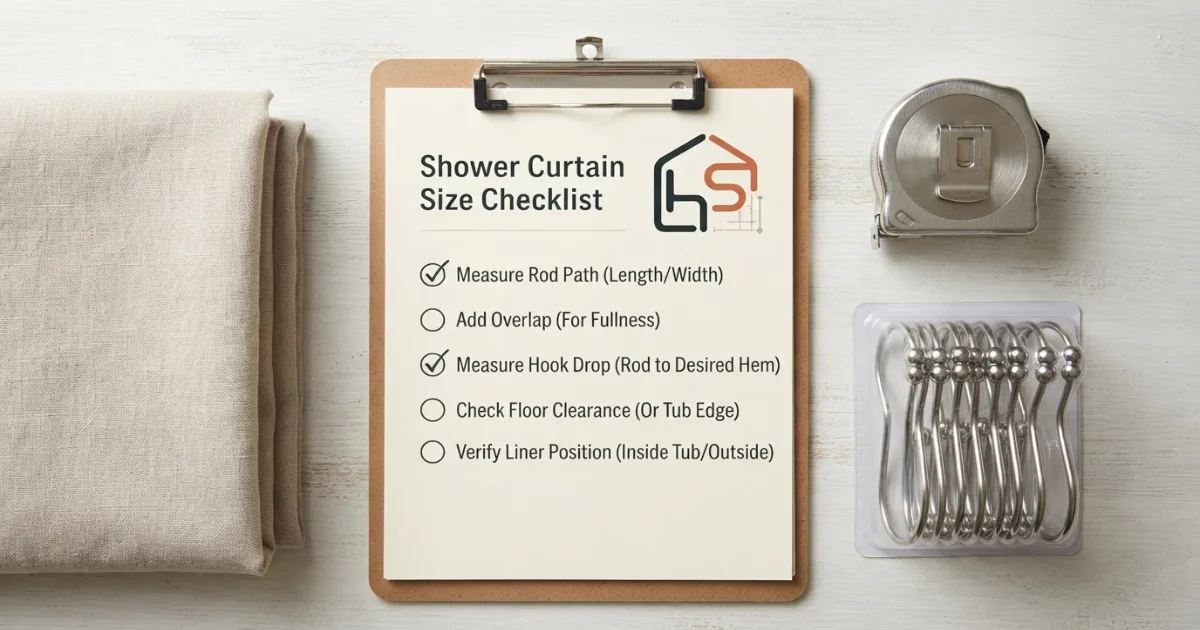
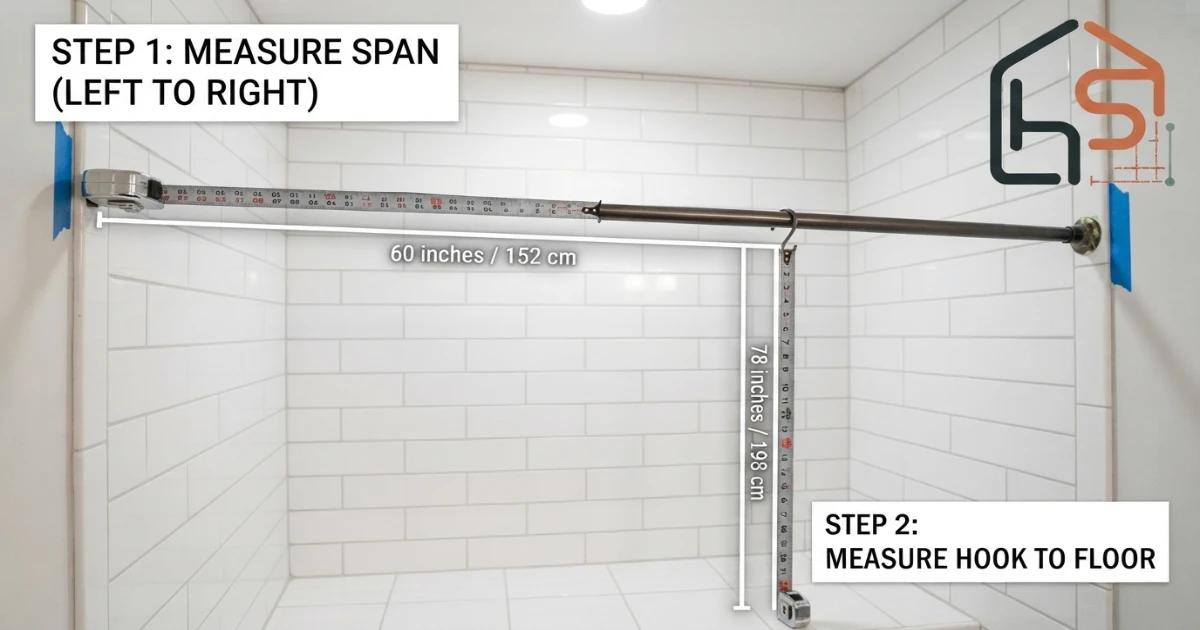
Measure along the usable rod path and from the bottom of the hooks or rings to the desired stopping point. The decorative curtain should not drag on the floor, and the liner should stay inside the tub or shower base.
Use the right HomeStyle Calculator guide for every measurement
Shower curtains use different hardware and wet-zone rules, but width, length and panel logic still begin with accurate measurements.
Shower curtain sizing from chart to final installation
Shower curtain size calculator
Enter the usable rod path, desired side overlap, hook-to-tub or floor distance, lower clearance and curtain type. The tool recommends a likely standard, stall, extra-long or extra-wide size.
A standard 72 × 72-inch curtain provides suitable width and length for the entered tub-shower measurements.
Compare standard, extra-long, stall and extra-wide curtains
The visual shows the relationship between curtain dimensions and the shower opening. Select a size type to compare its typical proportions.
Shower curtain sizes chart
Shower curtain dimensions are usually listed as width first and length second. A curtain labeled 72 × 84 inches is approximately 72 inches wide and 84 inches long. Product measurements vary slightly, so review the current listing rather than treating every category as exact.
| Common listed size | Size category | Typical use | Main measurement check | Metric reference |
|---|---|---|---|---|
| 70 × 72 in | Near-standard | Many tub-shower combinations | Confirm enough side overlap on a 60-inch tub | 178 × 183 cm |
| 72 × 72 in | Standard | Typical straight tub rod | Measure hook-to-tub drop | 183 × 183 cm |
| 72 × 78 in | Extra long | Moderately high rod | Keep lower edge clear of floor | 183 × 198 cm |
| 72 × 84 in | Extra long | Tall opening or near-ceiling style | Rod and hook height | 183 × 213 cm |
| 72 × 96 in | Very long | Very high rod or custom-style bathroom | Avoid floor dragging and pooling | 183 × 244 cm |
| 36 × 72 in | Narrow stall | Compact shower stall | Opening width and side overlap | 91 × 183 cm |
| 48 × 72 in | Stall | Medium shower stall | Doorless opening and liner position | 122 × 183 cm |
| 54 × 78 in | Wide/long stall | Larger or taller stall | Exact rod path and floor clearance | 137 × 198 cm |
| 108 × 72 in | Extra wide | Curved rod, wide tub or open span | Actual rod path and stack bulk | 274 × 183 cm |
| 144 × 72 in | Very wide | Walk-in, L-shaped or large open shower | Track shape and multiple support points | 366 × 183 cm |
What is the standard shower curtain size?
Approximately 72 × 72 inches is the most familiar standard size in the United States. Many manufacturers also sell 70 × 72-inch curtains. Both are designed around a typical tub-shower combination, but neither automatically fits every bathroom.
A standard bathtub is often described as 60 inches long. The curtain is wider than the tub so it can overlap the ends and form loose folds. A curtain exactly equal to the opening width may pull flat, expose side gaps and allow water to escape.
Length is measured from the top edge of the curtain, while the installed drop begins below rings or hooks. Measure from the bottom of the actual hanging hardware to the desired hem position.
How to measure shower curtain width
Measure the usable path the curtain follows. For a straight rod, this is generally the distance between the inner stopping points. For a curved rod, use a flexible tape along the curve. For an L-shaped or ceiling track, add every segment of the path.
Add width for side overlap and gathering. A practical starting allowance is approximately 10 to 20 percent more than the opening or several inches at each end. The wet-zone geometry and liner arrangement control the final allowance.
For a 60-inch straight rod, a 72-inch curtain adds 12 inches of total width. This is a common relationship. For a curved rod whose measured path is 68 inches, the same 72-inch curtain gives only 4 inches of extra width and may look stretched. An extra-wide curtain may be better.
How to measure shower curtain length
Measure from the bottom of the rings or hooks to the point where the curtain should stop. For a tub-shower, the decorative curtain normally hangs outside the tub and can finish close to the tub apron or several inches above the floor. The liner hangs inside the tub.
For a shower stall or walk-in base, keep the curtain low enough to control splash but high enough to avoid dragging. A curtain resting on the floor stays wet longer, traps dirt and can become a tripping hazard.
If the measured drop is 76 inches, a 72-inch curtain is short and a 78-inch curtain may be appropriate. If the drop is 82 inches, choose 84 inches rather than lowering the rod solely to fit a standard 72-inch panel.
Account for hook length. Decorative rings, roller hooks and integrated grommets can shift the fabric by an inch or more.
Extra-long shower curtain sizes
Extra-long shower curtains commonly measure 78, 84 or 96 inches long. They suit high rods, tall ceilings, walk-in showers and bathrooms where a standard 72-inch curtain leaves too much space below.
Choose extra length from the measured drop rather than ceiling height. A high ceiling does not require a long curtain if the rod remains at standard height. Conversely, a low ceiling can still need an extra-long curtain when the rod is mounted high.
Long fabric is heavier and stays wetter near the bottom if it hangs too low. Maintain a deliberate clearance and choose a material that dries appropriately for the bathroom’s ventilation.
Extra-wide shower curtain sizes
Extra-wide curtains include dimensions such as 84, 108 and 144 inches wide. They are useful for curved rods, oversized tubs, walk-in showers, clawfoot tubs and multi-side tracks.
A wider curtain creates more folds and stack bulk. Confirm where the fabric rests when open. In a compact bathroom, a 144-inch curtain can crowd fixtures and take longer to dry.
Very wide treatments may work better as two panels. A split arrangement can provide easier access and distribute weight, but the center meeting line needs overlap to contain splash.
Shower stall curtain sizes
Shower stalls vary much more than standard tubs. Common curtain widths include approximately 36, 48 and 54 inches, while lengths may be 72, 78 or 84 inches.
Measure the actual opening between the side walls or the full track path. Add enough width for the curtain to reach both sides without stretching flat. Keep the liner inside the shower base and verify that the lower edge remains below the curb top.
A narrow stall curtain that is too wide can form dense folds that stay wet. A curtain that is too narrow can pull away from the side wall and allow water to escape.
Curtain sizing for walk-in showers
Walk-in showers may use one straight opening, a partial glass panel, a corner track or a ceiling-mounted multi-side curtain. Measure the complete path of the curtain, not only the clear doorway.
Wide walk-ins often need 108- or 144-inch curtains, custom panels or multiple curtains. Confirm where the curtain stacks and whether it blocks shelves, controls or the entry.
For a curbless shower, lower clearance is especially important. The curtain should contain splash without dragging on the wet floor. A weighted liner can help, but it must not create a tripping hazard.
Do curved shower rods need wider curtains?
Usually, yes. A curved rod creates a longer path than the straight distance between the walls. Measure along the rod with a flexible tape after installation or use the manufacturer’s stated arc length.
A 60-inch wall-to-wall opening may produce a rod path several inches longer after curving outward. A 72-inch curtain may still fit, but it provides less spare width than it would on a straight rod.
Curved rods also move the decorative curtain farther outside the tub at the center. Make sure the lower hem clears the floor and does not interfere with the toilet or vanity.
Shower curtain liner sizing
The liner is the water-control layer. It should remain inside the tub or shower base and extend low enough to direct water inward. The decorative curtain normally stays outside.
A liner can be the same nominal size as the curtain, but some bathrooms benefit from a slightly shorter liner so it does not bunch at the bottom. The liner still needs enough width to overlap both sides.
Weighted magnets work only with compatible metal tubs and may not attach to fiberglass or acrylic. Suction cups, side clips and weighted hems are alternatives, but they do not replace correct sizing.
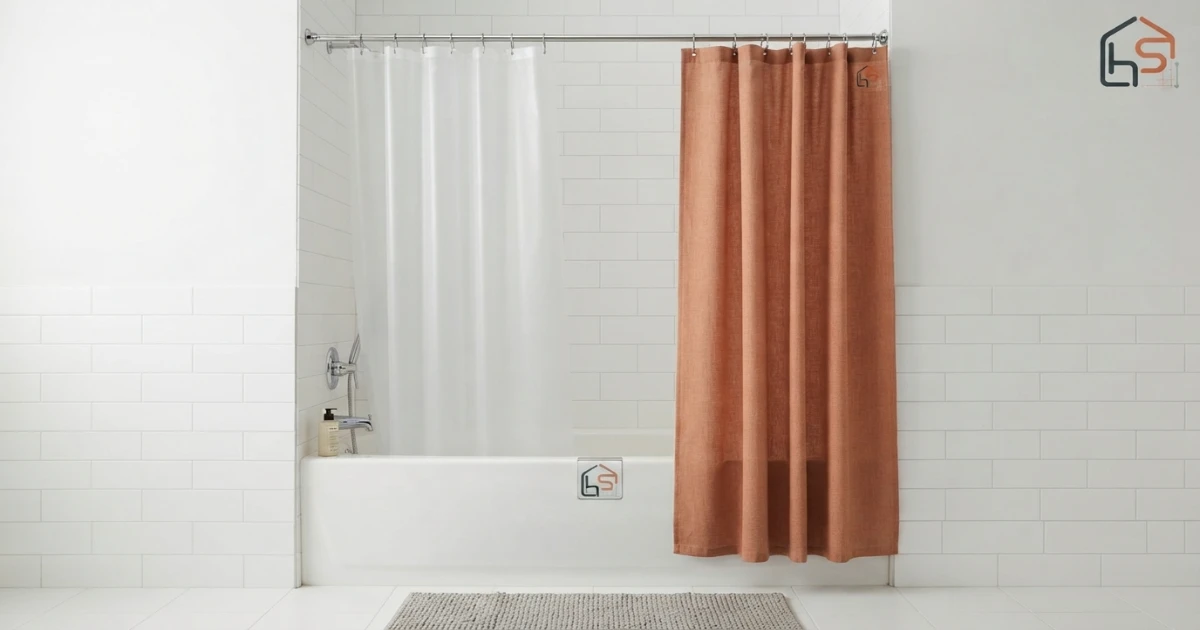
How high should a shower curtain rod be?
Set rod height from the curtain and hook combination. Add the installed curtain drop, hook length and desired lower clearance. Mark the position before drilling.
If a 72-inch curtain hangs from hooks that lower the fabric 1 inch and you want the curtain bottom 2 inches above the floor, the hook connection point needs to be approximately 75 inches above the floor.
For a tub, also check the top edge of the tub apron and the liner depth inside the basin. The decorative curtain can hang outside, but the liner must reach into the tub without excessive bunching.
Use a level and follow the rod manufacturer’s installation instructions. Tension rods should be secure enough to support the wet curtain and liner.
How far should a shower curtain hang from the floor?
A decorative curtain should normally clear the floor by approximately 1 to 3 inches, depending on the bathroom and tub height. The exact clearance should prevent dragging while preserving visual coverage.
For a stall or walk-in shower, the liner may hang lower than the decorative curtain, but it should not pile on the shower floor. Ensure that the lower edge stays within the wet zone.
Check bath mats, floor slopes and raised curbs. A curtain that appears clear on bare tile may drag when a thick mat is placed below it.
Fabric, vinyl, PEVA and care considerations
Fabric curtains offer a softer decorative appearance and usually require a separate liner. Polyester dries quickly and is widely available. Cotton and linen blends may absorb more moisture and can shrink if washing instructions are ignored.
Vinyl and PEVA curtains or liners are water-resistant and easy to wipe, but thickness, odor and flexibility vary. Review the product specifications and ventilation guidance.
Long or extra-wide curtains take longer to dry because more material gathers together. Spread the curtain after use and maintain bathroom ventilation.
Before hemming fabric curtains, wash or steam them according to the care label. Decorative borders, buttonholes and weighted hems can limit alterations.
How tub height and apron depth affect curtain length
The bathtub itself changes the apparent and functional curtain drop. A typical alcove tub may have an apron that rises around fourteen to twenty inches above the bathroom floor, but freestanding, soaking and accessible tubs can be very different. The decorative curtain hangs outside the tub, while the liner must extend inside far enough to direct water back into the basin.
Measure the rod-to-floor distance and the rod-to-inside-tub distance separately. These are not interchangeable. A decorative curtain may finish two inches above the floor while its liner reaches several inches below the inner rim. When one standard liner cannot satisfy both relationships, use separate curtain and liner lengths rather than forcing them to match.
Deep tub aprons can visually shorten a standard curtain. A high rod combined with a tall apron may make a 72-inch curtain look balanced even when the lower floor clearance is generous. Conversely, a low-profile tub can expose too much space below a standard curtain unless the rod is lowered or a longer curtain is chosen.
Clawfoot and freestanding tub curtain sizing
Clawfoot and freestanding tubs often use oval, rectangular or ceiling-mounted tracks that surround more than one side. The required width is the complete perimeter path plus enough overlap at the entrance. A standard 72-inch-wide curtain is rarely enough for a full enclosure.
Measure every track segment or use a flexible tape around the installed oval. Very wide curtains of 180 inches or more may be required, or several panels may be joined. Multiple panels are easier to wash and position, but every meeting line needs overlap so water does not escape.
Measure liner length from the hooks to a point several inches inside the tub. The lower edge should remain within the basin without resting heavily on the tub floor. Keep fabric away from exterior plumbing, radiators and nearby electrical fixtures.
Hook count, grommet spacing and width compatibility
Many standard shower curtains use twelve hook holes, but stall, extra-wide and custom curtains can use a different count. The rod width may be correct while the supplied hook spacing creates uneven folds or leaves the ends unsupported.
Compare the number of holes in the curtain and liner. When both hang from the same hooks, their hole counts and spacing should align. An extra-wide curtain may require more hooks, a reinforced track or multiple panels. Do not stretch a twelve-hole curtain across a path designed for many more support points.
Roller hooks can improve movement across a long rod, while ordinary rings may bind at telescoping joints. For corner and ceiling tracks, use carriers specifically designed for the system and confirm that they move through bends.
When two shower curtain panels work better than one
A split shower curtain opens from the center and can make a wide walk-in or freestanding tub easier to access. Divide the total width target between two panels, then add center overlap. If the path requires 120 inches of total coverage, two 66-inch panels provide 132 inches and create twelve inches of combined extra width.
Split panels also reduce the weight of each piece and make laundering easier. However, the center seam is a potential splash gap. Use magnets, snaps, clips or deliberate overlap when the opening receives direct spray.
For an L-shaped track, two panels can meet at the corner rather than the center. Distribute width according to each track segment, not equally, unless both sides are the same length.
Weighted liners, magnets and lower-edge control
A weighted hem helps the liner hang straighter and reduces inward movement caused by warm rising air. Magnets can hold the liner against a compatible metal tub, but many acrylic, fiberglass and stone-resin tubs are not magnetic.
Weights do not correct a liner that is too short or too narrow. The liner still needs enough lower reach and side overlap. Excessively heavy weights can make a thin liner sag between hooks, so inspect the complete system rather than one feature.
Clean weighted hems regularly because soap residue and moisture collect near the bottom. Replace liners that remain stained, torn or difficult to dry.
Unusual shower layouts and custom sizing
Steam showers, accessible roll-in showers, sloped ceilings and partial-glass enclosures may not match standard curtain categories. Draw a top-view plan and label every rod or track run, return and opening. Measure the lowest ceiling point and every floor change.
A custom curtain becomes worthwhile when standard widths leave gaps, several panels create awkward seams or the required length falls between specialty sizes. Custom work can also place hook holes and weighted hems exactly where the hardware needs them.
Before ordering custom dimensions, confirm whether the supplier wants finished curtain size, track size or opening size. These measurements are different, and assumptions can produce an unusable curtain.
Worked shower curtain size examples
Example one: standard tub. The straight rod path is 60 inches. Add 12 inches for overlap and gathering, producing a 72-inch width target. The hook-to-floor distance is 74 inches with 2 inches of clearance, so the required curtain length is 72 inches. Choose 72 × 72 inches.
Example two: high rod. The measured hook-to-floor distance is 80 inches and desired clearance is 2 inches. Required length is 78 inches. Choose a 72 × 78-inch extra-long curtain.
Example three: tall bathroom. Hook-to-floor distance is 86 inches with 2 inches of clearance. Required length is 84 inches. Choose a 72 × 84-inch curtain.
Example four: curved rod. The straight wall distance is 60 inches, but the measured rod path is 68 inches. Add 10 inches of overlap for a 78-inch target. A standard 72-inch curtain is narrow; compare an 84-inch or 108-inch-wide option.
Example five: narrow stall. Opening path is 32 inches and 6 inches of overlap is desired. Width target is 38 inches. A 36-inch curtain may be tight; a 42- or 48-inch-wide stall curtain is safer.
Example six: wide walk-in. The ceiling-track path is 102 inches and 12 inches of additional width is needed. Target is 114 inches. A 108-inch curtain is slightly short; use 120 inches, two overlapping panels or a custom width.
Example seven: L-shaped shower. Track segments are 48 and 36 inches, totaling 84 inches. Add 16 inches for overlap and corner movement. Target width is 100 inches, so a 108-inch-wide curtain works.
Example eight: split curtain. A 120-inch-wide target is divided into two panels. Each panel should provide at least 60 inches plus center overlap. Two 66-inch panels create a 12-inch combined overlap allowance.
Common shower curtain sizing mistakes
- Assuming every bathtub uses a 72 × 72-inch curtain.
- Measuring wall-to-wall width instead of the actual curved or corner rod path.
- Forgetting that rings and hooks change the installed length.
- Allowing the curtain or liner to drag on the floor.
- Choosing a curtain equal to the opening width with no side overlap.
- Using an extra-wide curtain where dense wet folds cannot dry.
- Placing the decorative curtain inside the tub and the liner outside.
- Ignoring bath mats, tub aprons, curbs and floor slopes.
- Buying a liner without checking magnet compatibility and lower reach.
- Drilling the rod before testing the complete curtain-and-hook drop.
Shower curtain buying checklist
Record the rod or track path, side-overlap allowance, hook-to-tub or floor drop, desired lower clearance, shower type, rod shape and whether the treatment uses one curtain or two.
Check the listed width and length, number of hook holes, package quantity, fabric or liner material, weighted hem, care method, shrinkage risk and return policy.
Confirm that the decorative curtain remains outside the wet zone and the liner stays inside. Test the rod height with painter’s tape before drilling or tightening a tension rod.
For unusually wide, curved or tall installations, enter the measured dimensions in the Curtain Size Calculator and choose a specialty or custom size when standard options are too small.
Two practical shower-curtain product categories to compare
Search links are used because dimensions, materials and package contents change. Confirm the current listing before ordering.
Standard and Extra-Long Shower Curtains
Compare 72-, 78-, 84- and 96-inch lengths after measuring from the hooks to the desired lower clearance.
- Confirm width × length order
- Check fabric, liner and hook-hole count
- Review washing and drying instructions
Extra-Wide Curtains and Shower Liners
Compare 108- and 144-inch-wide options for curved rods, walk-ins, corner tracks and broad shower openings.
- Measure the complete rod or track path
- Confirm liner position and weighted hem
- Check whether one or two panels are included
Affiliate disclosure: As an Amazon Associate, HomeStyle Calculator may earn from qualifying purchases. Product specifications, prices and availability can change. Review the current listing before ordering.
Shower curtain sizes FAQs
What is the standard shower curtain size?
A common standard size is approximately 72 inches wide by 72 inches long, although 70 × 72-inch curtains are also widely sold.
What size shower curtain fits a standard bathtub?
A typical 60-inch tub often uses a 70- to 72-inch-wide curtain with a 72-inch length. Measure the actual rod path and installed drop before buying.
What size is an extra-long shower curtain?
Common extra-long sizes include 72 × 78, 72 × 84 and 72 × 96 inches. Choose from the measured hook-to-floor or hook-to-tub drop.
How wide should a shower curtain be?
It should be wider than the opening or rod path so it can overlap the sides and form loose folds. A common starting allowance is approximately 10 to 20 percent.
Should a shower curtain touch the floor?
No. It should normally clear the floor so it does not drag, stay wet or create a tripping hazard.
What size curtain fits a shower stall?
Common stall sizes include approximately 36 × 72, 48 × 72 and 54 × 78 inches, but stall openings vary and should be measured individually.
Do curved rods require wider shower curtains?
Often yes. Measure along the full curved rod path because it is longer than the straight wall-to-wall distance.
Should the liner be the same size as the shower curtain?
It can be the same or slightly shorter and narrower, provided it remains inside the wet zone and gives enough side and lower coverage.
Calculate the exact shower curtain size
Turn the measured rod path, overlap allowance and installed drop into a complete curtain order.