TV size for 8 feet: Best complete viewing guide
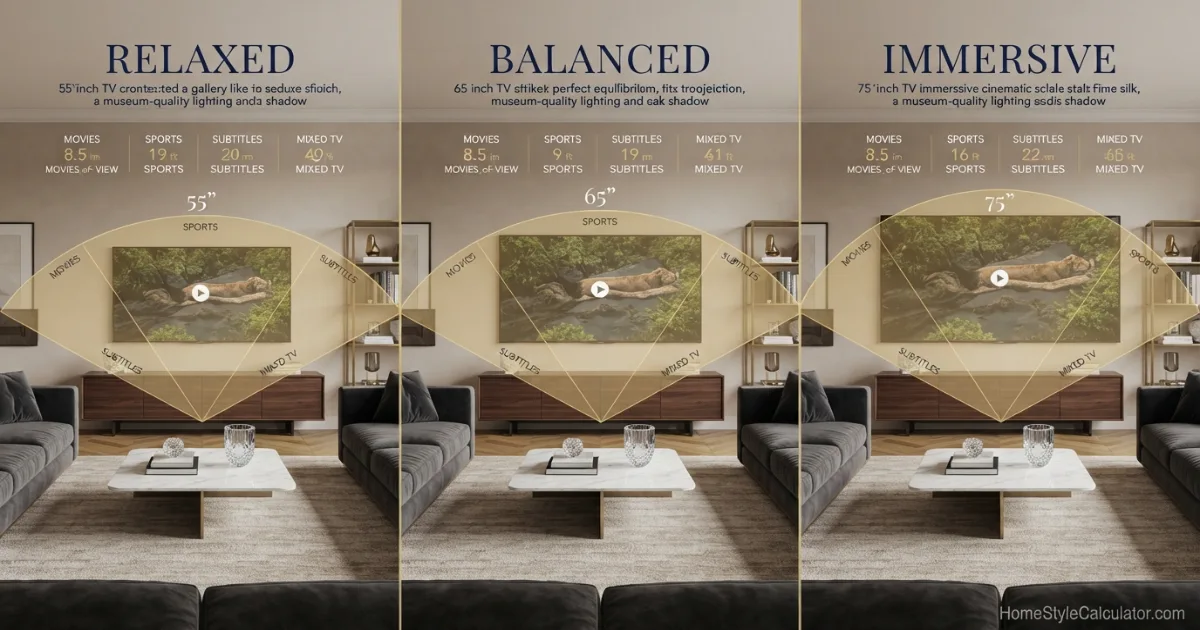
TV size for 8 feet viewing usually falls between 55 and 75 inches. A 55-inch screen feels relaxed, 65 inches is balanced for many living rooms, and 75 inches creates a more cinematic field of view.
Written and reviewed by Rehana K · HomeStyle Calculator measurement-first method.
TV size for 8 feet is usually 55 to 75 inches, with 65 inches as the balanced choice.
Choose 55 inches for relaxed mixed television, 65 inches for a balanced all-around setup, or 75 inches for movies, sports, subtitles and cinematic gaming.
The final decision depends on content quality, wall width, media-console size, glare and how much visual presence you want the screen to have.
TV size for 8 feet: complete every measurement
Use the distance result, then confirm the exact physical width, compare adjacent sizes and set the correct mounting height.
8-foot TV sizing from quick answer to final installation
TV size for 8 feet comparison calculator
The distance stays fixed at 8 feet. Choose your viewing style, main content quality and available wall width.
Recommended standard size
Adjusted for viewing style and content.
Visible 16:9 screen before bezels.
Useful for mounting-height planning.
Allow extra width for bezels and breathing room.
A 65-inch TV is the balanced starting choice at 8 feet. Outline 55, 65 and 75 inches on the wall before ordering.
TV size for 8 feet: 55 vs 65 vs 75-inch chart
TV size for 8 feet should be compared as a practical range rather than reduced to one universal number. The chart below shows the main differences among 55, 65 and 75 inches for relaxed, balanced and immersive viewing.
| TV size | Approx. screen width | Approx. screen height | Viewing character at 8 ft | Best use |
|---|---|---|---|---|
| 55 in | 47.9 in | 27.0 in | Relaxed | News, mixed TV and visually calm rooms |
| 65 in | 56.7 in | 31.9 in | Balanced | Living rooms, sports, streaming and subtitles |
| 75 in | 65.4 in | 36.8 in | Immersive | Movies, strong sports presentation and gaming |
The physical difference is substantial. Moving from 55 to 65 inches adds about 8.7 inches of visible screen width. Moving from 65 to 75 inches adds another 8.7 inches.
Confirm that the viewing distance is really 8 feet
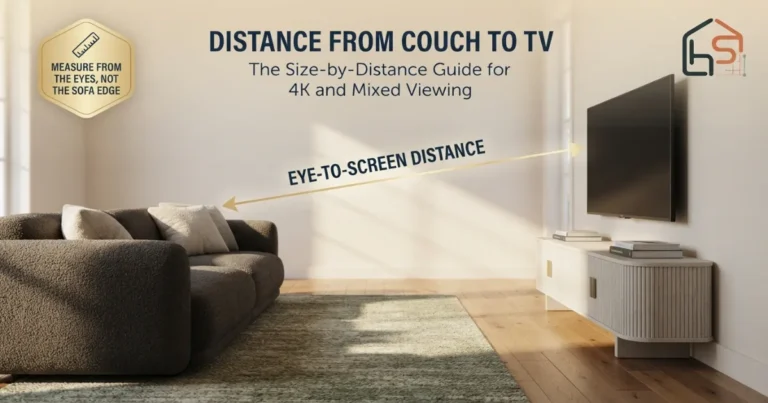
Measure from the main viewer’s eyes to the planned screen surface. Do not measure from the front edge of the sofa, the back wall or the TV stand.
If the TV will be wall mounted, measure to the wall position. If it will sit on a deep media console, the screen may project several inches closer to the viewer.
Check the distance while sitting normally. A reclining sofa can move the viewer’s eyes backward, while a gaming chair placed in front of the sofa can create a much shorter distance.
When the household uses several seats, prioritize the main seat and verify the side seats. A sectional may place some viewers at 8 feet and others at 12 feet even though the central seat is exactly 8 feet away.
Distance rule
Ten feet equals 96 inches. Measure eye position to screen surface before comparing 55, 65 and 75 inches.
Is a 55-inch TV big enough at 8 feet?
A 55-inch TV is big enough for many households at 8 feet, especially when television is used casually or the room should remain visually calm.
Its visible 16:9 screen is approximately 47.9 inches wide and 27 inches high before bezels. This makes it easy to fit on many existing media consoles.
The main compromise is immersion. Subtitles, distant sports details and movie presentation feel less commanding than they do on a 65- or 75-inch screen.
Choose 55 inches when mixed television, lower-resolution channels, compact wall space and budget matter more than a theater-like field of view.
Is a 65-inch TV best at 8 feet?
For many living rooms, 65 inches is the best balanced TV size for 8 feet. It creates a clear increase in scale over 55 inches without requiring the full wall width and visual dominance of a 75-inch television.
A 65-inch screen is approximately 56.7 inches wide and 31.9 inches high before bezels. Confirm the complete model width, weight and stand-foot position.
Movies, sports, streaming menus and subtitles become easier to follow at 8 feet. The screen feels substantial without creating the strongest front-row effect.
Choose 65 inches when most viewing is modern HD or 4K and the room needs one dependable all-around recommendation.
Is a 75-inch TV too big at 8 feet?
A 75-inch TV is not automatically too big at 8 feet. It produces a cinematic field of view that can suit movies, sports, concert videos and modern console gaming.
The visible screen is approximately 65.4 inches wide and 36.8 inches high before bezels. The complete television needs a suitably wide stand or secure wall mount.
The larger image improves subtitle readability and sports detail, but it also reveals poor compression and can dominate a compact or formal room.
Outline the full screen for at least a day. Check speaker placement, glare and whether every regular viewer is comfortable with the stronger visual presence.
TV size for 8 feet must fit the wall and stand
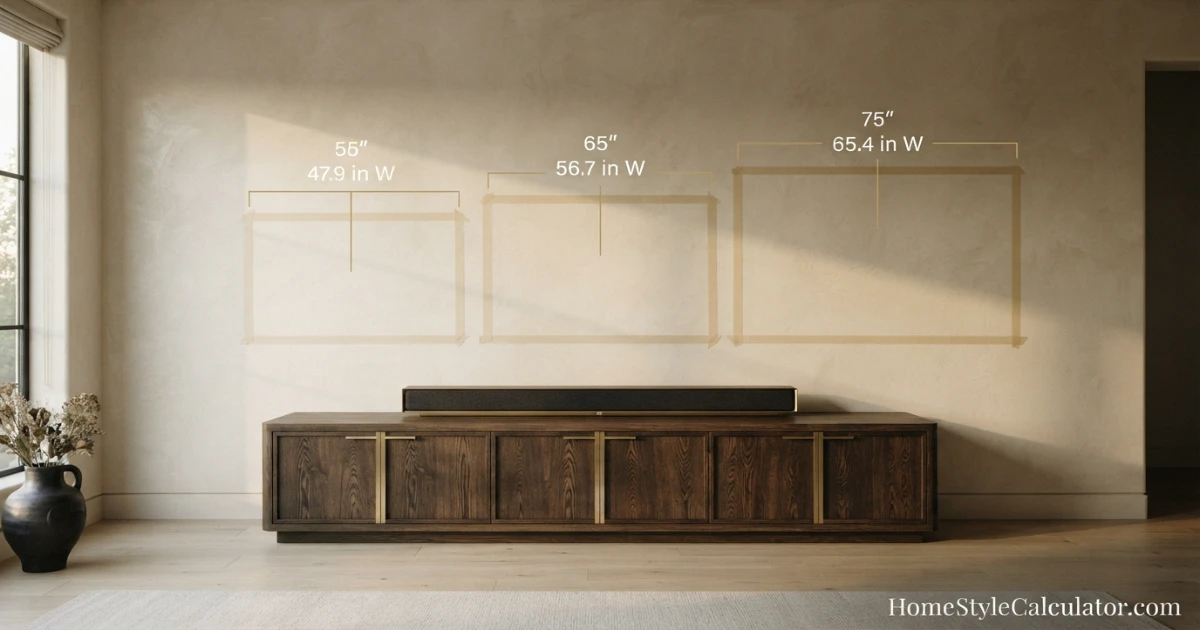
After deciding the diagonal, convert it into physical width. Diagonal advertising does not tell you whether the TV fits the wall, console or soundbar layout.
A 55-inch screen is about 47.9 inches wide. A 65-inch screen is about 56.7 inches wide. An 75-inch screen is about 55.4 inches wide before bezels.
Measure the uninterrupted wall area. Exclude windows, door swings, built-ins, speakers, sconces and shelves. Leave room for ventilation and cable access.
If the television sits on furniture, confirm the complete product width, foot spacing, foot depth and weight. Wide-set feet can make a model unusable on a narrow console even when the screen itself appears to fit.
Use the TV Dimensions Chart, How Wide Is a 55 Inch TV? and How Wide Is a 65 Inch TV? guides.
How content quality changes TV size for 8 feet
Mostly 4K content supports the larger end of the range. Modern streaming, UHD discs and current game consoles can remain detailed on 65- and 75-inch screens at 8 feet.
Mixed HD and 4K viewing usually favors 65 inches because it balances immersion with tolerance for lower-quality sources. A 55-inch screen is more forgiving when the household watches many compressed channels.
Old DVDs, standard-definition television and poor streaming connections can look soft or blocky on an 75-inch screen. Screen size cannot restore detail that is missing from the source.
Use the 4K Viewing Distance Guide when most viewing is high-resolution.
Movies and streaming
Movies benefit from the stronger field of view of a 65- or 75-inch screen. Letterboxed films may feel smaller because black bars reduce the active picture height, making the larger option more attractive.
Sports
Sports viewers benefit from a larger image because players, ball movement, scores and field detail remain easier to see. At 8 feet, 65 inches is balanced and 75 inches is more stadium-like.
Subtitles
Subtitles often justify moving from 55 to 65 inches. Text becomes easier to read without leaning forward, especially for viewers seated off-center.
Gaming
Console gaming from the sofa can be excellent at 65 or 75 inches. Competitive games with interface elements near the screen edges may feel more demanding on the largest option.
Use the TV Size for Gaming Distance guide for a gaming-specific decision.
TV size for 8 feet and correct mounting height
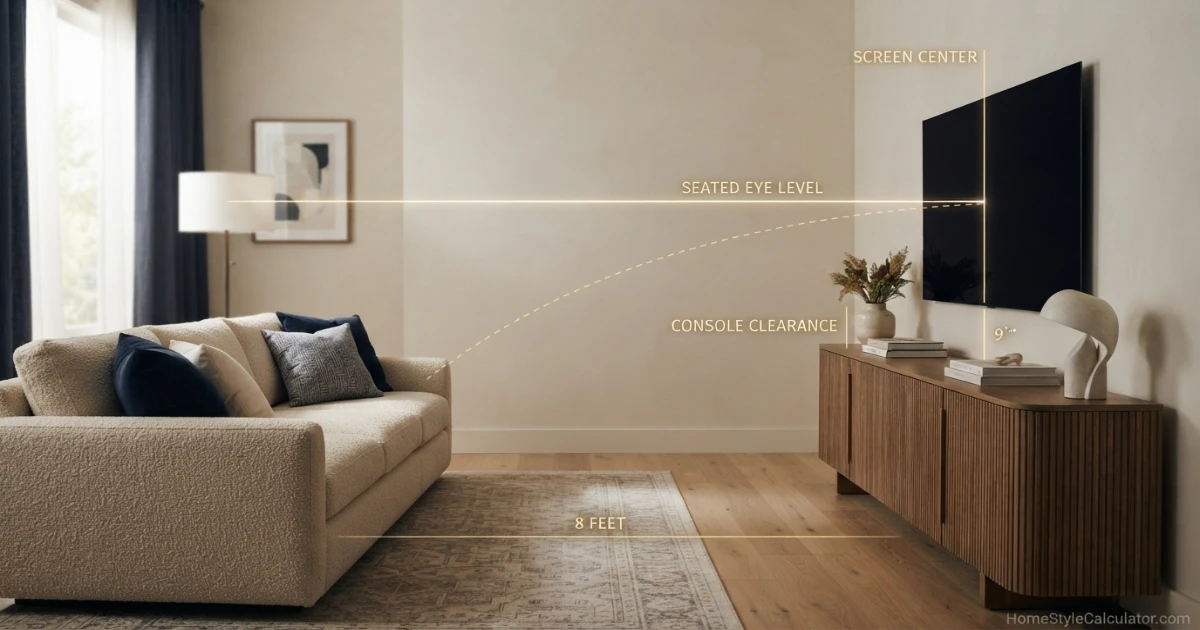
A comfortable starting point places the screen center close to seated eye level. The exact center height depends on sofa height, viewer height, reclining posture and screen size.
A larger TV extends farther above and below the center. If you keep the bottom edge fixed while moving from 55 to 75 inches, the screen center rises by almost 5 inches.
Outline the complete screen and mark its center. Sit normally for several minutes. Do not judge the position while standing near the wall.
Leave enough clearance above the media console and soundbar. Avoid raising the TV merely to create decorative space beneath it.
Use the TV Mounting Height Guide. For fireplace installations, use the TV Height Above a Fireplace guide and verify heat clearances.
How the room’s visual style affects the choice
A 55-inch TV leaves more visual breathing room around artwork, paneling and furniture. It suits living rooms where the screen should not become the main architectural feature.
A 65-inch TV creates a stronger anchor without filling most walls. It usually balances well with medium and large consoles.
An 75-inch TV becomes a dominant visual object. This can be desirable in a media-focused family room but less suitable in a formal sitting room.
Compare the taped screen outline with the sofa width, console width and surrounding architecture. The television should look intentional, not squeezed between features.
Glare, brightness and daytime viewing
A larger TV does not solve window glare. Reflections can remain distracting on every size and may become more noticeable because the reflective surface is larger.
Inspect the planned screen area at the brightest time of day. Check windows, lamps and ceiling fixtures from the main and side seats.
Tilting or full-motion mounts can adjust reflections, but excessive tilt often indicates that the TV is mounted too high. Curtains and shades can improve daytime visibility.
Soundbar and speaker planning
Leave enough space below the screen for a soundbar without blocking the picture or remote sensor. Check the distance from the TV feet or bottom bezel to the console surface.
An 75-inch TV may fill most of a wall, leaving limited room for side speakers. A 65-inch screen can preserve better speaker placement in a moderate room.
Measure the complete audio layout before ordering the TV. Do not assume the soundbar must be as wide as the television.
TV size for 8 feet: six worked examples
Example one: mixed family television. The household watches news, cable channels and streaming. A 55- or 65-inch TV is the safer choice, with 65 inches providing the stronger all-around result.
Example two: movie-first living room. Most viewing is 4K streaming and UHD movies. An 75-inch screen creates the strongest cinematic effect at 8 feet.
Example three: sports household. Viewers want clear field detail and score graphics. A 65-inch TV is balanced; 75 inches adds stronger immersion.
Example four: narrow wall. The uninterrupted wall width is only 68 inches. A 65-inch model may fit tightly depending on bezels, while an 75-inch screen is too wide.
Example five: compact media console. The console is 60 inches wide. Many 55-inch TVs can fit, while a 65-inch model may require wall mounting or a wider console.
Example six: subtitle-heavy viewing. A 65-inch screen improves subtitle readability over 55 inches without creating the full visual dominance of 75 inches.
Common TV size for 8 feet mistakes
- Measuring from the sofa edge instead of the viewer’s eyes.
- Assuming one universal size fits every household.
- Confusing diagonal size with physical TV width.
- Ignoring lower-resolution television and streaming quality.
- Choosing 75 inches without checking wall width and mount capacity.
- Buying a 65-inch TV before measuring stand-foot spacing.
- Mounting the screen from the bottom edge instead of the centerline.
- Ignoring window and lamp reflections.
- Forgetting space for soundbars, speakers and cable access.
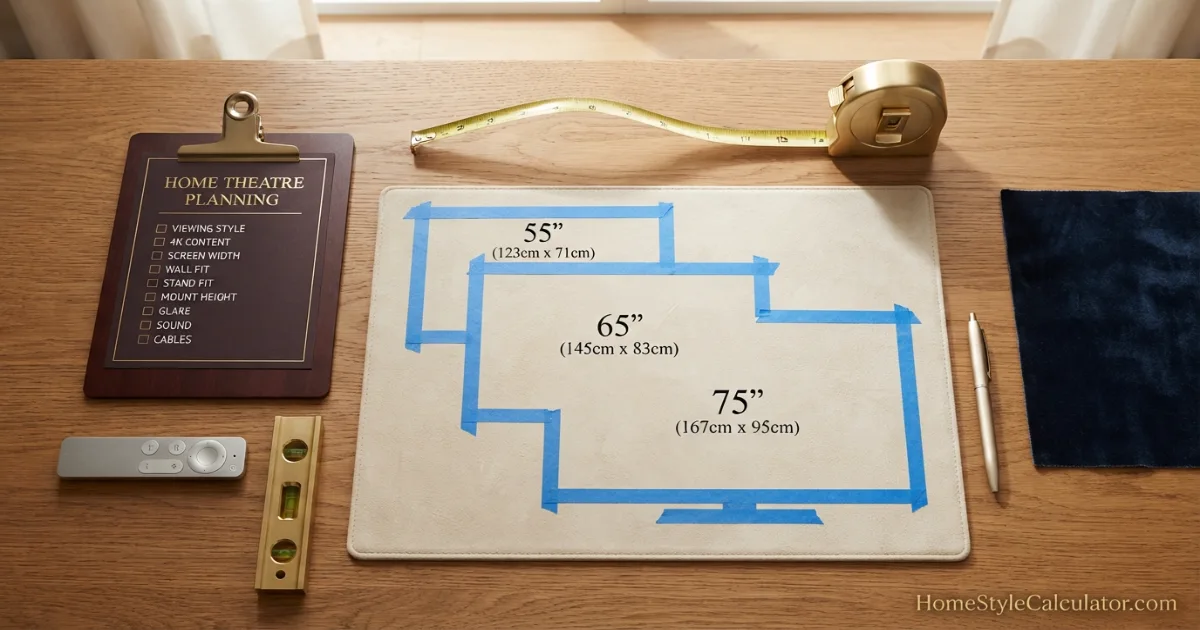
- Skipping a painter’s-tape comparison of all three sizes.
TV size for 8 feet buying checklist
- Confirm a true 120-inch eye-to-screen distance.
- Choose relaxed, balanced or immersive viewing.
- Record the main content quality.
- Compare 55, 65 and 75-inch outlines.
- Measure physical screen width and height.
- Check complete product dimensions with stand.
- Verify foot spacing, depth and weight.
- Measure uninterrupted wall width.
- Confirm mount VESA pattern and capacity.
- Set screen center near seated eye level.
- Check soundbar and speaker space.
- Inspect daytime glare from every seat.
- Plan outlets and cable routing.
Also consider long-term use. A screen that feels slightly large during the first day often becomes familiar, but a television that blocks speakers, crowds a wall or sits too high remains inconvenient.
Include the wall mount or stand, soundbar placement, surge protection, cable management and possible wall repair in the total budget. Do not reduce mount quality or installation safety merely to reach the largest diagonal.
A 55-inch television is easier to handle and usually fits a broader range of existing furniture. A 65-inch model sits between the two, offering stronger immersion without every installation challenge of the largest size.
The cost difference between TV sizes extends beyond the screen. An 75-inch television may require a stronger mount, wider console, two-person delivery, professional installation and more difficult cable access. Measure doorways, stairs and elevators before ordering.
Installation cost and practical ownership
Outline the screen on the wall and sit in every regularly used position. Check subtitles, menus and sports scores rather than judging only the blank outline.
For a family room with seats between 8 and 12 feet, a 65-inch screen often balances the range. An 75-inch model favors the far seats and movie viewing, while a 55-inch television favors the closest seat and a calmer room.
A larger TV helps distant side viewers read text, but off-axis picture quality depends on the display technology and model. The widest screen is not always the best solution when side seats have strong angles or reflections.
A single central sofa seat may be exactly 8 feet from the television, while the ends of a sectional sit closer or farther away. Measure the center seat first, then check the diagonal distance from the outer seats to the middle of the screen.
How to plan for several seats at an 8-foot distance
Choose the 65-inch default when content is mixed, the household watches both television and movies, or different viewers prefer different levels of immersion. It is not automatically perfect, but it is the most balanced starting point to test with painter’s tape.
The 65-inch category also fits a wider range of media consoles and wall layouts. Its approximate 56.7-inch screen width leaves more room for speakers, shelves and architectural features than an 75-inch screen. Many models remain manageable for delivery and mounting with suitable help.
For households that cannot decide between 55 and 75 inches, 65 inches is usually the safest middle choice. It creates a meaningful increase in picture size over 55 inches, improves subtitle readability and gives sports a stronger sense of scale without requiring the full wall width of an 75-inch television.
Why 65 inches is the safest default at 8 feet
For households that cannot decide between 55 and 75 inches, 65 inches is usually the safest middle choice at 8 feet.
It creates a meaningful increase in picture size over 55 inches, improves subtitle readability and gives sports a stronger sense of scale without requiring the complete wall width of a 75-inch television.
A 65-inch TV also fits a broader range of media consoles and mounting systems than the largest option. It is still substantial enough to feel modern and immersive from an 8-foot sofa.
Choose the 65-inch default when content is mixed, the household watches both television and movies, or different viewers prefer different levels of immersion.
For tabletop placement, check foot spacing and console depth. For wall mounting, verify the VESA pattern, television weight, wall construction and stud position before purchase.
Include the cost of a suitable mount or stand, cable management, surge protection and professional installation where needed. Do not reduce mount quality merely to reach a larger diagonal.
A 75-inch TV is more difficult to move through doorways, stairs and hallways than a 55- or 65-inch model. Measure the delivery path and confirm whether the television must remain upright during transport.
Delivery and installation planning
When household members have different preferences, outline 65 and 75 inches and ask everyone to judge normal content rather than showroom demo footage.
Test the actual subtitle settings on the services you use. Some apps allow larger text, but sports scores, game interfaces and television menus may remain fixed. Screen size should support comfortable reading without constant leaning.
Subtitle use and eyesight can justify choosing the larger end of the range. A 65-inch TV makes streaming menus and captions easier to read than a 55-inch model, while 75 inches gives the strongest text visibility from the sofa.
Subtitles, eyesight and text readability at 8 feet
Do not let a narrow walkway force the sofa closer after the TV is installed. Confirm the final furniture positions, reclining depth and coffee-table clearance before choosing the largest screen.
In a compact room, 55 inches keeps more empty wall space and may integrate better with shelves or artwork. A 65-inch screen creates a stronger anchor without necessarily crowding the wall. A 75-inch television works best when the wall is broad and the room is intentionally media-focused.
An 8-foot viewing distance appears in apartments, bedrooms, dens and medium living rooms. The total room size can be larger or smaller because furniture depth and sofa placement control the actual eye-to-screen measurement.
How an 8-foot distance works in compact and medium rooms
Final answer: what TV size for 8 feet should you buy?
TV size for 8 feet viewing should usually be selected from 55, 65 and 75 inches. Choose 55 inches for relaxed mixed television, 65 inches for the best balanced all-around setup, or 75 inches for immersive movies, sports and gaming.
For most living rooms with mainly 4K content, 65 inches is the safest default recommendation. Move to 75 inches when the wall is broad and cinematic viewing is the priority. Move to 55 inches when the screen should remain visually calm or lower-quality content is common.
Confirm physical width, stand or mount compatibility, screen-center height, glare and soundbar space before ordering.
Calculate the full setup
Use the free TV Size Calculator and compare the nearest standard sizes.
Two practical products to compare after choosing TV size
Confirm the current VESA pattern, weight rating, dimensions and package contents before ordering.
TV Wall Mounts for 55–75 Inch Screens
Compare mounts for 55-, 65- and 75-inch TVs only after checking VESA pattern and weight.
- Confirm maximum TV weight
- Check extension and tilt
- Verify wall and stud requirements
TV Stands for 55–75 Inch Screens
Compare console width, top depth, weight capacity and soundbar space against the chosen TV.
- Check TV foot spacing
- Confirm top depth and weight
- Allow cable and speaker room
Affiliate disclosure: As an Amazon Associate, HomeStyle Calculator may earn from qualifying purchases. Product specifications, prices and availability can change.
TV size for 8 feet FAQs
What TV size is best for 8 feet?
For an 8-foot viewing distance, 55 to 75 inches is the most useful comparison range. A 55-inch TV feels relaxed, 65 inches is balanced for many living rooms, and 75 inches provides a more cinematic field of view.
Is a 55-inch TV big enough for 8 feet?
Yes. A 55-inch TV is a comfortable relaxed option at 8 feet, especially for mixed television and households that do not want the screen to dominate the room.
Is a 65-inch TV good for 8 feet?
Yes. A 65-inch TV is often the best balanced choice at 8 feet because it improves immersion, subtitles and sports without requiring the wall width of a 75-inch screen.
Is a 75-inch TV too big for 8 feet?
Not automatically. A 75-inch TV can work well at 8 feet for movies, sports and gaming when most content is 4K and the wall, stand and mounting height can support the larger screen.
How wide is a 65-inch TV?
A 16:9 screen with a 65-inch diagonal is approximately 56.7 inches wide before bezels. Check the exact model dimensions before buying a stand or mount.
How wide is a 75-inch TV?
A 16:9 screen with a 75-inch diagonal is approximately 65.4 inches wide before bezels. The complete product width varies by model.
Does 4K make a larger TV better at 8 feet?
4K content supports a larger screen more comfortably than lower-resolution video because the image remains detailed. Streaming quality and compression still affect the final result.
What TV size is best at 8 feet for sports?
A 65- or 75-inch TV is usually the stronger sports choice at 8 feet because players, score graphics and motion are easier to see from the sofa.
What TV size is best at 8 feet for gaming?
For console gaming from a sofa at 8 feet, 65 inches is a balanced choice and 75 inches is more immersive. Competitive players should also consider interface visibility and motion performance.
How high should a TV be mounted at 8 feet?
A comfortable starting point places the center of the screen close to seated eye level. The exact height depends on sofa height, screen size, reclining posture and furniture below the television.